

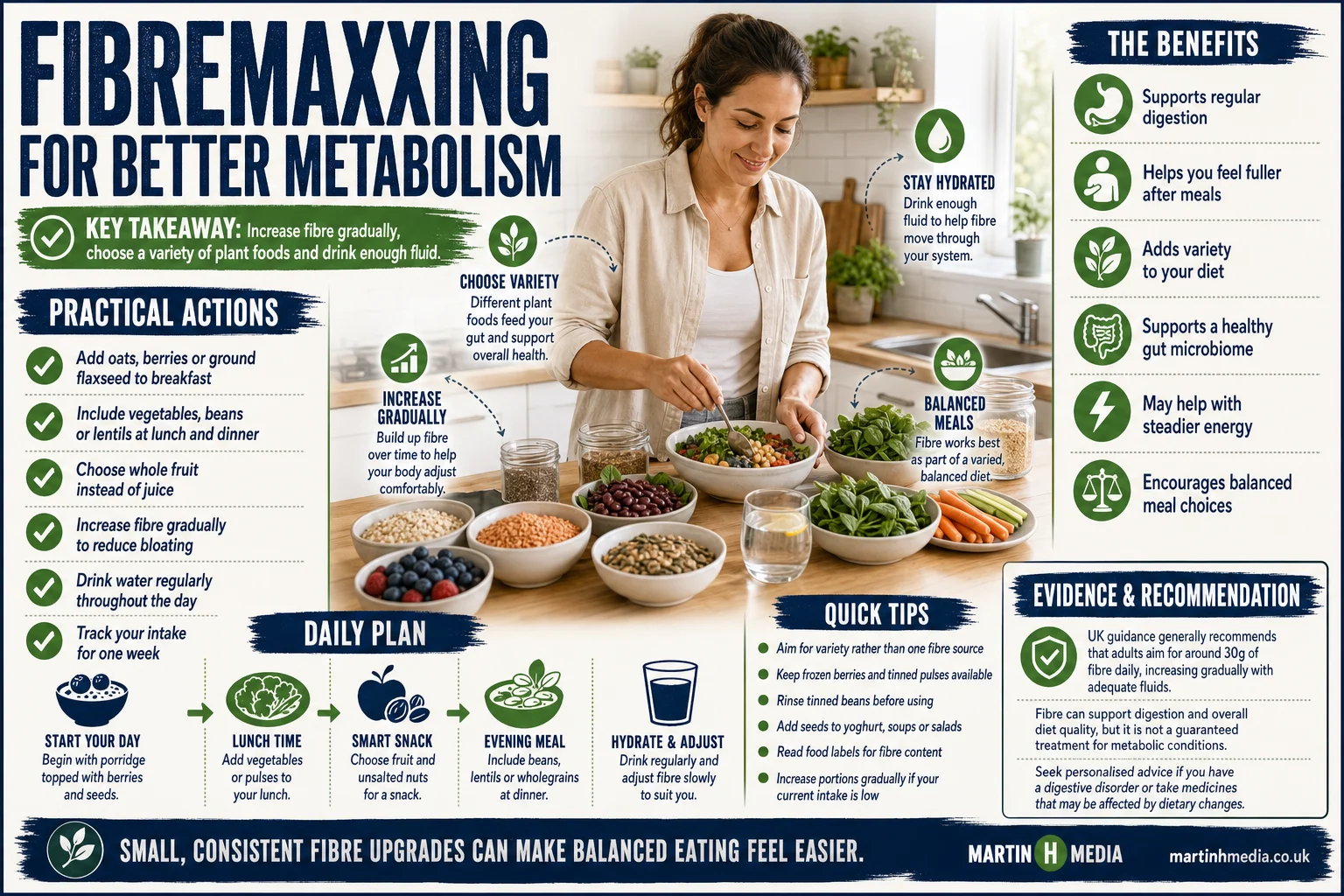
Why Fibremaxxing Works When Calorie Counting Fails
You eat vegetables but still feel sluggish by afternoon. Your fiber intake might look good on paper. Fibremaxxing for Better Metabolism means timing and type matter more than total grams. The right fiber at the right moment changes everything.
Why Fibremaxxing for Better Metabolism Starts With Soluble Fiber
Soluble fiber dissolves in water and forms a gel in your digestive tract. This gel slows down how fast glucose enters your bloodstream. Your pancreas doesn’t need to release massive insulin spikes.
Oats contain beta-glucan, a soluble fiber that coats your intestinal walls. This coating reduces glucose absorption speed after meals. Studies show beta-glucan can lower post-meal blood sugar by twenty percent.
Psyllium husk swells to fifty times its dry volume in your stomach. This expansion signals fullness hormones earlier during meals. You eat less without feeling deprived.
Inulin from chicory root feeds specific bacteria in your colon. These bacteria produce short-chain fatty acids as waste products. Those fatty acids improve how your cells respond to insulin signals.
Most people get only fifteen grams of fiber daily. Your metabolism functions better with at least thirty grams. Double your intake over two weeks to avoid digestive discomfort.
Timing Your Fiber Intake for Maximum Metabolic Impact
Eating fiber before carbohydrates changes how your body processes those carbs. The fiber creates a physical barrier in your small intestine. Glucose molecules must navigate through this barrier to reach absorption sites.
Start lunch with a small salad dressed in vinegar. The fiber from greens plus acetic acid from vinegar compounds the effect. Your blood sugar rise from the main course drops by thirty percent.
Afternoon fiber intake prevents the typical energy crash around three o’clock. An apple with almond butter delivers both soluble and insoluble fiber. Your blood sugar stays stable for hours afterward.
Evening meals need fiber to prevent overnight glucose spikes. Your liver processes stored glycogen while you sleep. Fiber from dinner vegetables moderates this release pattern throughout the night.
Skip fiber immediately before workouts. The gel formation slows nutrient delivery when you need quick energy. Save high-fiber foods for at least ninety minutes after exercise ends.
How Fibremaxxing for Better Metabolism Supports Your Gut Bacteria
Your intestinal bacteria outnumber your human cells by a factor of ten. These organisms determine how efficiently you extract energy from food. Fiber acts as their primary fuel source.
Resistant starch passes through your small intestine completely undigested. It reaches your colon intact where bacteria ferment it aggressively. This fermentation produces butyrate, a compound that strengthens your intestinal barrier.
Leaky gut allows partially digested food particles into your bloodstream. Your immune system attacks these particles, creating chronic low-grade inflammation. Inflammation interferes with insulin receptor function across all tissues.
Diverse fiber sources create diverse bacterial populations in your microbiome. Eat ten different plant foods weekly at minimum. Each plant type feeds different bacterial strains with unique metabolic benefits.
Prebiotic fibers like fructooligosaccharides target beneficial bacteria specifically. Asparagus, garlic, and onions contain high amounts. These bacteria crowd out harmful strains that produce inflammation-triggering compounds.
Fermented foods pair perfectly with fiber-rich meals. Sauerkraut or kimchi adds live bacteria while vegetables provide their food. This combination rebuilds a damaged microbiome faster than either approach alone.
Fibremaxxing for Better Metabolism Through Resistant Starch Cycling
Cooking and cooling certain starches transforms their molecular structure completely. Hot rice has a high glycemic index that spikes blood sugar. Cooled rice contains resistant starch that feeds gut bacteria instead.
Prepare potatoes the night before you plan to eat them. Refrigeration allows the starch molecules to crystallize into resistant forms. Reheating doesn’t reverse this process.
Green bananas contain far more resistant starch than ripe yellow ones. The starch converts to sugar as the banana ripens. Choose bananas with green tips for maximum metabolic benefit.
Legumes deliver both protein and resistant starch in one package. A cup of lentils provides fifteen grams of fiber. Half of that fiber resists digestion and reaches your colon intact.
Cycle resistant starch intake throughout your week strategically. Eat higher amounts on rest days when you need less quick energy. Reduce intake on training days when muscles need readily available glucose.
Understanding How Fibremaxxing for Better Metabolism Reduces Hunger Signals
Fiber activates stretch receptors in your stomach wall mechanically. These receptors send fullness signals to your brain within minutes. Chemical satiety hormones take thirty minutes to activate by comparison.
Glucomannan from konjac root absorbs water at exceptional rates. One gram can absorb fifty grams of water. This creates substantial stomach volume with almost zero calories.
Pectin from apples triggers cholecystokinin release in your small intestine. This hormone slows stomach emptying significantly. Food stays in your stomach longer, extending the satisfied feeling. For a comprehensive approach to metabolic health, you should explore everyday habits that support better metabolic function alongside your fiber strategy.
Ghrelin is your primary hunger hormone produced in the stomach lining. Fiber suppresses ghrelin production for hours after meals. Lower ghrelin means fewer random cravings between scheduled eating times.
Protein and fiber together create the strongest satiety effect possible. Greek yogurt mixed with chia seeds combines both elements. The chia seeds expand while protein digests slowly.
The Role of Insoluble Fiber in Fibremaxxing for Better Metabolism
Insoluble fiber doesn’t dissolve in water at all. It passes through your digestive system largely unchanged. This passage speeds up transit time significantly.
Faster transit means less time for calorie absorption from food. Your intestines extract fewer total calories from the same meal. The difference can reach ten percent of total intake.
Wheat bran contains the highest concentration of insoluble fiber available. Two tablespoons added to yogurt provides six grams. Your digestive transit time drops by several hours.
Celery and cucumbers offer mostly insoluble fiber with high water content. The combination creates volume in meals without adding many calories. You feel physically full while maintaining a caloric deficit.
Insoluble fiber prevents constipation that slows metabolic rate through multiple mechanisms. Backed-up waste increases toxin reabsorption into your bloodstream. These toxins interfere with thyroid hormone conversion in your liver.
Regular bowel movements remove excess estrogen from your system completely. Fiber binds to estrogen metabolites in your intestines. High estrogen levels in both men and women slow fat metabolism. This connection between daily metabolic habits and hormonal balance explains why digestive health impacts energy levels.
Combining Fibremaxxing for Better Metabolism With Hydration
Fiber without adequate water causes constipation instead of regular movements. Soluble fiber needs fluid to form its beneficial gel. Insoluble fiber needs fluid to maintain transit speed.
Drink one glass of water with every high-fiber meal minimum. Add another glass thirty minutes after finishing. This prevents the fiber from hardening in your intestines.
Chia seeds demonstrate this principle perfectly. Dry chia seeds can absorb twelve times their weight in liquid. If you don’t provide enough water, they pull it from your intestinal walls.
Morning fiber requires morning hydration for proper function. Drink two glasses of water before breakfast. Add fiber to that breakfast for optimal metabolic activation.
Herbal teas count toward your daily fluid needs without adding calories. Peppermint tea aids digestion while hibiscus tea supports blood pressure. Both help fiber move through your system efficiently.
Avoid drinking large amounts of water during meals themselves. Excessive fluid dilutes digestive enzymes needed to break down food. Sip small amounts during eating and drink more between meals instead.
Practical Fibremaxxing Strategies You Can Start Today
Add one tablespoon of ground flaxseed to your morning routine immediately. Mix it into coffee, smoothies, or oatmeal without changing anything else. This single change adds four grams of fiber and omega-3 fats.
Replace white rice with cauliflower rice for half your portions. The swap cuts calories while tripling fiber content per serving. Your blood sugar response improves within the first meal.
Snack on raw vegetables with hummus instead of crackers. Carrots, bell peppers, and celery provide crunch with substantial fiber. The chickpeas in hummus add both protein and additional fiber.
Keep frozen berries stocked at all times for emergency fiber boosts. Raspberries deliver eight grams of fiber per cup. Frozen varieties cost less and last months without spoiling.
Build meals around fiber instead of making it an afterthought. Choose your vegetable portions first, then add protein and fats. This reverses the typical approach and naturally increases fiber intake. The principles behind supporting better metabolic health through simple changes apply directly to restructuring your plate composition.
Track your fiber grams for one week to establish your baseline. Most people dramatically overestimate their actual intake. Awareness creates the foundation for meaningful improvement.
Start adding fiber to one meal at a time over several weeks. Sudden increases cause bloating, gas, and digestive discomfort. Your gut bacteria need time to adjust to new fuel sources.
Choose whole fruits over fruit juices every single time. An orange contains four grams of fiber while orange juice contains zero. The fiber makes all the difference in metabolic response.
Add fiber to your current favorite foods rather than replacing them completely. Sprinkle seeds on pizza or mix vegetables into pasta sauce. Small additions create big changes without feeling like deprivation.
Start tomorrow morning with high-fiber breakfast and watch your energy levels.
Frequently Asked Questions
How much fiber do I need daily for better metabolism?
Most adults need between thirty and forty grams of fiber daily for optimal metabolic function. Start with your current intake and add five grams weekly. Rapid increases cause digestive discomfort. Mix soluble and insoluble fiber sources throughout the day. Track your intake for one week to understand your baseline.
Can too much fiber slow down my metabolism?
Excessive fiber intake above seventy grams daily can interfere with mineral absorption. Your body needs zinc, iron, and magnesium for metabolic processes. Fiber binds to these minerals in your intestines. Stay between thirty and fifty grams for most people. Spread fiber intake across all meals instead of concentrating it.
What’s the best time to eat fiber for blood sugar control?
Eat fiber before or with carbohydrate-rich meals for maximum blood sugar benefit. Starting meals with salad or vegetables creates an intestinal barrier. This barrier slows glucose absorption significantly. A ten-minute walk after high-fiber meals compounds the effect. Avoid fiber immediately before intense workouts when you need quick energy.
Does cooking destroy the fiber in vegetables?
Cooking changes fiber structure but doesn’t eliminate it completely. Steaming and roasting preserve fiber better than boiling. Some fibers become more accessible to gut bacteria after light cooking. Raw vegetables provide intact insoluble fiber for faster transit. Mix both cooked and raw vegetables throughout your day for variety.
Can fiber supplements replace food sources for metabolism?
Fiber supplements provide concentrated amounts without the vitamins and minerals in whole foods. Psyllium and glucomannan work well for specific purposes. Whole foods feed diverse gut bacteria better than isolated fiber. Use supplements to bridge gaps but prioritize food sources. Aim for eighty percent of fiber from actual foods.