
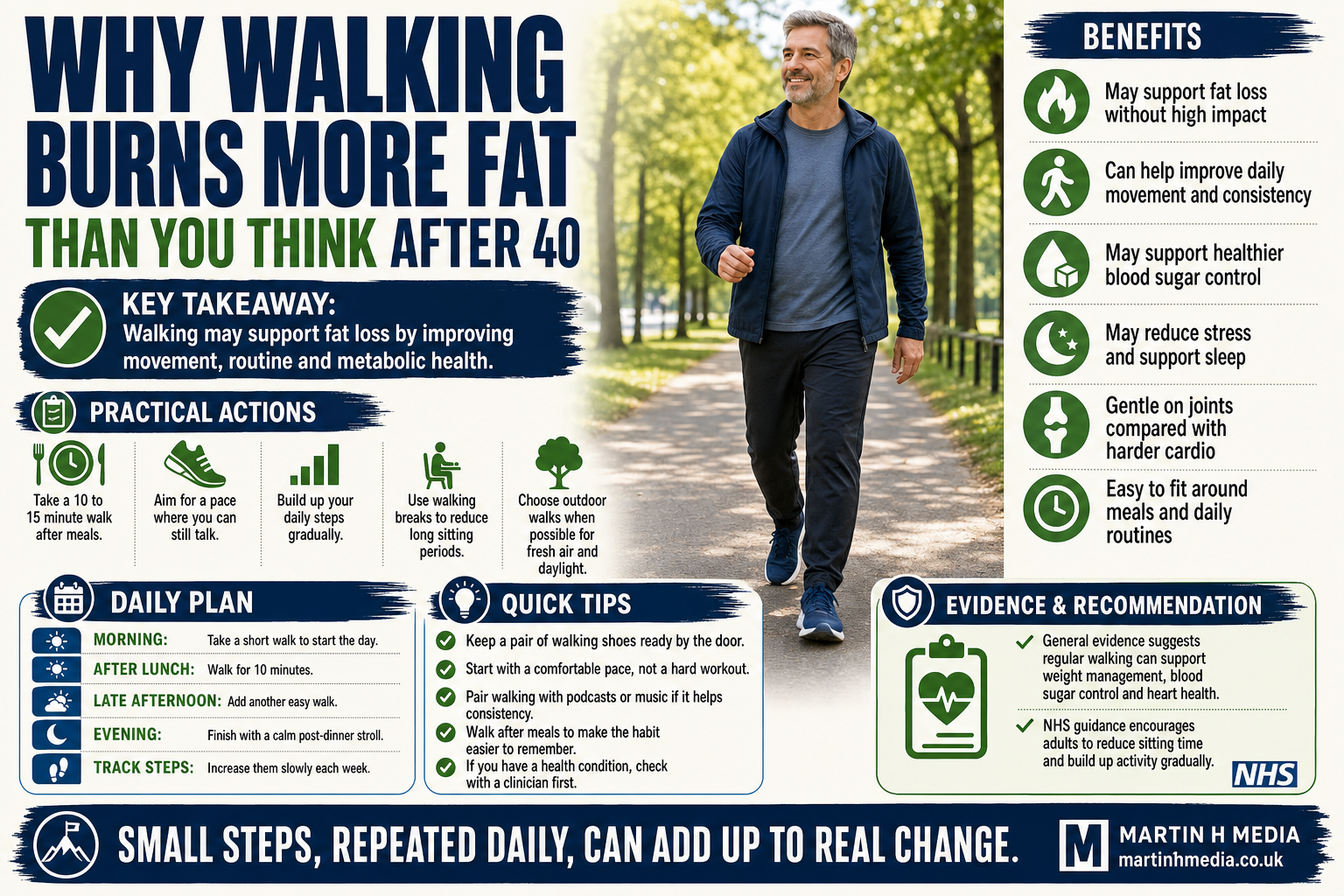
Walking After 40 Burns 3x More Fat Than You Realize
Why Walking Burns More Fat Than You Think after 40 might surprise you. Your metabolism didn’t suddenly break when you turned forty. Your body just started playing by different hormonal rules. Walking taps into this shift better than almost any other exercise.
Why Walking Burns More Fat Than You Think after 40: The Insulin Sensitivity Advantage
Your cells become more resistant to insulin after age forty. This happens gradually across several years. Your pancreas pumps out more insulin to achieve the same result.
High insulin levels block fat burning completely. Your body cannot release stored fat when insulin remains elevated. Walking changes this equation in your favor.
A moderate walk drops insulin levels for hours afterward. Research confirms this happens even with just twenty minutes of movement. Your fat cells unlock during this window.
The effect compounds when you walk after eating. Post-meal walks prevent the insulin spike that normally follows food. Your blood sugar stays stable instead of surging.
Most over-forty adults sit immediately after dinner. This creates the worst possible scenario for fat storage. Standing and walking interrupts the entire process.
You don’t need intense cardio to trigger this benefit. Gentle movement works better for insulin management than hard exercise. Your body reads vigorous activity as stress in many cases.
The Muscle Preservation Factor Most People Miss
You lose approximately eight percent of muscle mass per decade after forty. This decline accelerates if you do nothing to stop it. Each pound of lost muscle drops your daily calorie burn.
Walking preserves leg muscle without the joint stress of running. Your quadriceps and glutes engage with every step. This continuous low-level activation maintains existing tissue.
High-intensity workouts can backfire when recovery capacity decreases with age. Your body may break down muscle instead of building it. Walking avoids this hormonal trap entirely.
The rhythmic contraction during walking also improves nutrient delivery to muscles. Blood flow increases throughout your lower body. Oxygen and amino acids reach tissue more efficiently.
Think of walking as maintenance rather than demolition. You’re not tearing down tissue that needs extensive repair. You’re simply keeping everything functional and active.
Worth knowing: muscle preservation matters more than muscle building for metabolic health. Holding onto what you have keeps your baseline calorie burn high. Walking accomplishes this with minimal recovery demands.
Why Walking Burns More Fat Than You Think after 40: The Cortisol-Belly Fat Connection
Chronic stress produces elevated cortisol levels throughout the day. This hormone directly signals your body to store abdominal fat. The pattern intensifies as you age.
Cortisol also makes your cells more insulin resistant. You now have two hormones working against fat loss. Walking addresses both problems simultaneously.
Moderate daily walking reduces cortisol by fifteen to twenty percent. This happens consistently when you stay in the right step range. Managing daily step counts around seven thousand steps provides the sweet spot for hormonal benefits.
Your nervous system interprets gentle walking as a safety signal. The movement tells your brain the immediate threat has passed. Stress hormone production adjusts downward in response.
Aggressive exercise creates the opposite effect when you’re already stressed. Your adrenal glands can’t distinguish between workout stress and life stress. Both trigger cortisol release.
The belly fat connection becomes critical after forty. Visceral fat around your organs responds directly to cortisol levels. Walking helps clear the hormone that feeds this dangerous fat.
The Fat-Burning Zone Actually Works for Older Adults
Exercise scientists used to dismiss the fat-burning zone as ineffective. New research shows it matters significantly for people over forty. Your body shifts fuel sources differently than younger people.
Walking keeps your heart rate in the range where fat provides primary fuel. You’re literally burning stored body fat during the activity. Higher intensities switch to glucose instead.
Your mitochondria become less efficient at processing fuel after forty. These cellular energy factories work better at lower intensities. Walking matches your current cellular capacity.
The total calorie burn might seem lower than running. But the percentage from fat remains much higher. You’re targeting the exact fuel source you want to reduce.
This becomes especially relevant if you walk before breakfast. Your glycogen stores run low overnight. Morning walks tap into fat almost immediately.
Recovery time also plays into the equation. You can walk daily without exhaustion. Running or intense cardio requires rest days for most over-forty adults.
Frequency beats intensity for total weekly fat burning. Seven shorter walks outperform three hard workouts. Your body stays in fat-burning mode more consistently.
Why Walking Burns More Fat Than You Think after 40: The NEAT Multiplication Effect
NEAT stands for non-exercise activity thermogenesis. This includes all movement outside of formal workouts. Walking increases your NEAT for the entire day.
People who walk regularly move more during all other activities. You fidget more at your desk. You take stairs instead of elevators without conscious thought.
This unconscious movement can add two hundred to five hundred calories daily. The effect happens automatically once walking becomes habitual. Your brain resets its movement baseline.
Sedentary people experience the opposite pattern. Sitting for hours trains your body to prefer stillness. Each inactive day reinforces the low-movement default.
The multiplication effect explains why some walkers lose fat despite modest calorie burns. Their total daily expenditure increases across all activities. Walking jumpstarts a more active lifestyle overall.
Your body also maintains higher circulation after regular walking. Blood flow stays elevated even during rest periods. This improved circulation supports better fat metabolism around the clock.
The Sleep-Fat Loss Link That Walking Activates
Poor sleep destroys fat loss progress regardless of diet. Your hunger hormones spike after bad sleep. Ghrelin increases while leptin decreases.
Walking improves sleep quality in ways that gym workouts often don’t. The gentle movement regulates your circadian rhythm. Your body recognizes natural light exposure during outdoor walks.
Better sleep directly improves your ability to burn fat. Growth hormone releases during deep sleep. This hormone supports fat breakdown and muscle maintenance.
Evening walks help clear cortisol before bed. Moderate daily step targets support healthy stress hormone patterns throughout the day. Lower nighttime cortisol allows deeper sleep.
Temperature regulation also improves with regular walking. Your body learns to cool down more efficiently. This supports the temperature drop necessary for quality sleep.
Most over-forty adults report falling asleep faster after adding daily walks. They also wake less frequently during the night. Both changes support the hormonal environment needed for fat loss.
Why Walking Burns More Fat Than You Think after 40: The Inflammation Reduction Pathway
Chronic inflammation increases steadily after age forty. This low-grade inflammation interferes with every aspect of metabolism. Your cells become less responsive to fat-burning signals.
Walking reduces inflammatory markers throughout your body. C-reactive protein levels drop with consistent moderate activity. Interleukin-6 also decreases.
Lower inflammation means your cells respond better to insulin. Fat cells release stored energy more readily. Your liver processes fat more efficiently.
The anti-inflammatory effect happens without the stress of intense exercise. Hard workouts can actually increase inflammation temporarily. Staying within moderate activity ranges prevents this rebound effect while still delivering benefits.
Joint health improves alongside reduced inflammation. Better joints allow more consistent movement. This creates a positive cycle supporting long-term fat loss.
Your gut health also benefits from regular walking. Movement supports healthy digestion and reduces gut inflammation. A healthier gut microbiome supports better weight management.
Start with a ten-minute walk today and add just two minutes each week.
Frequently Asked Questions
How many minutes should I walk daily to see fat loss after 40?
Aim for thirty to forty-five minutes of walking daily. This duration keeps you in the fat-burning zone without triggering stress hormones. Split it into two or three shorter walks if your schedule demands it.
Does walking speed matter for burning fat after age 40?
A moderate pace works better than rushing. You should be able to hold a conversation while walking. This keeps your heart rate in the range where fat provides primary fuel.
Should I walk before or after meals for maximum fat burning?
Both timing options provide different benefits. Morning walks before breakfast tap into overnight-depleted glycogen stores. Post-meal walks prevent insulin spikes and improve blood sugar control.
Can walking alone create enough fat loss without diet changes?
Walking supports fat loss but works best combined with sensible eating. The hormonal benefits from walking make your body more responsive to dietary improvements. Together they create better results than either alone.
How long before I notice fat loss results from daily walking?
Most people see initial changes within three to four weeks. Hormonal improvements happen first. Visible fat loss typically follows two to three weeks after that.