

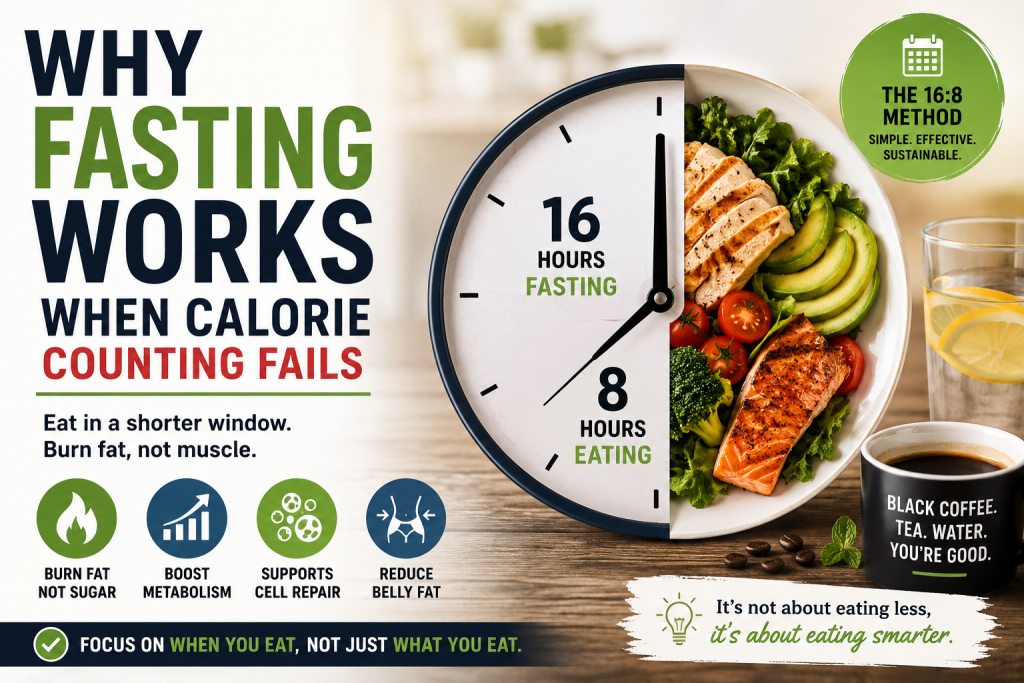
Why Fasting Works When Calorie Counting Fails
Intermittent fasting weight loss happens when you stop eating breakfast and your body finally burns stored fat. You’ve been told to eat six small meals daily. That advice kept you hungry and heavier. The fix is eating within a shorter window each day.
How Intermittent Fasting Weight Loss Actually Works
Your body stores energy as glycogen in your liver and muscles. When you eat constantly, you never burn through these stores. Your body has no reason to touch fat reserves.
Fasting drops insulin levels after about 12 hours without food. Low insulin signals your body to release stored fat. This fat gets converted into ketones for energy.
Most people eat from 7am to 9pm daily. That’s a 14-hour eating window. Your body stays in storage mode the entire time. Shrinking this window to 8 hours changes everything.
You eat your last meal at 8pm and break your fast at noon the next day. That’s 16 hours of fasting. Your body spends half that time burning fat instead of storing it.
The 16:8 Method for Intermittent Fasting Weight Loss
The 16:8 approach means fasting for 16 hours and eating during an 8-hour window. This is the easiest pattern to maintain long term.
Skip breakfast and have your first meal at noon. Eat normally until 8pm. Then stop eating until noon the following day. You’re already sleeping for 8 of those 16 fasting hours.
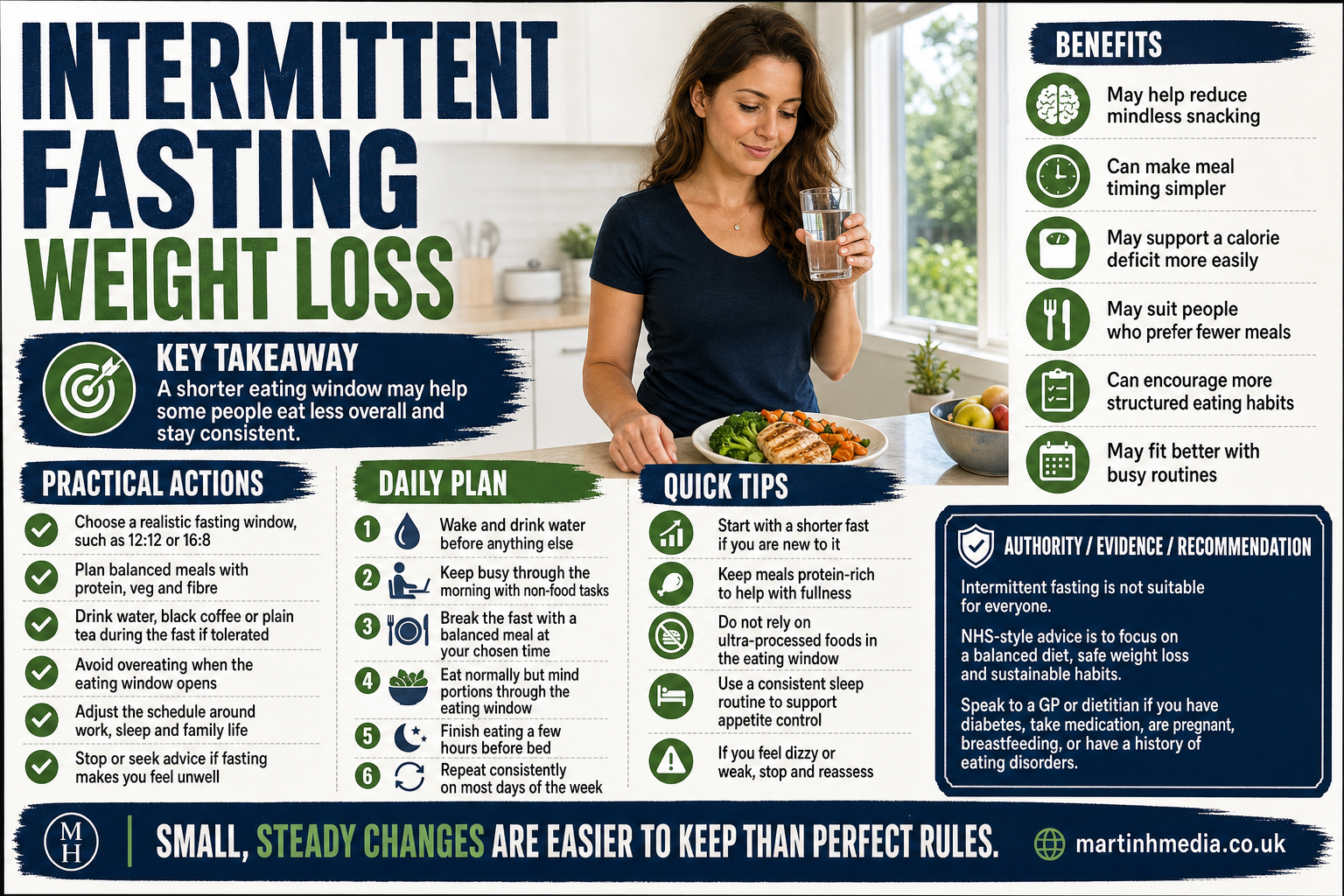
Black coffee and plain tea don’t break your fast. Water is unlimited. These drinks keep you comfortable during morning hours without spiking insulin.
Your eating window can shift based on your schedule. Some people prefer 10am to 6pm. Others do 2pm to 10pm. The 16-hour fast matters more than specific timing.
You don’t need to count calories obsessively within your eating window. Focus on whole foods and reasonable portions. The restricted timeframe naturally limits total intake.
What Happens During Your Fasting Window
Hours 0 to 4 after eating, your body digests and absorbs nutrients. Insulin remains elevated. You’re in full storage mode during this phase.
Hours 4 to 8, insulin drops but you’re still burning recently consumed glucose. Your body hasn’t tapped into fat stores yet. Nothing dramatic happens during this window.
Hours 12 to 16, glycogen stores deplete and fat burning accelerates. Human growth hormone increases by up to five times normal levels. This hormone preserves muscle while burning fat.
Cellular repair processes called autophagy activate around hour 16. Your cells break down and recycle damaged components. This cleanup happens most efficiently during fasted states.
You might feel slightly hungry around hour 14. This passes quickly. Hunger comes in waves, not steady increases. Wait 20 minutes and the sensation fades.
Intermittent Fasting Weight Loss Results You Can Expect
Most people lose one to two pounds weekly with the 16:8 method. This pace preserves muscle mass while reducing fat. Faster weight loss usually means water and muscle loss.
Your first week might show a three to five pound drop. This is mostly water weight as glycogen stores deplete. Don’t expect this rate to continue past week one.
Belly fat decreases noticeably within four weeks for most people. Fasting specifically targets visceral fat around organs. This fat responds better to fasting than subcutaneous fat.
Women sometimes see slower results than men initially. Hormonal differences affect how quickly the body adapts to fasting. Results even out after the first month.
Taking beginner weight loss tips seriously during your eating window improves results. Proper hydration and whole foods matter more when you eat less frequently.
Common Mistakes That Stall Progress
Breaking your fast with high-sugar foods spikes insulin dramatically. Your blood sugar crashes two hours later. You feel exhausted and hungry again quickly.
Some people restrict calories too much during their eating window. Your body adapts by slowing metabolism. You need adequate nutrition in those 8 hours.
Drinking diet soda during fasting hours seems harmless but isn’t. Artificial sweeteners trigger an insulin response in some people. This breaks the fasted state metabolically.
Exercising intensely while fasted works for experienced fasters. Beginners should work out during eating windows initially. Your body needs time to adapt to using fat for fuel.
Binge eating during your window because you “earned it” defeats the purpose. Eating 3000 calories in 8 hours still exceeds your daily needs. Practice normal portion control.
Adjusting Intermittent Fasting Weight Loss for Your Schedule
Shift workers can fast during their sleep hours plus work hours. If you sleep 8am to 4pm, fast from 4am to 8pm. The continuous 16-hour block matters most.
Social dinners don’t have to derail your pattern. Adjust your window that day to accommodate the meal. Skip lunch and break your fast at dinner instead.
Weekend schedules often differ from weekdays. Pick a consistent window you can maintain five days weekly. Two flexible days won’t destroy your progress.
Travel complicates timing but doesn’t make fasting impossible. Stick to your home time zone for the first day. Gradually shift your window to local time.
How Women Experience Intermittent Fasting Weight Loss Differently
Female hormones are more sensitive to perceived starvation than male hormones. Starting with a 12-hour fast prevents hormonal disruption. Add one hour weekly until reaching 16 hours.
Your menstrual cycle affects how you tolerate fasting. Fasting feels easier during the follicular phase right after your period. Shorten your fasting window during the luteal phase if needed.
Women over 40 often see better results with intermittent fasting than younger women. Declining estrogen makes traditional calorie restriction less effective. Fasting works with hormonal changes instead of against them.
Pregnancy and breastfeeding require abandoning intermittent fasting completely. Your body needs consistent nutrition during these phases. Resume fasting only after weaning.
Combining Fasting with Other Approaches
Low-carb eating during your window accelerates fat loss noticeably. Your body stays in fat-burning mode longer when you minimize carb intake. This combination works faster than either approach alone.
Walking during fasted hours burns fat directly for fuel. Your glycogen is already depleted. A 30-minute walk before breaking your fast taps into fat stores immediately.
Strength training during eating windows preserves muscle mass during weight loss. Schedule workouts for mid-afternoon if your window opens at noon. You’ll have energy from your first meal.
Many weight loss strategies complement fasting naturally. Smaller plates during your eating window prevent overeating. Tracking food helps you stay aware of portions.
Signs Intermittent Fasting Weight Loss Is Working
Your stomach stops growling in the mornings after two weeks. This indicates your body adapted to burning fat instead of expecting food. Hunger hormones reset to your new pattern.
Mental clarity improves noticeably during fasted hours. Brain fog from constant blood sugar fluctuations disappears. Ketones provide stable fuel for your brain.
Your clothes fit differently before the scale shows major changes. Fat loss around your waist appears within three weeks. Muscle retention keeps your weight higher than expected initially.
Energy levels become more consistent throughout the day. You skip the afternoon crash that used to hit at 3pm. Stable blood sugar means stable energy.
Sleep quality improves when you stop eating three hours before bed. Your body isn’t digesting food while trying to sleep. You wake up feeling more rested.
When to Adjust Your Intermittent Fasting Weight Loss Approach
Hitting a weight loss plateau after two months is normal. Try shortening your eating window to 6 hours temporarily. This 18:6 pattern often breaks through stalls.
Feeling weak or dizzy during fasted hours means you need more nutrients. Add an extra serving of vegetables to your meals. Focus on nutrient density during your eating window.
Intense food obsession during fasting hours signals you’re restricting too much. Extend your window back to 10 hours for a week. Sustainable beats optimal every time.
Losing weight too quickly can cause gallstones and muscle loss. Slow down by eating slightly more during your window. Aim for that one to two pound weekly loss.
Following simple approaches to sustainable weight loss matters more than perfect timing. Consistency with a 14-hour fast beats occasional 20-hour fasts.
Making Intermittent Fasting Weight Loss Permanent
Think of your eating window as your new normal, not a temporary diet. This mindset shift prevents the cycle of losing and regaining weight. You’re changing when you eat forever.
Your social life adapts easier than you expect. Friends understand when you skip breakfast meetings. Suggest lunch or dinner instead without explaining your entire eating pattern.
Maintenance after reaching your goal weight looks nearly identical to weight loss. You might extend your window to 10 hours. The basic pattern stays the same.
Your body eventually prefers this eating pattern. Going back to constant eating feels uncomfortable. You’ll naturally gravitate toward your fasting schedule.
Pick one day each week to eat outside your window if needed. This flexibility makes the approach sustainable for years. Perfection isn’t required for long-term success.
Start your 16-hour fast tonight after dinner and break it tomorrow at noon.
Frequently Asked Questions
How quickly does intermittent fasting produce weight loss results?
Most people lose one to two pounds weekly after the initial water weight drops. You’ll notice changes in how clothes fit within three weeks. Belly fat reduction becomes visible around week four. Consistent fasting for eight to twelve weeks produces noticeable body composition changes. Results vary based on starting weight and adherence to your eating window.
Can I drink coffee during my intermittent fasting window?
Black coffee is completely fine during fasting hours and won’t break your fast. Adding cream, milk, or sugar does break your fast by spiking insulin. Plain tea and water are also unlimited during fasting periods. Some people add a pinch of salt to water for electrolytes. Avoid all artificial sweeteners as they may trigger insulin responses in some people.
Will intermittent fasting slow down my metabolism?
Short-term fasting actually increases metabolic rate by up to 14 percent. This happens because norepinephrine levels rise during fasted states. Your body doesn’t enter starvation mode until after 48 to 72 hours without food. The 16:8 method is too short to cause metabolic slowdown. Eating adequate calories during your window prevents metabolism problems.
Should I do intermittent fasting every single day?
Daily fasting works well for most people once they adapt to the pattern. Starting with five days weekly lets your body adjust gradually. Some people prefer alternate-day fasting with longer eating windows on rest days. Consistency matters more than perfection for long-term results. Two flexible days per week won’t derail your progress significantly.
What should I eat when breaking my intermittent fast?
Break your fast with protein and healthy fats to stabilize blood sugar. Eggs, avocado, or Greek yogurt work well as first meals. Avoid high-sugar foods that spike insulin and cause energy crashes. Include vegetables for fiber and nutrients your body needs. Save starchy carbs for later in your eating window when possible.