
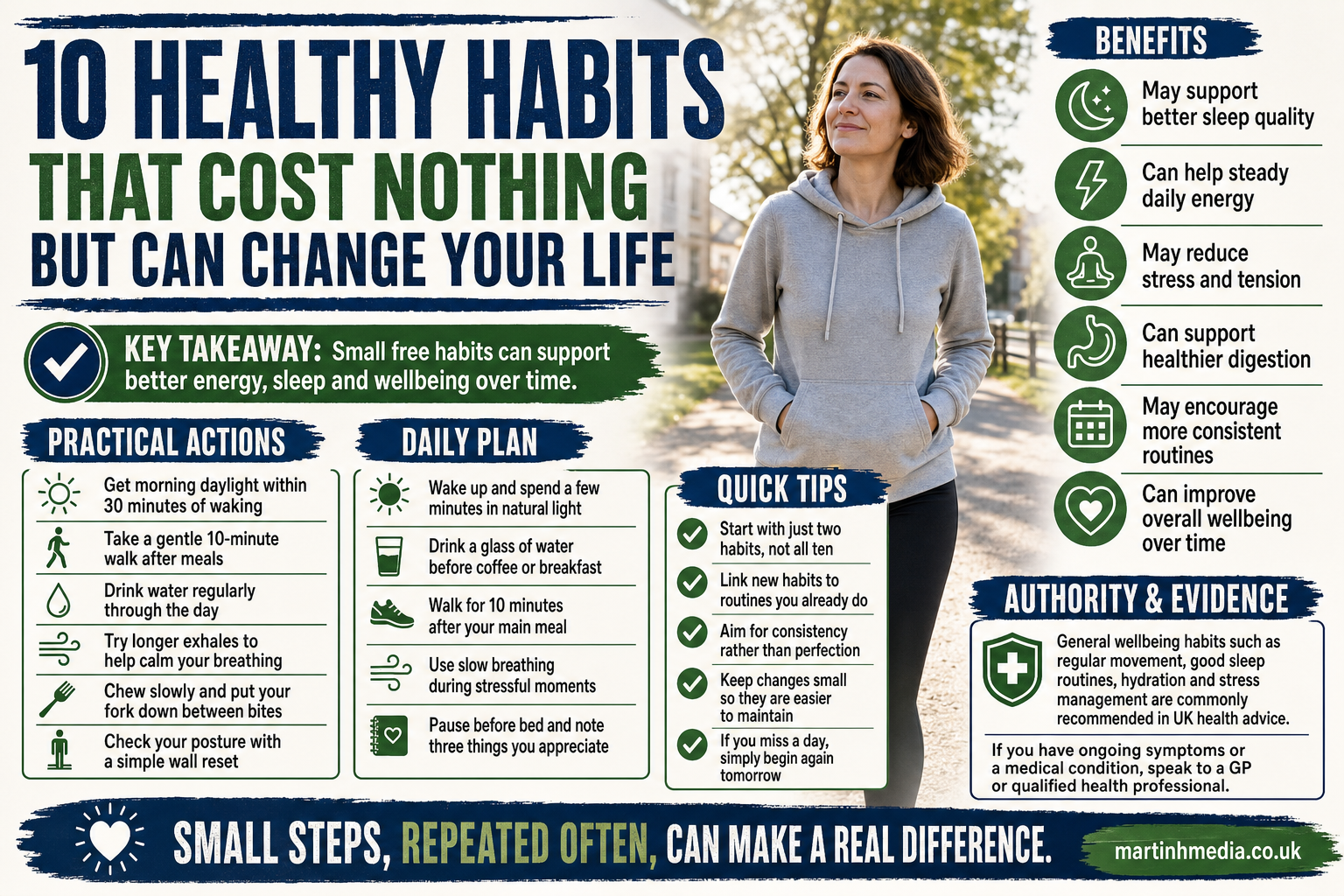
10 Free Habits Doctors Wish You Started Yesterday
You already own everything needed to transform your health. The difference between feeling stuck and feeling alive isn’t expensive. These 10 Healthy Habits That Cost Nothing But Can Change Your Life work because they tap into how your body actually functions. The best part is you can start right now.
Why 10 Healthy Habits That Cost Nothing But Can Change Your Life Start With Morning Sunlight
You already own everything needed to transform your health. The difference between feeling stuck and feeling alive isn’t expensive. These 10 Healthy Habits That Cost Nothing But Can Change Your Life work because they tap into how your body actually functions. The best part is you can start right now.
Your circadian rhythm controls more than just sleep. It regulates hormone release throughout the entire day. Morning light exposure sets this internal clock correctly.
Step outside within thirty minutes of waking. Even five minutes helps. The blue spectrum light hits receptors in your eyes. These receptors signal your brain that the day has started.
Your cortisol naturally peaks in the morning. This is healthy and normal. Sunlight amplifies this beneficial morning spike. Your body then knows to lower cortisol properly at night.
Melatonin production gets suppressed during daylight hours. This keeps you alert and focused. The same system allows melatonin to rise smoothly after sunset. Better sleep follows automatically.
Cloud cover doesn’t matter much. Outdoor light remains far brighter than indoor lighting. Your eyes need this intensity difference to function properly.
The Breathing Pattern That Calms Your Nervous System
Your breath directly controls your stress response. Most people breathe shallowly without realizing it. This keeps you in a low-level fight mode.
Exhale longer than you inhale. This simple ratio activates your parasympathetic nervous system. Try four counts in and six counts out.
Your heart rate drops within seconds. Blood pressure decreases simultaneously. The vagus nerve responds to extended exhales immediately.
You can do this anywhere without anyone noticing. Sitting at your desk works fine. Lying in bed works equally well. Three minutes creates a measurable shift.
Most stress management advice feels complicated. This technique requires nothing but attention. Your body already knows how to respond.
Why Walking After Meals Matters More Than Exercise Timing
Blood sugar spikes after you eat. This happens to everyone regardless of fitness level. The spike triggers insulin release to clear the glucose.
A ten-minute walk immediately after eating blunts this spike. Your muscles absorb the glucose without needing extra insulin. Walking after dinner creates the most dramatic effect because evening meals tend to be largest.
You don’t need intensity. A gentle stroll works perfectly. Your muscles use available blood sugar as fuel. The glucose never has a chance to create problems.
Most people sit down right after eating. This creates the worst possible metabolic scenario. Standing and moving interrupts the entire cascade.
Worth knowing: this habit prevents the afternoon energy crash. Your blood sugar stays stable instead of plummeting two hours later.
How 10 Healthy Habits That Cost Nothing But Can Change Your Life Include Proper Hydration
Your body confuses thirst with hunger constantly. The signals feel nearly identical. Most people eat when they actually need water.
Drink water first thing in the morning. Your body just went eight hours without fluid. Rehydration kickstarts multiple metabolic processes.
Room temperature water absorbs faster than cold. Your body doesn’t need to warm it first. The hydration reaches your cells more quickly.
You need roughly half your body weight in ounces daily. A hundred and sixty pound person needs eighty ounces. Spread this throughout the day.
Your energy levels depend heavily on hydration status. Even mild dehydration reduces cognitive function. Your brain is seventy-three percent water.
Skin appearance improves within days of proper hydration. Joint pain often decreases as well. Water cushions and lubricates your entire system.
The Sleep Position That Reduces Morning Stiffness
Sleeping on your back maintains neutral spine alignment. Your neck stays in line with your body. Morning pain decreases significantly.
Side sleeping works well if you place a pillow between your knees. This keeps your hips stacked properly. Your lower back stays neutral throughout the night.
Stomach sleeping creates the most problems. Your neck twists for hours. Your lower back arches excessively. This position causes preventable damage.
Most people never consider how position affects recovery. Your body repairs itself during sleep. Poor alignment interferes with this process.
Try the new position for one full week. Your body needs time to adapt. The discomfort fades after a few nights.
Why Cold Water Face Washing Beats Expensive Skincare
Cold water constricts blood vessels in your face. This tightens pores temporarily. The vessels then dilate when you stop. Fresh blood rushes in.
This cycle improves circulation to facial skin. Nutrients and oxygen reach cells more efficiently. Waste products clear out faster.
Your face looks more awake within minutes. Puffiness decreases noticeably. The effect lasts several hours.
Hot water strips natural oils from your skin. Cold water preserves the protective barrier. Your skin stays hydrated naturally.
Do this morning and night for best results. Thirty seconds each time is plenty. Pat dry gently instead of rubbing.
The Posture Reset That Takes Thirty Seconds
Stand with your back against a wall. Your heels should touch the baseboard. Press your lower back flat against the surface.
Tuck your chin slightly. The back of your head should also contact the wall. This position shows you true neutral alignment.
Most people can’t hold this comfortably at first. Years of poor posture created the problem. The discomfort reveals where work is needed.
Do this reset three times daily. Your body gradually remembers correct positioning. Muscle memory begins to shift.
Your breathing improves when your spine aligns properly. Your lungs have more room to expand. Oxygen intake increases automatically.
Back pain often stems from chronic misalignment. Simple daily movement resets your baseline positioning. The compound effect builds over weeks.
How 10 Healthy Habits That Cost Nothing But Can Change Your Life Include Intermittent Fasting
You already fast every night while sleeping. Extending this window costs nothing. Stop eating three hours before bed.
Push breakfast back by two hours if possible. This creates a fourteen-hour fasting window. Your body switches to fat burning during this time.
Insulin levels drop significantly after twelve hours without food. Your cells become more sensitive to insulin. This improves metabolic health dramatically.
You don’t need to count calories during eating windows. Focus only on timing. The metabolic benefits happen regardless of food choices.
Most people eat constantly throughout the day. Your digestive system never gets a break. Fasting periods allow for cellular cleanup.
Autophagy increases during extended fasting. Your cells recycle damaged components. This process declines with age but fasting reactivates it.
The Gratitude Practice That Rewires Your Brain
Name three specific things you appreciate before getting out of bed. Be concrete rather than general. Not “my family” but “my daughter’s laugh yesterday.”
Your brain releases dopamine during gratitude moments. This neurotransmitter creates motivation and pleasure. The morning boost sets your entire day differently.
Negative thoughts create stronger neural pathways than positive ones. This kept your ancestors alive. Gratitude practice builds competing positive pathways.
The effect accumulates over time. Your default mental state gradually shifts. You notice positive details more automatically.
Write nothing down if you don’t want to. Simply think through your three items. The neurological benefit happens either way.
Why 10 Healthy Habits That Cost Nothing But Can Change Your Life End With Proper Chewing
Digestion begins in your mouth. Saliva contains enzymes that break down food. Chewing thoroughly mixes food with these enzymes.
Most people chew each bite only ten times. Aiming for twenty chews per bite transforms how your body processes meals. Your stomach receives partially digested food instead of large chunks.
You eat less when you chew more. Satiety signals have time to reach your brain. The meal lasts longer naturally.
Bloating decreases significantly with proper chewing. Your digestive system handles smaller particles more efficiently. Gas production drops as well.
Put your fork down between bites. This forces you to slow down. The practice feels strange initially but becomes automatic.
Your body works incredibly hard to extract nutrients from food. Chewing thoroughly makes this job easier. Better nutrition follows from the same meals.
Start with just one of these habits and add another each week.
Frequently Asked Questions
How long does it take to see results from these free healthy habits?
Some changes appear within days while others need weeks. Morning sunlight improves sleep quality within three to five days. Hydration benefits show up almost immediately. Posture improvements and fasting adaptations take two to four weeks. The key is consistency rather than perfection.
Can I do all 10 healthy habits at once or should I start slowly?
Start with two or three habits maximum. Your brain resists too much change simultaneously. Master the first few before adding more. This approach creates lasting change instead of temporary enthusiasm. Most people succeed by adding one new habit every seven to ten days.
What if I miss a day with one of these habits?
Missing occasional days doesn’t erase your progress. Your body responds to consistent patterns over time. Simply resume the next day without guilt. Perfection isn’t the goal. Sustainable practice matters more than flawless execution.
Do these habits work the same for everyone regardless of age?
These habits benefit people at any age. Younger people might notice energy changes first. Older adults often see pain reduction and sleep improvements. The underlying biological mechanisms work universally. Your individual response depends on current health status and consistency.
How do I remember to do these habits every day?
Link new habits to existing routines. Do morning sunlight right after you wake up. Practice breathing after you sit at your desk. Walk immediately after dinner. These connections create automatic triggers. Your existing routine reminds you of the new behavior.