
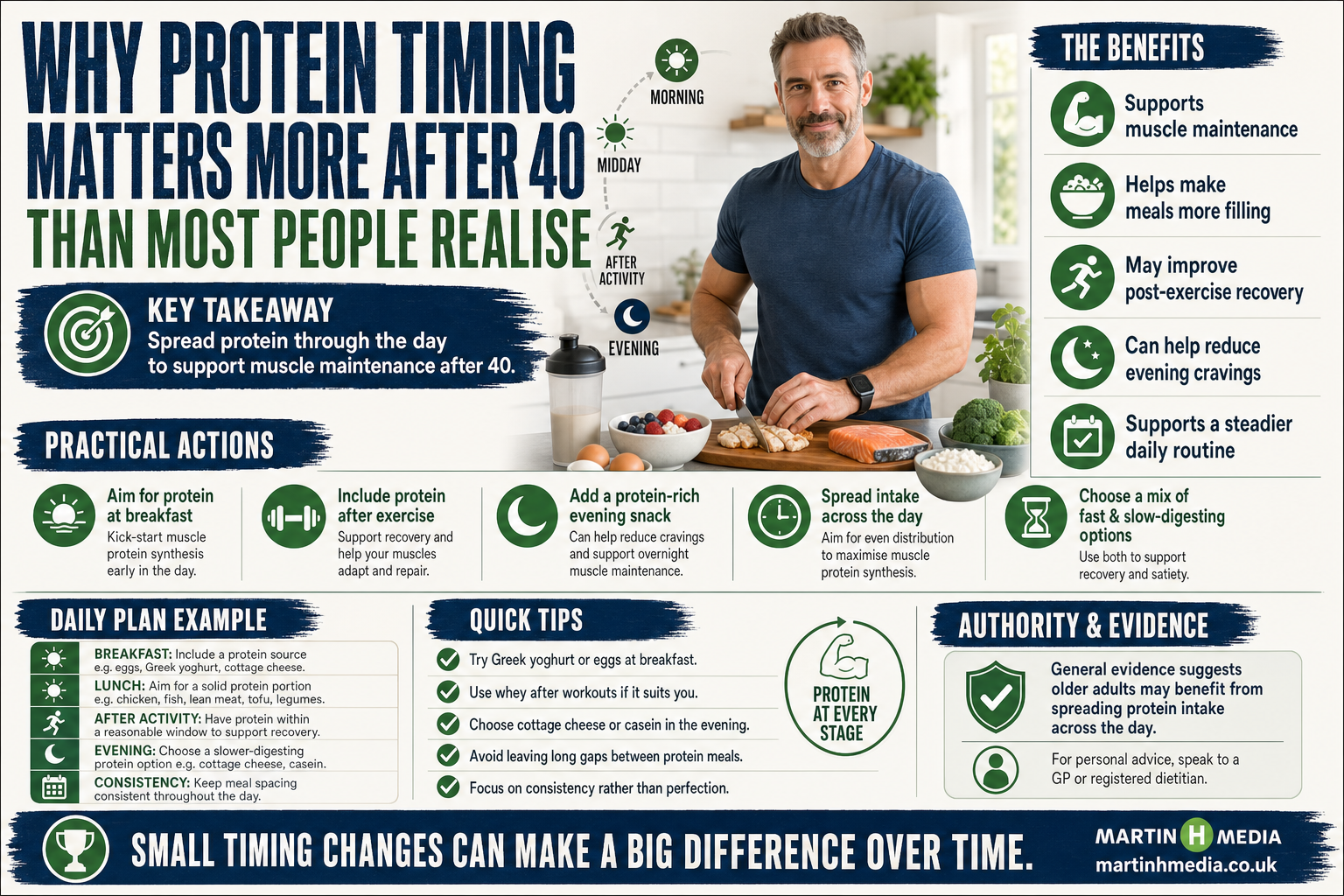
The Protein Timing Window Most 40+ People Get Dangerously Wrong
Your morning protein shake sits untouched until noon. You finally drink it between meetings. Your muscles barely respond. Why Protein Timing Matters More After 40 Than Most People Realise comes down to one fact: your body lost its ability to be patient with nutrients.
Your Muscles Stop Being Forgiving After 40
Muscle protein synthesis slows dramatically once you hit your fifth decade. Your younger body grabbed amino acids whenever they arrived. It built muscle efficiently regardless of timing.
That system breaks down with age.
Research shows people over 40 need 40 percent more protein per meal to trigger the same muscle-building response as someone in their twenties. Your muscles develop what scientists call anabolic resistance. They ignore smaller protein doses completely.
Eating 15 grams at breakfast does almost nothing for muscle preservation. Your body burns through it for basic functions. None goes toward maintaining lean tissue. You need at least 30 grams in one sitting to flip the muscle-building switch.
This threshold doesn’t exist for younger people. They build muscle from scattered protein intake throughout the day. You can’t afford that luxury anymore. Every meal either contributes to muscle maintenance or it doesn’t.
Most people spread their protein too thin across meals. They eat 10 grams at breakfast, 15 at lunch, then 45 at dinner. Only one meal actually did anything useful. The other two were wasted opportunities.
Why Protein Timing Matters More After 40 in the Morning Hours
Your body spent the entire night breaking down muscle tissue. It needed amino acids for overnight repairs and cellular maintenance. Those had to come from somewhere. Your muscles paid the price.
You wake up in a catabolic state. Your muscle breakdown rate exceeds your muscle building rate. This gap widens considerably after age 40.
Waiting three hours to eat protein extends this muscle loss unnecessarily. Every hour delays the recovery process. Your body keeps mining your muscles for essential amino acids.
People who eat 30 grams of protein within an hour of waking preserve significantly more muscle mass over time. They stop the breakdown process before too much damage accumulates. Their metabolism stays higher throughout the day.
Morning protein also controls appetite better than protein consumed later. It reduces ghrelin levels for up to six hours. You make better food choices at lunch automatically. The satiety effect compounds throughout the day.
Greek yogurt with two scoops of protein powder hits 30 grams easily. Three eggs with cottage cheese gets you there. The specific food matters less than meeting the threshold before 9 AM.
Skip breakfast protein and you start every day from a deficit. Your muscles never fully recover from the previous night’s breakdown. This daily damage adds up to significant muscle loss annually.
The Post-Exercise Window Actually Gets Shorter With Age
The famous anabolic window doesn’t stay open as long after 40. Younger people have up to three hours post-workout to consume protein. Their muscles remain receptive to amino acids during this extended period.
Your window shrinks to about 90 minutes.
Your muscles become pickier about when they’ll accept nutrients for repair. Miss that window and the workout provided less benefit than it should have. You stressed your muscles without giving them resources to adapt.
Protein consumed two hours after training still helps. It just helps far less than protein consumed within the first hour. The difference becomes pronounced when you’re trying to maintain muscle against age-related loss.
This matters even for simple activities like weight loss without diet or exercise. Walking for 30 minutes depletes glycogen and creates muscle micro-tears. Those need repair. Timing your protein intake afterward maximizes the metabolic benefit.
A protein shake immediately after exercise prevents muscle cannibalization. Your body won’t break down existing muscle tissue for recovery amino acids. It uses what you just provided instead.
People who delay post-exercise protein often feel hungrier later. Their bodies keep searching for the nutrients they needed earlier. This creates evening cravings that sabotage other health goals.
Why Protein Timing Matters More After 40 During Sleep Hours
Most muscle repair happens while you sleep. Your growth hormone peaks during deep sleep phases. This hormone orchestrates muscle rebuilding and fat burning simultaneously.
Without available amino acids, growth hormone can’t complete its job. It signals for muscle repair but finds insufficient raw materials. Your body compromises by building less muscle than it could have.
Casein protein before bed solves this problem effectively. It digests slowly over seven to eight hours. Your bloodstream maintains steady amino acid levels throughout the night. Your muscles never run out of building blocks.
Research on people over 40 shows nighttime protein intake preserves muscle mass better than identical amounts consumed earlier. The timing aligns perfectly with natural repair cycles. You work with your biology instead of against it.
One scoop of casein powder in Greek yogurt provides sustained protein release. Cottage cheese works similarly. Either option keeps your muscles fed during the long overnight fast.
People who skip evening protein lose more muscle during sleep. They wake up in a deeper catabolic hole. This makes the morning protein timing even more critical to stop the breakdown.
The combination of morning protein and evening casein creates a protective shield around muscle tissue. You never enter extended periods without amino acid availability.
Spacing Protein Intake Changes Everything After 40
Your body can only process about 30 to 40 grams of protein per meal for muscle synthesis. Everything beyond that gets converted to glucose or burned for energy. It doesn’t contribute to muscle maintenance.
Eating 80 grams at dinner wastes half of it. Your muscles took what they needed. The rest went elsewhere. You can’t store protein for later use like you can store fat.
Spreading that same 80 grams across three meals would have built muscle three separate times. Each meal would have triggered the muscle-building response independently. The total effect multiplies significantly.
Aim for four protein doses daily if muscle preservation matters. Breakfast, lunch, post-activity, and before bed. Each dose should hit at least 30 grams. This pattern keeps muscle protein synthesis elevated throughout the day.
Three-hour gaps between protein doses work well for most schedules. This spacing gives each dose time to work without overlap. Your muscles get repeated building signals instead of one large inefficient signal.
People following this pattern while making other simple daily habit changes see faster body composition improvements. The protein timing enhances other metabolic benefits naturally.
Inconsistent spacing creates problems. Eating protein at 7 AM and then not again until 3 PM leaves an eight-hour gap. Your muscles entered breakdown mode during that window. One meal can’t compensate for extended neglect.
Why Protein Timing Matters More After 40 Than Protein Quantity
Most people focus on total daily protein intake. They aim for 100 grams daily and consider the job done. The distribution matters more than the total after 40.
Eating 100 grams across two meals provides less muscle benefit than 80 grams across four meals. The repeated stimulation beats higher total volume every time.
Your muscles respond to individual protein doses. They don’t calculate daily totals. Each meal either triggers muscle building or it doesn’t. The trigger matters more than the fuel amount.
Someone eating 25 grams four times daily builds more muscle than someone eating 50 grams twice daily. Same total. Different outcome. The difference becomes dramatic over months and years.
This explains why some people eat plenty of protein but still lose muscle with age. Their timing sabotaged their quantity. They fed their muscles inefficiently.
Tracking meal timing requires more attention than counting total grams. You need to plan when protein arrives. Random eating patterns produce random results. Intentional timing produces consistent muscle preservation.
Apps that track meal timing help initially. After two weeks, the pattern becomes automatic. You feel hungry for protein at the right intervals. Your body adapts to the predictable feeding schedule.
Protein Type Matters More When Timing Matters
Fast-digesting proteins work better for morning and post-exercise timing. Whey protein hits your bloodstream within 30 minutes. Your muscles get immediate amino acid access when they need it most.
Slow-digesting proteins serve evening timing better. Casein takes hours to break down completely. It feeds your muscles during the long overnight period when eating isn’t possible.
Matching protein speed to timing needs maximizes each dose’s effectiveness. The right protein at the wrong time provides suboptimal results. Fast protein before bed digests too quickly. You run out of amino acids by 2 AM.
Whole food proteins digest at medium speeds. Chicken, fish, and beef take two to four hours to process completely. They work well for midday meals when you need sustained amino acid release.
Combining protein types at different meals creates a constant amino acid supply throughout the day. Whey at breakfast. Chicken at lunch. Beef at dinner. Casein before bed. Your muscles never experience shortage.
People who apply these strategies alongside approaches like adjusting meal frequency see compound benefits. The timing principles stack with other metabolic improvements naturally.
Plant proteins digest differently than animal proteins. They often lack certain amino acids individually. Combining plant sources at each meal ensures complete amino acid profiles. Timing still matters just as much.
Why Protein Timing Matters More After 40 for Metabolic Rate
Muscle tissue burns calories constantly. Fat tissue barely burns any. Every pound of muscle you preserve keeps your metabolism higher. Protein timing directly affects how much muscle you keep.
Poor timing leads to gradual muscle loss. One pound of muscle lost drops your metabolic rate by about 50 calories daily. That’s 18,250 calories yearly. You gain five pounds of fat from muscle loss alone.
This metabolic slide accelerates after 40. You lose muscle faster while your body becomes more efficient at storing fat. The combination creates rapid body composition changes unless you intervene.
Proper protein timing reverses this trend. You maintain more muscle mass. Your resting metabolic rate stays elevated. You burn more calories doing absolutely nothing.
People who time their protein properly often eat more total calories without gaining weight. Their higher muscle mass burns the extra food for maintenance. They escape the reduced-calorie trap that slows metabolism further.
The thermic effect of protein also matters. Your body burns 25 percent of protein’s calories just digesting it. Spacing protein across four meals creates four separate metabolic boosts daily. The accumulated effect adds up significantly.
Eating protein every three hours keeps this thermic effect active throughout the day. Your metabolism never fully slows down between meals. You maintain a higher baseline calorie burn continuously.
Start timing your protein intake around your body’s natural rhythms instead of random convenience.
Frequently Asked Questions
How much protein should I eat at each meal after 40?
Aim for at least 30 grams per meal to trigger muscle protein synthesis effectively. This threshold increases with age due to anabolic resistance. Anything less provides minimal muscle-building benefit. Spread your protein across four meals daily rather than loading one or two meals. Each dose should contain complete amino acid profiles for maximum effectiveness.
Does protein timing matter if I don’t exercise regularly?
Yes. Your muscles break down overnight and during daily activities regardless of formal exercise. Proper timing stops this breakdown and preserves existing muscle mass. Muscle tissue maintains your metabolic rate even without training. Losing muscle through poor timing slows your metabolism and promotes fat storage. Timing matters for everyone over 40.
What’s the best protein to eat immediately after waking up?
Fast-digesting proteins like whey work best for morning intake. They stop overnight muscle breakdown quickly by flooding your bloodstream with amino acids. Greek yogurt with protein powder provides both fast and medium-digesting proteins. Egg whites digest rapidly too. Choose options that get you to 30 grams within an hour of waking.
Can I drink a protein shake instead of eating whole food protein?
Shakes work perfectly for meeting timing requirements when whole foods aren’t convenient. They digest quickly and hit amino acid targets easily. Use them strategically for morning and post-activity timing when speed matters. Whole foods provide additional nutrients and satiety benefits for other meals. Mix both approaches throughout the day for best results.
How long before bed should I eat my last protein serving?
Eat slow-digesting protein like casein within 30 minutes of bedtime. This timing ensures amino acids remain available throughout the night when muscle repair peaks. Earlier timing means you run out of amino acids before morning. Later timing may disrupt sleep initially until your body adapts. Casein powder or cottage cheese both provide sustained overnight protein release.