

The Protein Paradox Fasting Experts Won’t Explain
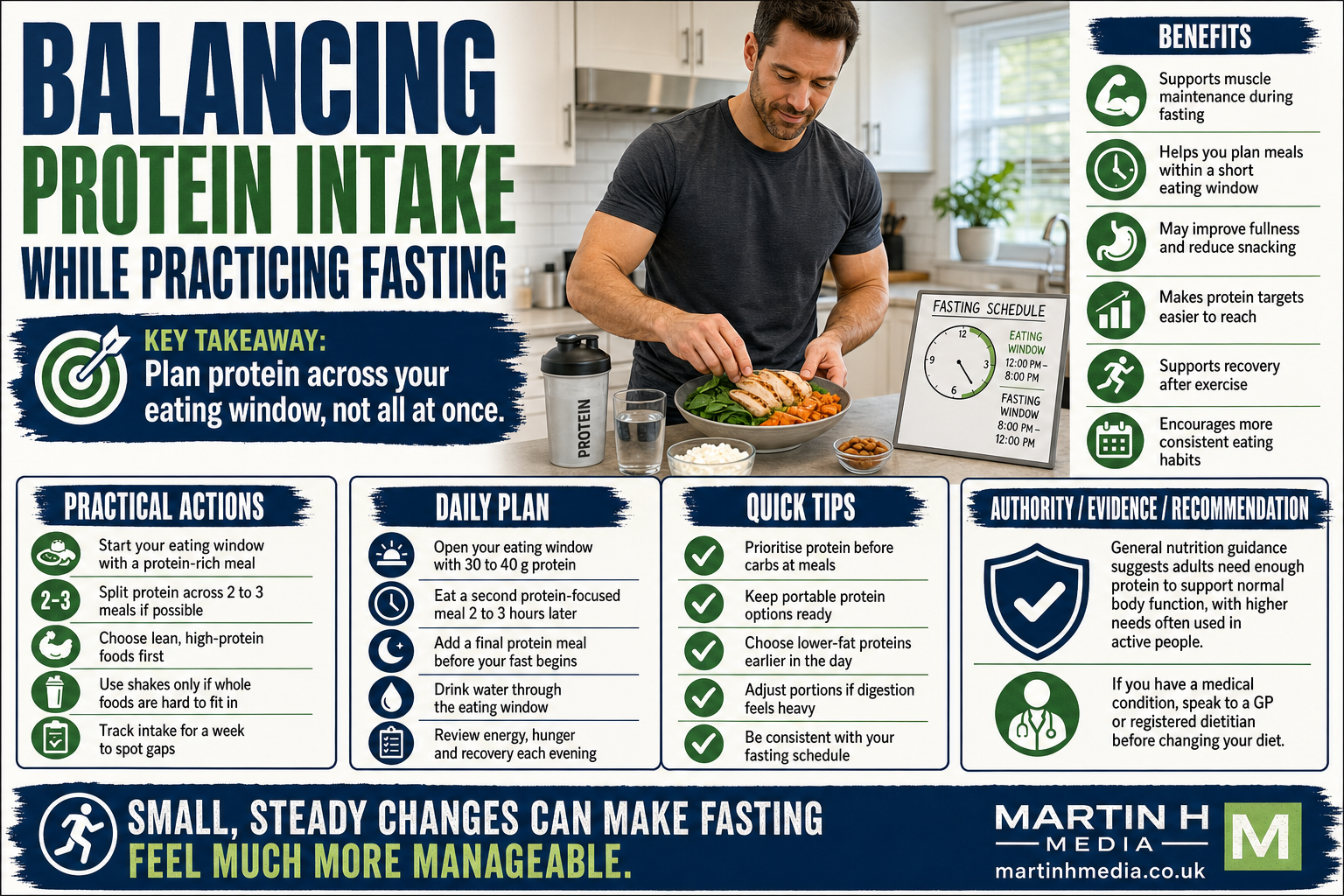
Balancing Protein Intake While Practicing Fasting feels impossible when your eating window closes at 6 PM. You need protein to maintain muscle. Fasting gives you metabolic benefits. The real skill is timing your intake to satisfy both goals.
Understanding How Balancing Protein Intake While Practicing Fasting Actually Works
Your body doesn’t store protein like it stores fat. It uses what you give it immediately. Leftover amino acids get converted or excreted. This creates a unique challenge during fasting periods.
Most people eat during a four to eight hour window. You must fit your entire daily protein requirement into that timeframe. A 150 pound person needs roughly 100 grams minimum. That’s 25 grams per hour in a four hour window.
Your body can only process about 30 to 40 grams per meal effectively. Eating 100 grams in one sitting wastes most of it. You need multiple protein doses within your eating window. Three meals work better than two.
The first meal after fasting matters most. Your muscles are primed to absorb nutrients. They’ve been waiting hours for amino acids. This meal should contain your highest protein portion.
Space subsequent meals two to three hours apart. This gives your digestive system time to process each dose. Your muscles get a steady supply of building blocks. Satiety hormones stay elevated between meals.
Choosing The Right Protein Sources For Compressed Eating Windows
Dense protein sources save stomach space during fasting schedules. You have limited time and capacity. Lean meats deliver more protein per bite than other options.
Chicken breast provides 31 grams per four ounce serving. Greek yogurt offers 20 grams per cup. Eggs give you six grams each. These foods pack protein without filling you up excessively.
Avoid protein sources with high fat content early in your window. Fatty meats slow digestion considerably. Your stomach stays full longer than necessary. This makes fitting in additional protein meals difficult.
Save fattier proteins for your final meal. Salmon or ground beef work well at this point. The fat helps you feel satisfied through your fasting period. You won’t wake up hungry at midnight.
Plant proteins require more volume to hit the same targets. Beans and lentils contain carbohydrates alongside protein. They fill your stomach faster. Mix plant and animal sources if you prefer. Just account for the extra bulk.
Balancing Protein Intake Requires Strategic Meal Timing
Your eating window placement changes everything about protein effectiveness. Morning windows suit people who train early. Evening windows work better for social eaters.
Breaking your fast with protein stabilizes blood sugar immediately. You avoid the energy crash that follows carbohydrate heavy meals. Your brain gets steady fuel for hours. Focus and concentration improve noticeably.
Training during fasted states demands post workout protein within your window. Muscle protein synthesis peaks in the hour after exercise. Missing this window reduces your training benefits significantly. Plan your first meal around your workout schedule.
Some people split their window around their busiest hours. They eat from noon to two PM. Then again from six to eight PM. This creates two mini feeding periods. Each one includes a protein focused meal.
The specific timing matters less than consistency. Your body adapts to regular patterns. Eating at random times within your window disrupts this adaptation. Pick your schedule and stick with it daily.
How Fasting Changes Your Protein Requirements Over Time
Extended fasting increases protein needs temporarily. Your body breaks down more muscle during longer fasts. You must compensate with higher intake during eating periods.
People practicing 16:8 fasting maintain normal protein requirements. Their muscles don’t experience significant breakdown. Standard recommendations of 0.8 to 1.2 grams per pound suffice. Those over 40 may need even higher amounts to preserve muscle mass.
Alternate day fasting demands different calculations entirely. On fasting days you consume minimal protein. Eating days must double your usual intake. This prevents net muscle loss across the week.
Your activity level multiplies these requirements further. Sedentary fasters need less protein than active ones. Someone lifting weights four times weekly needs 1.6 grams per pound minimum. Runners need slightly less but still more than baseline.
Age accelerates protein requirements during fasting schedules. Muscle protein synthesis becomes less efficient after forty. You need more raw material to achieve the same results. This compounds the challenge of compressed eating windows.
Balancing Protein Intake Without Digestive Distress
Cramming 100 grams of protein into four hours often causes stomach problems. Bloating, gas, and discomfort follow large protein meals. Your digestive system needs help processing this load.
Digestive enzymes taken with meals improve protein breakdown. They help your stomach handle larger protein portions. Protease enzymes specifically target protein molecules. Take them right before eating.
Hydration status affects protein digestion dramatically. Water helps your kidneys process nitrogen waste from protein. Drink at least eight ounces with each protein meal. Continue sipping between meals during your window.
Chewing thoroughly matters more than most people realize. Your stomach can’t chew for you. Large chunks of meat sit undigested for hours. Take smaller bites. Chew each one twenty times minimum.
Some people tolerate liquid protein better than solid food. Protein shakes digest faster than chicken breast. They don’t create the same fullness. Use them strategically to hit your targets without discomfort.
Tracking Your Success With Balancing Protein Intake While Practicing Fasting
You can’t manage what you don’t measure. Most people dramatically underestimate their protein intake. They think they’re eating enough. Food logs prove otherwise.
Track your intake for two weeks minimum. Use an app or simple notebook. Record every protein source and amount. You’ll spot patterns and gaps immediately.
Your body gives clear feedback about adequate protein. Hunger between fasting windows suggests insufficient intake. Strong cravings indicate missing nutrients. Adequate protein keeps these symptoms minimal.
Muscle retention shows up in your training performance. Strength should maintain during proper fasting protocols. Muscle preservation during calorie restriction requires consistent high protein intake. Declining performance signals inadequate nutrition.
Body composition changes reveal the truth about your protein balance. Losing weight while maintaining muscle means you’re doing it right. Losing strength alongside weight indicates protein deficiency. Adjust your intake upward immediately.
Recovery speed between workouts provides another clear signal. Sore muscles that stay sore for days need more protein. Quick recovery within 48 hours suggests adequate intake. Your body repairs itself properly.
Common Mistakes That Sabotage Balancing Protein Intake
Waiting until your final meal to eat protein ruins everything. You can’t absorb 100 grams at once. Most of it goes to waste. Your muscles stay undernourished despite adequate total intake.
Prioritizing carbohydrates over protein during limited windows backfires consistently. Carbs fill you up without providing building blocks. You run out of stomach space before hitting protein targets. Always eat protein first at every meal.
Choosing low quality protein sources to save money costs you results. Your body can’t use incomplete proteins efficiently. The quality of protein matters as much as quantity for maintaining muscle.
Skipping protein on rest days seems logical but isn’t. Your muscles repair themselves on off days. They need amino acids constantly. Protein requirements don’t decrease just because you didn’t train.
Breaking your fast with coffee and delaying protein intake wastes precious time. Your eating window shrinks with every delayed hour. Start eating protein immediately when your window opens. Coffee can wait thirty minutes.
Relying on protein bars as primary sources rarely works well. Most bars contain more carbs than protein. They’re candy bars with marketing. Real food should provide 80 percent of your protein.
Adjusting Your Approach Based On Results And Lifestyle
Your perfect protocol emerges through experimentation. What works for others might not suit your schedule. Test different eating windows for two weeks each. Track how you feel and perform.
Some people thrive on longer fasts with bigger protein meals. Others need shorter fasts with smaller frequent portions. Neither approach is inherently superior. Your adherence determines success.
Social situations force flexibility into rigid fasting schedules. Plan for dinner invitations and family meals. Shift your window occasionally without guilt. One flexible day won’t erase weeks of consistency.
Travel disrupts even the best fasting and protein habits. Prepare protein rich portable foods ahead. Beef jerky, protein powder, and canned fish travel well. Don’t let a business trip derail your progress.
Appetite changes signal when adjustments become necessary. Increased hunger might mean inadequate protein or calories overall. Decreased appetite could indicate you’re finally adapted. Listen to these signals carefully.
Your goals should dictate your protein targets and fasting schedule. Fat loss requires aggressive protein intake during fasting. Muscle gain might demand shorter fasting windows. Maintenance allows more flexibility in both variables.
Track your eating window and protein intake for seven days starting tomorrow.
Frequently Asked Questions
Can you build muscle while practicing intermittent fasting?
Yes, you can build muscle during intermittent fasting with adequate protein intake. You need 1.6 to 2.2 grams per kilogram of body weight daily. Distribute this protein across multiple meals within your eating window. Time your training session before your first meal for better results. Consistency with both fasting schedule and protein targets matters most.
How much protein should you eat in your first meal after fasting?
Aim for 30 to 40 grams of protein in your first meal. This amount maximizes muscle protein synthesis without overwhelming digestion. Your body absorbs this quantity most efficiently after fasting. Include a complete protein source like eggs, chicken, or fish. Save remaining daily protein for subsequent meals two to three hours apart.
Does drinking protein shakes break your fast?
Yes, protein shakes break your fast immediately. Any caloric intake stops the fasted state. Protein triggers insulin release and activates digestion. Save protein shakes for within your eating window. Use them to supplement whole food protein sources. They digest quickly and help you meet daily targets.
What happens if you don’t eat enough protein while fasting?
Insufficient protein during fasting causes accelerated muscle loss. Your body breaks down muscle tissue for amino acids. Metabolism slows as muscle mass decreases. Hunger and cravings intensify between eating windows. Recovery from exercise takes longer. Strength and performance decline over weeks. Always prioritize protein targets during eating periods.
Is it better to fast in the morning or evening for protein timing?
Evening fasting works better for most people’s protein needs. You can eat multiple protein rich meals throughout the day. This spreads amino acid delivery to muscles. Morning fasting suits early trainers who need post workout protein. Choose the window that lets you consistently hit protein targets. Personal adherence beats theoretical perfection.