
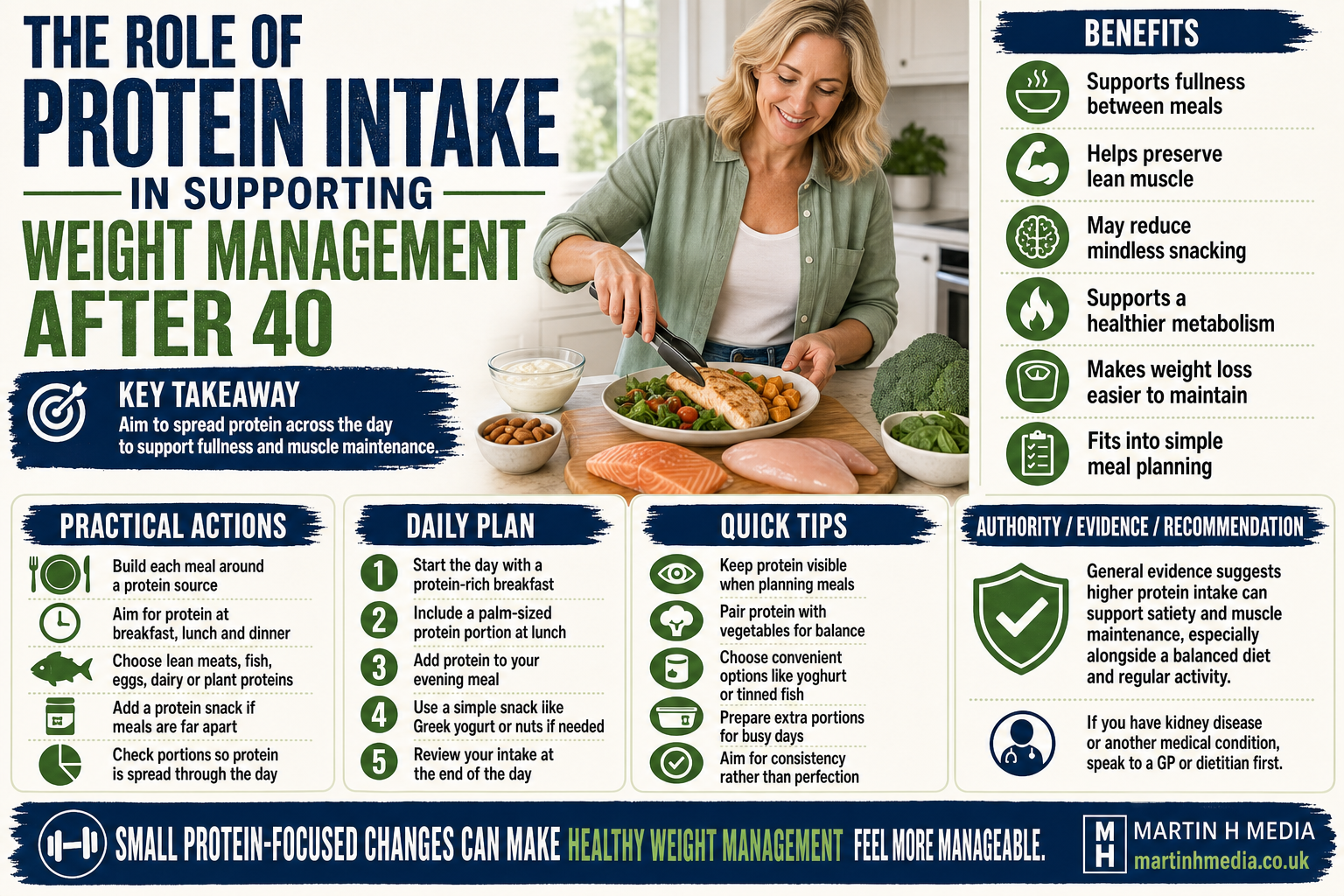
Why Your Protein Needs Actually Increase After 40
Your bathroom scale hasn’t moved in three weeks. You’re eating less than you did at thirty. The weight clings to your midsection anyway. The Role of Protein Intake in Supporting Weight Management After 40 starts with understanding your metabolism changed without warning.
The Role of Protein Intake in Supporting Weight Management After 40 Starts With Your Changing Metabolism
Your body burns fewer calories at rest now than it did a decade ago. Muscle mass declines by three to eight percent each decade after forty. Each pound of lost muscle reduces your daily calorie burn by about fifty calories. That adds up fast over months and years.
Fat gradually replaces muscle tissue even if your weight stays the same. You might wear the same jeans but your body composition shifted. More fat and less muscle means a slower metabolism overall. This makes weight management progressively harder each year.
Protein directly combats this metabolic decline. It preserves existing muscle tissue during calorie restriction. Your body breaks down less muscle when protein intake stays high. More preserved muscle means your metabolism stays higher during weight loss.
Most people eat the same protein portions they ate at twenty. That’s nowhere near enough now. Your body needs significantly more protein per meal to trigger muscle maintenance. Fifteen grams at breakfast won’t cut it anymore.
Protein Creates Satiety That Lasts Hours Beyond Other Nutrients
Hunger derails more weight loss attempts than any other factor. You start the day with good intentions. By three PM you’re raiding the snack drawer. Protein changes this pattern completely.
It suppresses ghrelin production more effectively than carbohydrates or fats. Ghrelin is the hormone that makes you feel hungry. Lower ghrelin means fewer cravings between meals. You stop thinking about food constantly.
A high protein breakfast keeps you satisfied until lunch without effort. You don’t need willpower to avoid mid morning snacks. Your appetite simply stays quiet for hours. This effect works better after forty than any other intervention.
Protein also increases peptide YY and GLP-1 secretion. Both hormones signal fullness to your brain. They work together to reduce total daily calorie intake. You naturally eat less without consciously restricting portions.
Studies show people who increase protein to thirty percent of calories eat up to 441 fewer calories daily. They don’t count or measure anything. The appetite reduction happens automatically. Their bodies regulate intake better with adequate protein.
The Role of Protein Intake in Supporting Weight Management After 40 Includes Preserving Muscle During Calorie Deficits
Weight loss always includes some muscle loss alongside fat loss. Your body breaks down both tissues when calories drop. After forty, this muscle loss accelerates dramatically without intervention.
High protein intake shifts the ratio in your favor. You lose more fat and less muscle when protein stays adequate. Studies show people eating 1.6 grams per kilogram of body weight preserve significantly more muscle. They end up leaner at the same final weight.
This matters more than the number on your scale. Two people can weigh 160 pounds with completely different body compositions. One person has 25 percent body fat. The other has 35 percent body fat. They look entirely different despite identical weight.
The person who preserved muscle looks tighter and more defined. Their clothes fit better. Their metabolism stays higher. They maintain their weight loss more easily long term. Understanding when to eat protein throughout the day makes this preservation even more effective.
You need at least 30 grams per meal to trigger muscle protein synthesis. Three meals with this amount protects muscle far better than spreading smaller amounts across five or six meals. Your muscles ignore doses below the threshold completely.
Protein Has a Higher Thermic Effect Than Other Macronutrients
Your body burns calories just digesting and processing food. This is called the thermic effect of food. Not all nutrients require equal energy to process.
Protein demands about 25 to 30 percent of its calories for digestion and absorption. Your body burns 30 calories processing 100 calories of protein. Only 70 calories remain available for energy or storage.
Carbohydrates require only six to eight percent of their calories for processing. Fats need just two to three percent. The difference becomes significant over weeks and months. Higher protein intake increases your total daily calorie burn substantially.
This metabolic boost helps offset the natural decline in resting metabolic rate. You’re burning fewer calories at rest than you used to. The thermic effect of protein compensates for some of that loss. Your metabolism stays more active throughout the day.
People who increase protein intake burn an extra 80 to 100 calories daily without exercise. That translates to about eight to ten pounds annually. The effect compounds when combined with the appetite suppression benefits.
The Role of Protein Intake in Supporting Weight Management After 40 Means Timing Your Meals Strategically
When you eat protein matters as much as how much you eat. Your body responds differently to protein at various times. Morning intake provides benefits that evening protein can’t replicate.
You wake up after eight hours without food. Your body spent the night breaking down muscle for amino acids. You’re in a catabolic state where breakdown exceeds building. Eating protein within an hour of waking stops this process.
Morning protein also controls appetite more effectively than protein consumed later. It sets your metabolism for the entire day. People who eat 30 grams at breakfast consume fewer total calories without trying. The satiety signal carries through to lunch and beyond.
Post exercise protein becomes critical after forty. Your muscles accept nutrients for repair during a shorter window now. You have about 90 minutes instead of three hours. Missing this window means your workout provided less benefit than it should have.
Spacing protein evenly across three meals works better than loading it all at dinner. Each meal should contain at least 30 grams. This pattern keeps muscle protein synthesis elevated throughout the day. Your muscles stay in building mode instead of breakdown mode.
Protein Quality Becomes More Important With Age
Not all protein sources trigger the same muscle building response. Your body absorbs and uses different proteins with varying efficiency. After forty, this difference matters more than ever.
Complete proteins contain all nine essential amino acids in adequate amounts. Animal sources like meat, fish, eggs, and dairy qualify as complete. They provide everything your muscles need for repair and maintenance. Your body uses them more efficiently than incomplete sources.
Leucine content particularly matters for triggering muscle protein synthesis. This amino acid acts as the ignition switch. You need about three grams per meal to activate the building process. Whey protein, chicken, and beef are leucine rich options.
Plant proteins often lack sufficient leucine or other essential amino acids. You need larger portions to achieve the same effect. Combining different plant sources helps but requires careful planning. Most people over forty find animal proteins simpler for meeting their needs.
Protein powder offers convenience for hitting targets consistently. Two scoops of quality whey provides 40 to 50 grams. You can add it to morning smoothies or post workout shakes. Proper timing of these protein doses throughout your day maximizes their effectiveness for both muscle maintenance and weight control.
The Role of Protein Intake in Supporting Weight Management After 40 Requires Adjusting Your Plate Composition
Most people fill half their plate with carbohydrates. Pasta, rice, and bread dominate the space. Protein sits in a small corner as an afterthought. This ratio worked fine at thirty.
Now you need to flip those proportions. Protein should occupy at least half your plate at every meal. Vegetables fill another quarter. Carbohydrates get the remaining space. This simple visual change makes hitting protein targets much easier.
A standard chicken breast provides about 30 grams of protein. That’s one meal handled. Two eggs with cottage cheese gets you there at breakfast. A serving of Greek yogurt with protein powder works too. The specific food matters less than the total per meal.
Planning your protein first changes how you approach every meal. You start with the protein source. Then you add vegetables and other elements. This prevents the common mistake of filling up on carbohydrates before protein needs are met.
Eating out becomes simpler with this approach. Order double protein on salads. Choose grilled chicken or fish as your main. Skip the bread basket. Request extra vegetables instead of extra rice. These small adjustments keep you on track anywhere.
Higher Protein Intake Helps Prevent Weight Regain After Loss
Losing weight is hard. Keeping it off proves even harder. About 80 percent of people regain lost weight within two years. Protein intake directly influences which group you join.
Your metabolism drops during weight loss. This is normal and expected. Your body adapts to lower calorie intake by burning fewer calories. High protein intake minimizes this metabolic adaptation. Your metabolism stays closer to baseline levels.
People who maintain high protein intake after reaching their goal weight regain significantly less. Their preserved muscle mass keeps their metabolism elevated. They burn more calories at rest than people who lost muscle during their diet.
Protein’s appetite suppression effect continues during maintenance. You still feel fuller on fewer calories. The constant hunger that drives most people back to old habits never arrives. You maintain your new weight without feeling deprived constantly.
Aim for at least 1.6 grams of protein per kilogram of your goal weight. This amount supports both loss and maintenance phases. Learning to space this protein properly across your meals ensures your body actually uses it instead of wasting it.
Start tracking your protein intake for one week to see where you actually stand.
Frequently Asked Questions
How much protein do I actually need daily after 40?
You need at least 1.6 grams per kilogram of body weight daily. A 160 pound person needs about 115 grams minimum. This amount supports muscle maintenance during weight management. Spread it across three meals with 30 grams minimum per meal.
Can I eat all my protein in one meal?
Your muscles can only use about 30 to 40 grams per meal for building and maintenance. Eating 100 grams at dinner wastes most of it. Your body burns excess protein for energy instead. Spacing protein across three meals works much better.
Does protein powder work as well as whole food sources?
Quality protein powder provides the same amino acids as whole foods. Your body uses it equally well for muscle maintenance. Whey protein digests faster which helps immediately after exercise. Whole foods provide additional nutrients powder lacks though.
Will high protein intake damage my kidneys?
Healthy kidneys handle high protein intake without problems. Research shows no kidney damage in people with normal kidney function. People with existing kidney disease should consult their doctor. For everyone else, higher protein is safe long term.
What’s the best protein source for weight management after 40?
Lean meats, fish, eggs, and Greek yogurt work extremely well. They provide complete proteins with all essential amino acids. Chicken breast, salmon, and cottage cheese are particularly effective. Choose options you actually enjoy eating consistently.