

Why You’re Tired Even After Coffee: The Hydration Hack
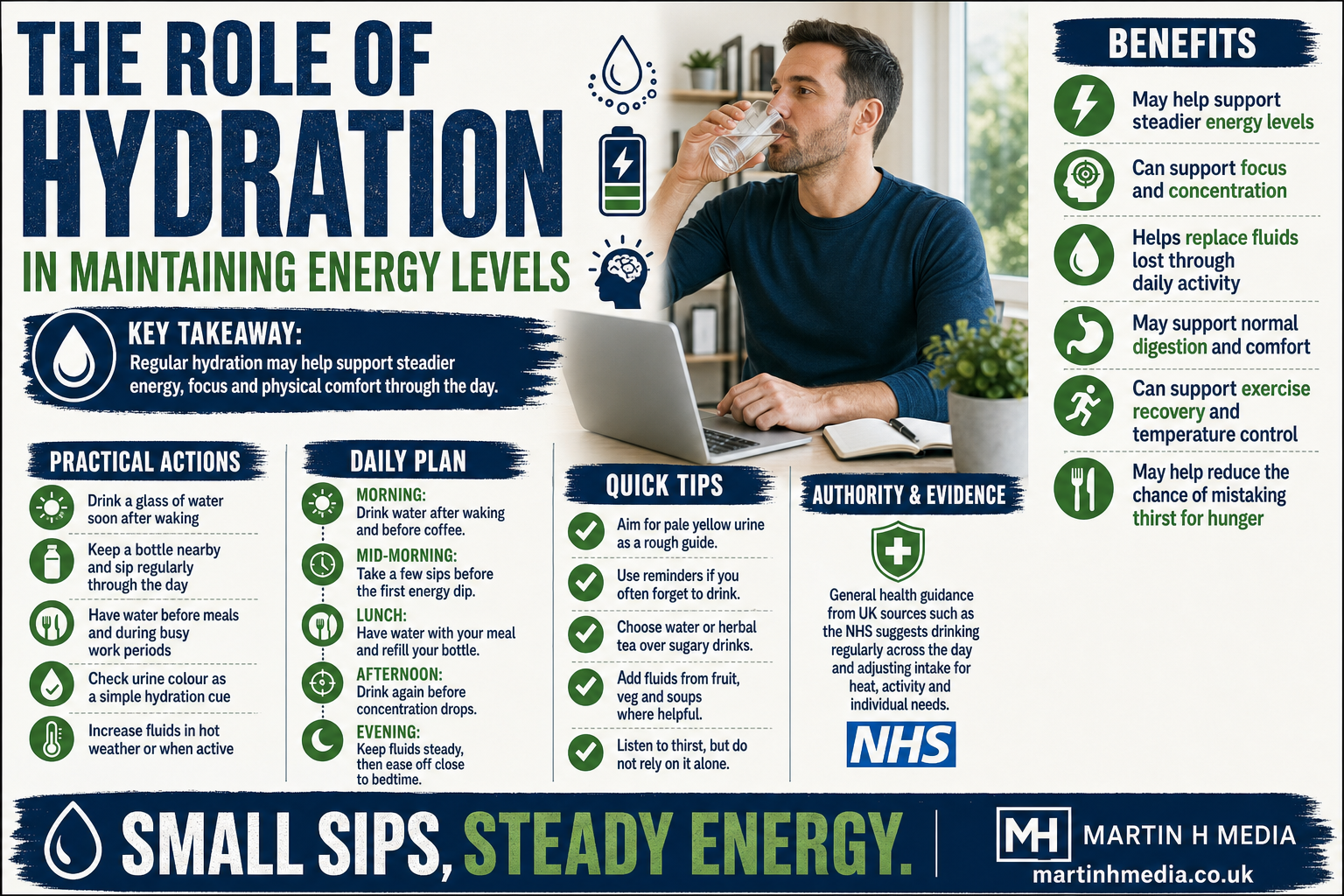
The Role of Hydration in Maintaining Energy Levels shows up in how you feel by mid-afternoon. That slump hits harder when you’ve skipped water all morning. Your brain and muscles need fluid to work properly. Drink water before you feel tired to avoid the crash.
How Water Powers Your Cells
Your cells run on chemical reactions. Every single one needs water to happen. Without enough fluid, these reactions slow down. Your body can’t make energy efficiently.
Mitochondria are the power centers inside your cells. They convert glucose and oxygen into usable energy. This process requires water as a medium for transport. Less water means less fuel reaches these cellular engines.
Blood volume drops when you’re dehydrated. Your heart pumps harder to move oxygen around. This takes more energy just to maintain basic functions. You feel exhausted doing normal tasks.
Think about a car engine without coolant. It overheats and stops working. Your body does the same thing. Water regulates temperature so cells can keep producing energy.
The Brain Fog Connection
Your brain is 75 percent water. Even mild dehydration shrinks brain tissue temporarily. This affects how well neurons fire and communicate.
Studies show just 2 percent fluid loss impairs concentration. You struggle to focus on simple tasks. Decision-making becomes harder. Mental fatigue sets in fast.
Brain cells need water to maintain electrical charge. This charge is how thoughts travel between neurons. Less fluid means slower signal transmission. Your thinking gets cloudy and slow.
One research team tested people after exercise without water. Their reaction times dropped by 14 percent. Memory tasks took longer to complete. Mood scores fell significantly.
The fix works faster than you’d think. Drinking 500ml of water improves attention within 20 minutes. Mental performance rebounds quickly with proper fluid intake.
Muscle Function Depends on Proper Hydration
Muscles are about 76 percent water. They contract and relax using electrolyte balance. Dehydration disrupts this balance immediately.
When you move, muscles generate heat. Water carries this heat away through sweat. Without enough fluid, muscles overheat internally. They fatigue much faster than normal.
Protein synthesis requires adequate hydration. Your body repairs and builds muscle tissue constantly. This process slows down when water levels drop. Recovery takes longer after any physical activity.
Athletes know this well. A 3 percent drop in hydration reduces strength by 10 percent. Endurance drops even more. Simple daily habits like drinking water prevent this decline.
Joint lubrication also depends on water. Cartilage is 80 percent fluid. Less water means more friction. Movement becomes painful and energy-draining.
Blood Sugar Regulation
Water helps your kidneys filter blood constantly. They remove waste products and regulate glucose levels. Dehydration makes this job much harder.
When you’re low on fluids, blood becomes more concentrated. Glucose levels can spike higher than normal. Your body releases stress hormones to cope. These hormones make you feel jittery and tired.
Insulin works less effectively in dehydrated conditions. Cells become more resistant to glucose uptake. Energy stays trapped in your bloodstream instead of fueling cells.
People often mistake thirst for hunger. They eat sugary snacks instead of drinking water. Blood sugar spikes then crashes. The cycle creates more fatigue.
Proper hydration stabilizes blood glucose throughout the day. Your energy stays more consistent. You avoid the roller coaster of peaks and crashes.
Sleep Quality Affects Daytime Energy Through Hydration
Being too dehydrated or overhydrated disrupts sleep. Your body needs balance for restful nights. Poor sleep directly impacts next-day energy levels.
Dry mouth and nasal passages wake you up repeatedly. You get less deep sleep. This is when your body repairs itself. Less repair means less energy tomorrow.
Dehydration increases body temperature at night. You toss and turn more. Sleep cycles get interrupted. Morning fatigue becomes your new normal.
Drinking too much before bed has the opposite problem. Bathroom trips break sleep continuity. You wake tired despite spending eight hours in bed.
The solution is timing. Drink most of your water during daytime hours. Taper off two hours before sleep. This supports both good rest and consistent energy.
Digestive Energy
Digestion takes significant energy. Your stomach and intestines need water to break down food. Without it, the process becomes sluggish and draining.
Saliva starts digestion in your mouth. It’s 98 percent water. Less saliva means harder work for your stomach. Your body diverts more energy to compensate.
Stomach acid needs proper dilution to work efficiently. Too concentrated, it causes discomfort. Your body slows digestion to protect itself. Food sits heavy and makes you tired.
The small intestine absorbs nutrients through water-based solutions. Dehydration slows nutrient absorption significantly. You get less energy from the same meal.
Constipation drains energy in surprising ways. Your colon extracts water from waste. When you’re dehydrated, it extracts too much. Waste becomes hard and difficult to pass. The discomfort and effort exhaust you.
Temperature Control
Your body maintains a narrow temperature range. This takes constant energy expenditure. Water makes this process much more efficient.
Sweating is your primary cooling mechanism. Each drop of sweat removes heat from your skin. No water means no sweat. Your core temperature rises.
When you overheat, your body enters emergency mode. It redirects blood flow to the skin. Less blood reaches your muscles and organs. Everything feels harder and more tiring.
Cold environments also challenge hydration. You breathe out moisture with every breath. Winter air is drier, increasing fluid loss. People drink less because they don’t feel thirsty.
Indoor heating strips moisture from the air. You dehydrate faster sitting at a desk than you realize. This explains afternoon energy crashes in office environments. Maintaining simple routines like regular water breaks makes a real difference.
Practical Hydration Timing Throughout Your Day
Most people drink reactively after feeling thirsty. By then, you’re already mildly dehydrated. Energy levels have already dropped.
Start with water immediately after waking. You’ve gone eight hours without fluid. Your body needs 250ml to rehydrate. This jumpstarts your metabolism.
Drink before meals, not during. Water 30 minutes before eating improves digestion. It prepares your stomach for incoming food. Energy extraction becomes more efficient.
Set specific times rather than relying on thirst. Mid-morning and mid-afternoon are critical windows. These are common energy dip periods. Proactive hydration prevents the slump.
Match water intake to activity level. Desk work needs about 30ml per kilogram bodyweight daily. Physical labor or exercise doubles this requirement. Hot weather adds another 500ml minimum.
Coffee and tea count partially. They provide fluid but also act as diuretics. For every cup, add an extra glass of water. This balances the fluid loss.
Signs You’re Losing Energy to Dehydration
Thirst appears late in dehydration. It’s not a reliable early warning. Other signs show up first.
Urine color tells the story. Pale yellow means you’re well hydrated. Dark yellow or amber signals a problem. Your kidneys are conserving water desperately.
Headaches often stem from mild dehydration. Your brain tissue shrinks slightly from fluid loss. It pulls away from the skull. Pain receptors activate.
Dry lips and skin appear within hours. Your body prioritizes vital organs over surface tissues. External dryness reflects internal depletion.
Dizziness when standing up suggests low blood volume. Your blood pressure drops too quickly. The brain gets less oxygen momentarily. This exhausts you over time.
Cravings for salt or sugar spike with dehydration. Your body seeks quick electrolyte replacement. Following these cravings without water makes things worse. Building better health practices means learning these signals.
Water Sources Beyond Plain Drinking
Plain water works best for most people. But you have other options.
Fruits contain significant water. Watermelon is 92 percent fluid. Oranges are 87 percent. Eating them hydrates you while providing nutrients.
Vegetables contribute too. Cucumbers, celery, and lettuce are mostly water. A large salad provides about 150ml of fluid.
Soups and broths count as hydration. They’re especially good in cold weather. Warm liquids encourage drinking when you’re not thirsty.
Herbal teas provide variety without caffeine. They’re as hydrating as plain water. Flavor makes people drink more throughout the day.
Sports drinks help only during intense exercise. The average person doesn’t need added sugar and electrolytes. Plain water works better for typical energy maintenance.
Avoid relying on high-sugar drinks. They cause blood sugar spikes. The crash that follows worsens fatigue. You end up more tired than before.
Track your water intake tomorrow and notice how your energy changes hour by hour.
Frequently Asked Questions
How much water do I actually need daily for good energy?
You need about 30ml per kilogram of body weight daily. A 70kg person needs roughly 2.1 liters. Activity level and climate increase this amount. Spread intake throughout the day rather than drinking it all at once.
Can I drink too much water and lose energy?
Yes, overhydration dilutes blood sodium levels. This condition is called hyponatremia. Symptoms include fatigue, nausea, and confusion. It’s rare but happens with extreme water intake. Listen to your body’s signals.
Does coffee dehydrate me and reduce my energy?
Coffee has a mild diuretic effect. But the water content mostly offsets this. Moderate coffee consumption doesn’t significantly dehydrate you. Problems arise when coffee replaces water entirely. Balance both throughout your day.
Why do I still feel tired after drinking water?
Rehydration takes 20 to 30 minutes to affect energy. Chronic dehydration may need several days to correct fully. Other factors like sleep, nutrition, and stress also impact energy. Water alone won’t fix everything.
Should I drink water even when I’m not thirsty?
Yes, thirst appears after you’re already mildly dehydrated. Schedule regular water intake instead of waiting for thirst. This prevents energy dips before they start. Set reminders if you forget to drink regularly.