
The Fasting Start Most Beginners Get Wrong
You skip breakfast and feel dizzy by noon. Intermittent fasting sounds simple until you actually try it. How to Safely Start Intermittent Fasting for Beginners means understanding your body’s signals first. The biggest mistake is jumping into long fasts without preparation.
Without Shocking Your System
Your body runs on a feeding schedule it’s followed for years. Changing that pattern overnight creates problems. You need a transition period to adjust.
Start by delaying breakfast by one hour. Do this for three days. Then push it another hour. Your metabolism adapts gradually this way.
Most people try a 16-hour fast on day one. They quit by day three. Their blood sugar crashes. They feel weak and angry.
The smart approach takes two weeks of gradual adjustment. You build tolerance slowly. Your hormones adapt. Your energy stays stable throughout the process.
Track how you feel each day. Write down energy levels and hunger intensity. These notes reveal patterns you can’t see otherwise.
Choosing Your First Fasting Window
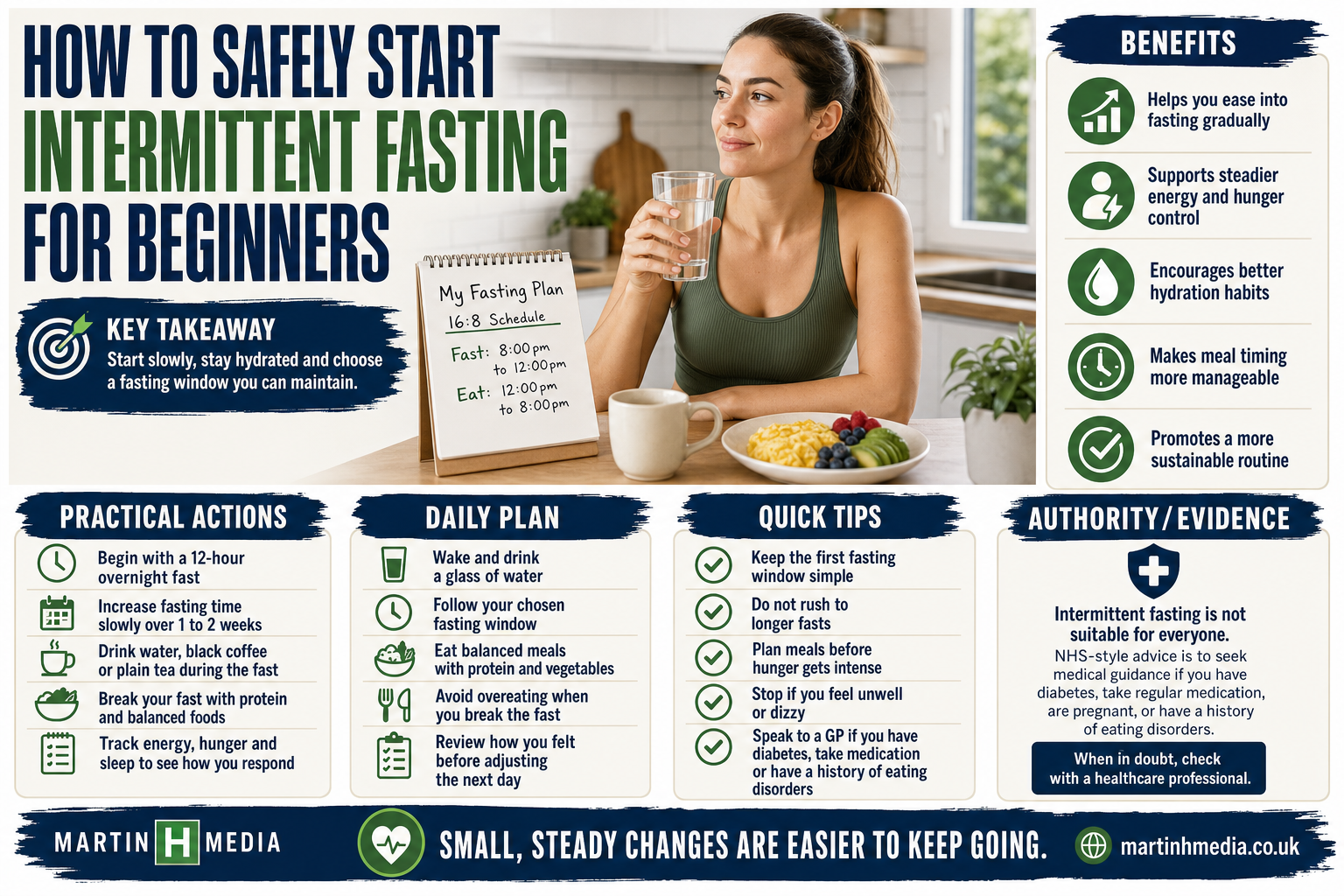
The 12-hour fast works best for complete beginners. You stop eating at 8 PM. You eat again at 8 AM. Half that time you’re sleeping anyway.
This window feels natural to most people. You’re not fighting intense hunger. You’re simply skipping late-night snacks and eating a normal breakfast.
After two weeks at 12 hours, move to 14 hours. Finish dinner by 7 PM. Eat breakfast at 9 AM. The extra two hours challenge you slightly.
The popular 16:8 method comes later. Don’t rush to it. Your body needs time to switch fuel sources efficiently.
Some people do better with evening fasts instead. They eat breakfast early and stop eating by 4 PM. Experiment to find what matches your lifestyle.
Your work schedule matters more than perfect timing. A nurse working night shifts needs different windows than a teacher. Customize the approach to your life.
Proper Hydration
Water becomes more important when you’re fasting. Dehydration mimics hunger. You think you need food when you actually need fluids.
Drink a full glass of water when you wake up. This is similar to fundamental weight loss habits you might already know. Have another glass mid-morning. Keep a bottle nearby throughout your fasting window.
Black coffee and plain tea don’t break your fast. They help suppress appetite naturally. Skip the cream and sugar though.
Herbal teas work well for variety. Peppermint reduces hunger pangs. Green tea provides gentle energy without jitters.
Sparkling water adds interest when plain water gets boring. The carbonation creates fullness in your stomach. This helps during the hardest hours.
Avoid diet sodas during fasting windows. Artificial sweeteners trigger insulin responses in some people. They can make hunger worse instead of better.
Breaking Your Fast the Right Way
Your first meal after fasting determines how you feel all day. Choose poorly and you’ll crash within an hour. Choose wisely and you’ll feel energized.
Protein should dominate your first meal. Eggs work perfectly. Greek yogurt is another solid choice. Protein stabilizes blood sugar quickly.
Avoid breaking your fast with carbs alone. Toast or cereal spikes your blood sugar fast. It crashes just as quickly. You’ll feel hungry again within two hours.
Keep your first meal moderate in size. Your stomach has shrunk slightly during the fast. A huge meal causes discomfort and bloating.
Eat slowly and chew thoroughly. Your digestive system needs time to ramp up production. Rushing through your meal causes indigestion.
Save heavy or greasy foods for later in your eating window. Fried foods sit poorly on an empty stomach. They can cause nausea in fasting beginners.
Maintaining Energy
The second week of fasting often feels harder than the first. Novelty has worn off. Your body is still adjusting. This is when most people quit.
Electrolytes prevent the weakness many beginners experience. Add a pinch of salt to your water. Sodium levels drop during extended fasting periods.
Light exercise works better than intense workouts initially. Walking maintains your fitness without depleting you. Save heavy lifting for your eating window.
Schedule important tasks during your eating window when possible. Your focus improves after you’ve eaten. Plan mentally demanding work for these hours.
Some fatigue is normal in week two. Your body is learning to burn fat for fuel. This metabolic switch takes time to complete.
Don’t push through severe dizziness or weakness. These signals mean you need food. Breaking your fast early occasionally is fine.
Combining Fasting With Smart Food Choices
Intermittent fasting isn’t a free pass to eat garbage. Your food quality matters more when eating windows are shorter. Every meal needs to count nutritionally.
Fill half your plate with vegetables during meals. They provide fiber and nutrients without many calories. You stay full longer between fasting periods.
Processed foods sabotage your fasting efforts. They’re engineered to make you crave more. Whole foods satisfy you naturally with less volume.
Many people pair fasting with simple dietary improvements for better results. You don’t need perfection. You need consistency with decent food choices.
Plan your meals in advance. Hunger makes you grab whatever’s convenient. Having healthy options ready prevents poor choices during your eating window.
Restaurant meals become trickier with fasting schedules. Check menus ahead of time. Know what you’ll order before hunger clouds your judgment.
Around Social Events
Your friends won’t understand why you’re skipping brunch. Social pressure derails more fasting attempts than actual hunger. You need strategies for these situations.
Adjust your fasting window on special occasions. Eat earlier or later to accommodate events. Flexibility keeps you social and consistent long-term.
You don’t owe anyone an explanation. Simply say you’re not hungry yet. Most people accept this without question.
Order tea or coffee at breakfast meetings. You’re still participating socially. You’re not drawing attention to your eating pattern.
Weekend schedules differ from weekdays for most people. Having different fasting windows for different days works fine. Consistency matters more than rigid timing.
Holiday meals pose the biggest challenge. Take a break from fasting on major holidays. Resume your schedule the next day without guilt.
Recognizing When to Stop or Adjust
Fasting isn’t right for everyone. Certain warning signs mean you should stop immediately. Ignoring these signals causes real harm.
Persistent headaches beyond the first week indicate a problem. Your body should adapt within 10 days. Ongoing pain means something is wrong.
Extreme irritability or mood swings aren’t normal. Mild hunger is expected. Rage and depression are not. Your mental health comes first.
Women sometimes experience menstrual cycle disruptions with fasting. Missed periods or unusual cramping require medical attention. Hormonal balance matters more than weight loss.
Binge eating during your eating window defeats the purpose. Fasting should feel sustainable. If you’re losing control around food, stop and reassess.
Anyone with a history of eating disorders should avoid intermittent fasting. The restrictive pattern can trigger unhealthy behaviors. Other approaches like gradual habit changes work better in these cases.
Diabetics and people on certain medications need doctor approval first. Fasting affects blood sugar and drug metabolism. Professional guidance prevents dangerous situations.
Measuring Progress Beyond the Scale
Weight fluctuates daily based on water retention and digestion. The number on your scale doesn’t tell the whole story. Other metrics matter more for beginners.
Energy levels throughout the day show adaptation. You should feel stable and focused after three weeks. Consistent energy means your metabolism has adjusted.
Hunger patterns change as you continue fasting. Intense cravings should decrease. You’ll notice genuine hunger versus boredom eating more clearly.
Sleep quality often improves with intermittent fasting. You fall asleep faster. You wake up less during the night. Better rest accelerates all health improvements.
Clothes fit differently before the scale moves significantly. Your body composition shifts. You lose inches while weight stays similar initially.
Take progress photos every two weeks. Visual changes appear before numbers shift. Photos reveal what mirrors and scales miss.
Building Long-Term Fasting Habits
The first month teaches you the mechanics. The second month tests your commitment. Real habit formation takes three months minimum.
Autopilot happens around day 60. You stop thinking about your fasting window constantly. It becomes part of your routine like brushing teeth.
Bad days will happen. You’ll break your fast early sometimes. One mistake doesn’t erase weeks of progress. Resume your schedule the next day.
Track your fasting hours with a simple app. Seeing your consistency streak motivates you. Numbers don’t lie about your commitment level.
Join online communities of other fasters. Shared experiences normalize the process. You’ll find solutions to problems you haven’t encountered yet.
Revisit your reasons for fasting monthly. Your motivation evolves over time. Connecting with your current why keeps you going.
Start with a 12-hour fasting window today and track how you feel for one full week.
Frequently Asked Questions
Can I drink coffee with milk during my fasting window?
Milk contains calories and protein that break your fast. Black coffee is fine. Small amounts of cream under 50 calories might not completely break a fast. Most experts recommend keeping fasting windows completely calorie-free for best results. Save your coffee additions for your eating window instead.
Will intermittent fasting slow down my metabolism?
Short-term fasting does not slow your metabolism. Studies show metabolic rate stays stable or increases slightly during fasts under 48 hours. Your body increases adrenaline and growth hormone during fasting. This preserves muscle mass and maintains energy expenditure. Long-term severe calorie restriction is different from time-restricted eating.
How long before I see weight loss results from fasting?
Most people notice changes within two to four weeks. Initial weight loss is often water weight. Real fat loss becomes visible around week three. Results depend on your eating window food choices and activity level. Some people lose inches before seeing scale changes. Consistency matters more than speed for sustainable results.
Can I exercise during my fasting window?
Light to moderate exercise works well while fasting. Walking and yoga are safe for beginners. Intense workouts might feel harder until you adapt. Some people prefer exercising just before breaking their fast. Your body learns to access fat for fuel during fasted exercise. Listen to your body and reduce intensity if needed.
Is intermittent fasting safe for women over 40?
Women over 40 can fast safely with proper approach. Hormonal changes during perimenopause require extra attention. Start with shorter fasting windows like 12 hours. Monitor how your body responds before extending fasts. Some women do better with less frequent fasting days. Consult your doctor if you have thyroid issues or take hormones.