
Why Your Diet Fails When Sleep Does After 40
How Poor Sleep May Affect Weight Loss After 40 is something you notice first in the mirror. You’re eating well and staying active. The scale doesn’t move. Your sleep has been off for months and you didn’t connect it.
How Poor Sleep May Affect Weight Loss After 40 Through Hormonal Changes
Your body produces different amounts of hunger hormones when you don’t sleep enough. Ghrelin rises when you’re sleep deprived. This hormone signals your brain to eat more food. Leptin drops at the same time. Leptin tells your body when you’ve had enough.
The combination makes you hungrier throughout the day. You crave more food even when you don’t need it. Your body thinks it needs extra energy to stay awake. This happens whether you’re aware of it or not.
Research shows that even one night of poor sleep changes these hormones. After 40, these shifts become more pronounced. Your body is already dealing with other metabolic changes. Poor sleep adds another layer of difficulty.
You might find yourself reaching for snacks more often. Evening becomes particularly challenging. Your willpower feels weaker than usual. That’s not a personal failing. It’s your hormones working against your goals.
The Cortisol Connection Nobody Talks About
Sleep deprivation raises cortisol levels in your body. Cortisol is your main stress hormone. It stays elevated when you don’t get adequate rest. This creates a cycle that’s hard to break.
High cortisol tells your body to store fat. It preferentially stores it around your midsection. This type of fat is the hardest to lose. It’s also the most metabolically active kind.
After 40, your body already experiences natural hormonal shifts. Adding chronic sleep deprivation makes everything worse. Your cortisol stays higher for longer periods. The fat storage signal never really turns off.
You wake up tired. Your body perceives this as stress. More cortisol gets released. The pattern continues day after day. Many people don’t realise their sleep is driving this entire process.
How Poor Sleep May Affect Weight Loss After 40 By Changing Your Food Choices
Sleep deprivation alters your brain’s reward centers. Foods high in sugar and fat become more appealing. Your prefrontal cortex doesn’t function as well. This is the area responsible for decision making.
You’re more likely to choose processed foods when you’re tired. Fresh vegetables and lean protein feel less satisfying. Your brain wants quick energy. It pushes you toward foods that provide instant gratification.
Studies using brain scans show this clearly. Sleep deprived people show stronger responses to unhealthy foods. The same foods trigger less response when they’re well rested. This isn’t about willpower. It’s about brain chemistry.
After 40, your body is already responding differently to diet than it did before. Poor sleep magnifies these challenges. You’re fighting your biology on multiple fronts. Most people blame themselves instead of addressing the sleep issue.
How Poor Sleep May Affect Weight Loss After 40 Through Reduced Physical Activity
You move less when you’re tired. This seems obvious but the impact is significant. Small movements throughout the day burn more calories than most realize. These are called non-exercise activity thermogenesis.
When you’re sleep deprived, you sit more often. You take the elevator instead of stairs. You drive instead of walk. Each choice seems minor. Together they reduce your daily calorie burn substantially.
Your planned workouts suffer too. You might skip them entirely when you’re exhausted. Even when you go, your intensity drops. You can’t push as hard. Your body needs energy for basic functioning.
After 40, maintaining muscle mass becomes more important for metabolism. Exercise helps preserve that muscle. Poor sleep reduces your exercise quality and frequency. This creates a downward spiral that’s hard to reverse.
The Insulin Resistance Problem
Poor sleep makes your cells less responsive to insulin. Insulin helps move glucose from your blood into cells. When cells resist insulin, glucose stays in your bloodstream. Your pancreas releases more insulin to compensate.
High insulin levels promote fat storage. They also make it harder to access stored fat for energy. Your body stays in storage mode instead of burning mode. Weight loss becomes extremely difficult under these conditions.
Research shows that just four days of poor sleep can reduce insulin sensitivity. After 40, many people already face increased insulin resistance. Adding sleep deprivation accelerates this process. It’s like pouring fuel on an existing fire.
You might notice your energy crashes more frequently during the day. This often happens after meals. Your blood sugar spikes higher and drops lower. These swings make you hungrier and more tired. The cycle continues.
How Poor Sleep May Affect Weight Loss After 40 By Disrupting Your Metabolism
Your resting metabolic rate drops when you don’t sleep enough. This is the energy you burn just staying alive. It accounts for most of your daily calorie expenditure. Even small decreases make weight loss harder.
Sleep deprivation also changes how your body uses fuel. It shifts toward burning less fat and more muscle. You want the opposite when trying to lose weight. Muscle tissue keeps your metabolism higher. Losing it slows everything down.
Studies show that people on calorie restricted diets lose more muscle when sleep deprived. They lose less fat compared to when they’re well rested. The scale might show similar weight loss. The body composition results are dramatically different.
After 40, you’re already fighting natural muscle loss. Poor sleep accelerates this decline. You end up with a slower metabolism and less lean tissue. This makes the body more efficient at storing energy instead of burning it.
The Recovery Factor Most People Ignore
Your body repairs itself during sleep. This includes muscle tissue from workouts. It also includes cellular damage from daily stress. Poor sleep interrupts these repair processes.
Without adequate recovery, your body stays in a stressed state. Inflammation remains higher than it should be. Chronic inflammation interferes with fat loss. It also increases hunger and cravings.
After 40, recovery takes longer than it used to. Your body needs more support to bounce back. Sleep is the foundation of that recovery. Skimping on it means you never fully recover from anything.
You might notice you’re sore longer after workouts. Your energy doesn’t fully recharge day to day. These are signs your recovery is compromised. Most people try to push through instead of addressing sleep.
How Poor Sleep May Affect Weight Loss After 40 Through Gut Health Changes
Sleep deprivation alters your gut microbiome. The bacteria in your digestive system change when you’re not resting enough. Some beneficial bacteria decrease. Others that promote inflammation increase.
Your gut bacteria influence how you extract calories from food. They also affect hunger signals and metabolism. An unhealthy microbiome makes weight loss harder. It can increase cravings for unhealthy foods.
Research shows that people with poor sleep have less diverse gut bacteria. Diversity is a marker of gut health. After 40, gut health naturally declines. Poor sleep accelerates this decline significantly.
You might experience more digestive issues when you’re sleep deprived. Bloating becomes more common. Your appetite regulation feels off. These symptoms often improve when sleep improves. The connection is stronger than most people realize.
The Time Window Nobody Considers
Poor sleep often means staying up later at night. Late night hours increase the likelihood of eating. These calories are often unplanned and unnecessary. They add up quickly over weeks and months.
Your body’s circadian rhythm affects when you should eat. Eating late disrupts these natural patterns. Food consumed at night is more likely to be stored as fat. Your metabolism isn’t primed to process it efficiently.
After 40, metabolic flexibility decreases naturally. Your body becomes less adaptable to poor timing. Late night eating compounds the problem. It works against your biology instead of with it.
You might not even register how much you’re eating during these hours. Mindless snacking while watching TV or scrolling your phone. Each instance seems small. The cumulative effect over time is substantial.
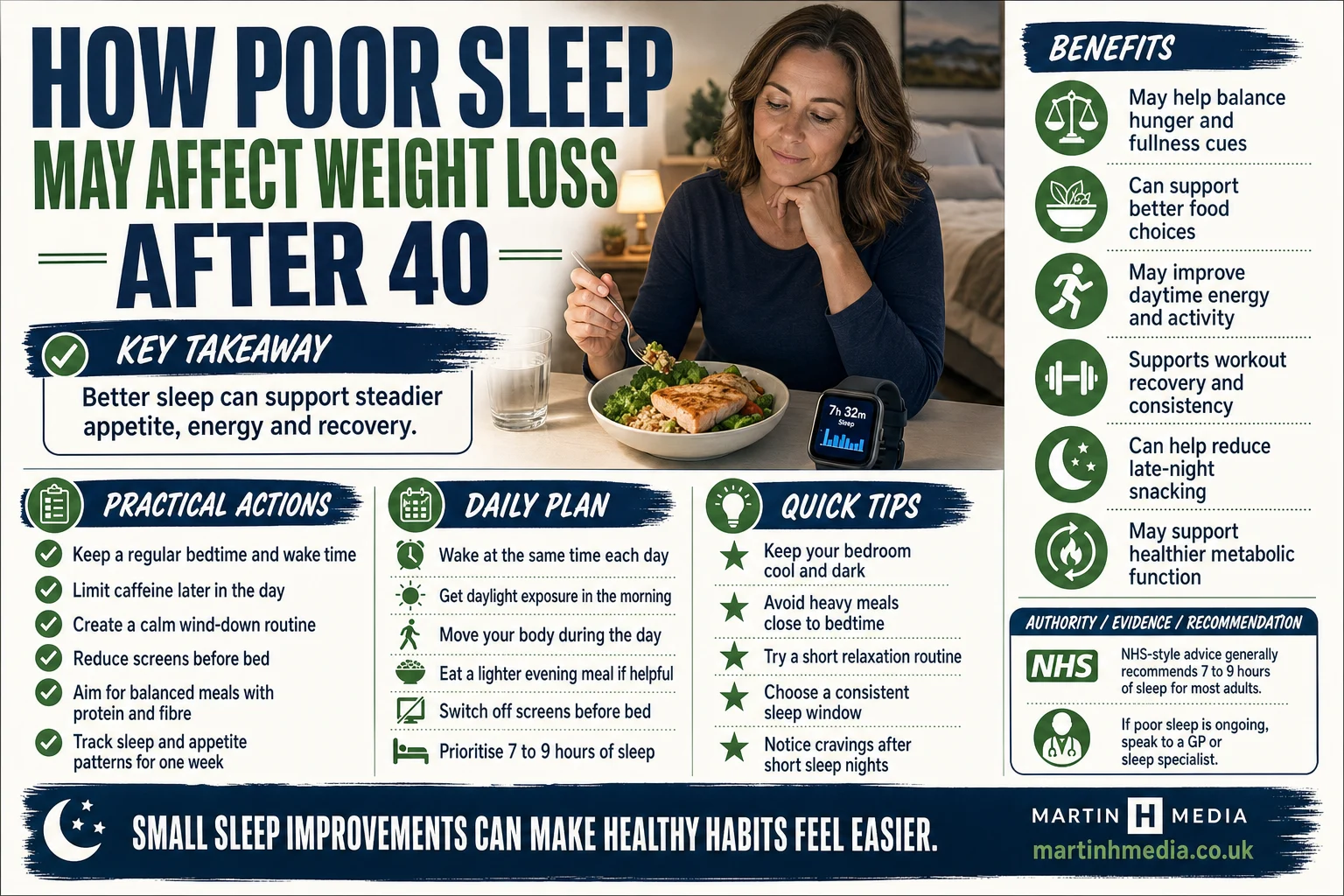
Track your sleep for one week and notice how your eating changes on poor sleep days.
Frequently Asked Questions
How many hours of sleep do I need to support weight loss after 40?
Most adults need seven to nine hours per night for proper metabolic function. After 40, aim for the higher end of this range. Quality matters as much as quantity. Consistent sleep timing helps regulate the hormones that control hunger and fat storage.
Can catching up on sleep during weekends help with weight loss?
Weekend catch up sleep doesn’t fully reverse weekday sleep debt. Your hormones and metabolism respond to consistent patterns. Irregular sleep schedules can disrupt your circadian rhythm. This makes weight loss harder even if total hours seem adequate.
Will improving my sleep immediately help me lose weight?
Better sleep won’t cause immediate weight loss on its own. It creates conditions that make weight loss possible. Your hunger hormones balance out. Your food choices improve naturally. Results typically become noticeable within two to four weeks.
Does sleep quality matter more than sleep quantity for weight loss?
Both quality and quantity matter for weight loss after 40. You can sleep eight hours but wake frequently. This disrupts the deep sleep stages your body needs. Deep sleep is when most hormonal regulation and repair occurs.
Can sleep supplements help with weight loss after 40?
Sleep supplements may help you fall asleep faster or stay asleep longer. They don’t directly cause weight loss. Better sleep from any source supports the metabolic processes that enable fat loss. Address sleep hygiene first before considering supplements.