

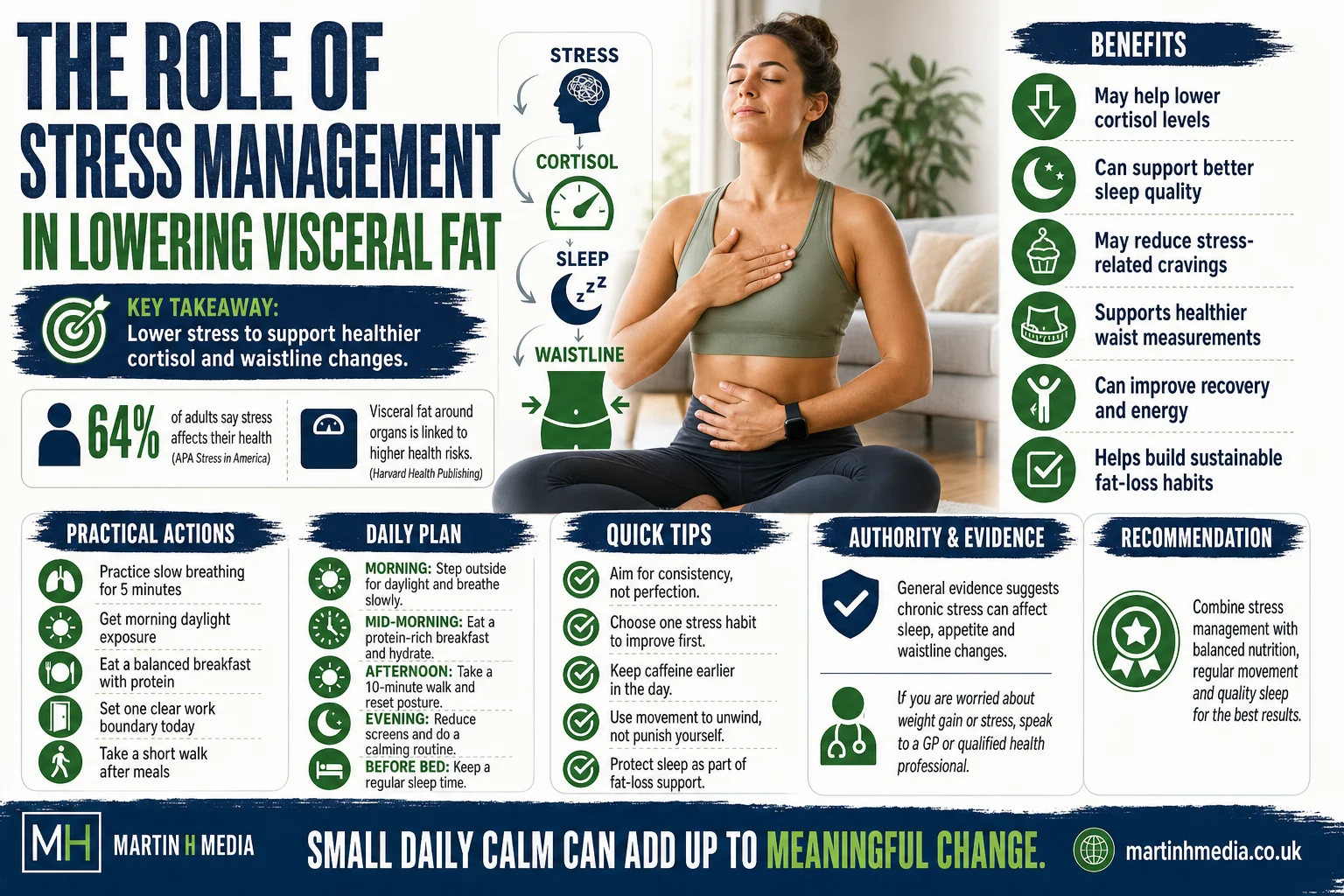
Why Your Stress Routine Is Fattening Your Belly
You sleep seven hours but wake up exhausted and bloated. Your jeans don’t button despite weeks of salads. The Role of Stress Management in Lowering Visceral Fat explains why your body hoards fat around organs when cortisol stays high. Managing stress hormones unlocks fat loss more than any diet.
The Role of Stress Management in Lowering Visceral Fat Starts with Understanding Cortisol’s Storage Pattern
Your body stores fat differently when stress hormones spike. Cortisol signals your cells to deposit fat around internal organs. This visceral fat differs completely from subcutaneous fat under your skin.
Belly fat accumulates even when you eat less. Your body prioritizes survival over appearance during perceived danger. Chronic stress convinces your system that famine or threat looms constantly.
Fat cells around your liver and intestines respond fastest to cortisol. These cells have more receptors for stress hormones than other areas. Your midsection becomes a storage depot when cortisol runs high.
This process happens independent of calorie counting. You can restrict food and still gain visceral fat. Hormones override traditional energy balance when stress persists for months.
Your waistline expands while arms and legs stay thin. This pattern signals cortisol rather than overall weight gain. Doctors measure waist circumference because it reveals hormone-driven fat storage.
How Chronic Stress Blocks Fat Burning Through Metabolic Shifts
High cortisol changes which fuel your body prefers to burn. Your cells shift toward burning sugar instead of stored fat. This metabolic switch makes visceral fat nearly impossible to lose.
Your body thinks it needs quick energy for emergencies. Glucose provides faster fuel than fat during fight-or-flight responses. Stress keeps your system locked in this inefficient mode.
Insulin levels rise alongside cortisol throughout the day. These two hormones work together to prevent fat breakdown. Your cells receive constant signals to store rather than release energy.
Exercise becomes less effective at burning belly fat. Cortisol blunts the normal metabolic boost from physical activity. You might work out regularly but see minimal waistline changes.
Your metabolism adapts to chronic stress by becoming conservative. Burning stored fat feels risky when your body believes resources are scarce. This survival mechanism served humans during actual famines but backfires now.
Post-workout recovery suffers when stress hormones stay elevated. Your muscles don’t repair efficiently without proper cortisol rhythms. Fat burning that normally happens during recovery gets suppressed.
The Role of Stress Management in Lowering Visceral Fat Through Sleep Restoration
Poor sleep raises cortisol the next morning by 45 percent. Your body interprets sleep deprivation as additional stress. This creates a cycle where stress ruins sleep and lack of sleep increases stress hormones further.
Visceral fat increases dramatically with less than six hours of sleep. Short sleep duration predicts belly fat better than total calories consumed. Your body can’t regulate stress hormones without adequate rest.
Growth hormone releases during deep sleep to burn fat. Cortisol blocks this release when levels stay high at night. You miss the natural fat-burning window that happens during quality sleep.
Leptin drops when you don’t sleep enough. This hormone tells your brain you’ve eaten enough food. Low leptin makes you hungry even after adequate meals.
Ghrelin spikes with poor sleep to increase appetite. You crave dense foods that pack quick energy. Your body seeks fast calories when it feels stressed and tired.
Managing stress improves sleep quality within days. Better sleep lowers morning cortisol naturally. This hormonal reset allows visceral fat to finally respond to diet changes.
Why Emotional Stress Creates Physical Fat Storage Around Organs
Your body doesn’t distinguish between physical and emotional threats. Work deadlines trigger the same cortisol response as being chased. Ancient survival systems react to modern stressors with ancient solutions.
Relationship conflict keeps cortisol elevated for hours after arguments. Your body pumps out stress hormones long after the threat passes. Emotional stress becomes chronic more easily than physical danger.
Financial worry activates stress pathways every time you check your bank account. Each mini-spike in cortisol throughout the day adds up. Your visceral fat responds to cumulative stress rather than single events.
Social media comparison triggers real physiological stress responses. Feeling inadequate or behind activates your threat detection system. Your waistline pays for psychological stress with physical fat deposits.
Perfectionism drives constant low-level stress that never resolves. Your cortisol never fully drops when you feel perpetually behind. This steady state prevents any meaningful fat loss around organs.
The Role of Stress Management in Lowering Visceral Fat via Inflammation Control
Chronic stress creates persistent inflammation throughout your body. Inflammatory molecules called cytokines increase when cortisol stays high. These chemicals make fat cells grow and multiply faster.
Visceral fat itself produces inflammatory compounds once it accumulates. You enter a feedback loop where stress creates belly fat. Then belly fat creates more inflammation and stress on your system.
Your immune system becomes confused under constant stress. It starts attacking healthy tissues as if they were threats. This autoimmune-like response worsens fat storage around organs.
Gut bacteria shift toward inflammatory species under chronic stress. These microbes send signals that increase visceral fat deposition. Your microbiome responds to stress hormones circulating through your bloodstream.
Anti-inflammatory foods help less when cortisol remains elevated. The hormonal signal overrides nutritional inputs from diet. You need to lower stress first before food choices matter fully.
Reducing stress allows your immune system to reset. Inflammation drops within weeks of better stress management. Visceral fat becomes easier to lose once inflammatory pressure releases.
Practical Stress Reduction Techniques That Target Belly Fat Specifically
Deep breathing activates your vagus nerve to lower cortisol. Six breaths per minute triggers a parasympathetic response. Your body shifts from stress mode into rest mode within minutes.
Morning sunlight exposure resets your circadian cortisol rhythm. Fifteen minutes outdoors before 9am helps cortisol peak properly. This natural rhythm prevents abnormal spikes throughout the day.
Protein at breakfast stabilizes blood sugar and reduces stress responses. Cortisol spikes less when glucose remains steady all morning. Your body feels less threatened when energy supply stays consistent.
Setting boundaries at work prevents chronic stress accumulation. Saying no to extra projects protects your hormonal health. Your waistline benefits more from boundaries than extra gym sessions.
Social connection lowers cortisol more effectively than isolation. Talking with trusted friends reduces stress hormone levels measurably. Your body interprets social support as safety rather than threat.
Time in nature drops cortisol by 20 percent in 20 minutes. Forest environments trigger specific relaxation responses in your nervous system. Your stress hormones normalize faster outdoors than anywhere else.
The Role of Stress Management in Lowering Visceral Fat When Diet Alone Fails
You might cut calories perfectly but still carry belly fat. High cortisol overrides caloric deficits by protecting visceral stores. Your body refuses to release this fat when it senses ongoing stress.
Keto diets can backfire if stress remains unmanaged. Very low carbs increase cortisol in some people. The added stress can worsen visceral fat despite improved food choices.
Intermittent fasting works only with proper stress management underneath. Fasting becomes another stressor when cortisol already runs high. Your body hoards belly fat more stubbornly under this double stress.
Weight plateaus often indicate cortisol problems rather than diet mistakes. You lose initial weight easily then stall for months. This pattern shows hormonal resistance to further fat loss.
Tracking macros perfectly misses the point when hormones block results. Numbers on paper don’t overcome biochemical stress signals. You need to address cortisol levels that sabotage your efforts before diet tweaks help.
Combining stress reduction with moderate calorie reduction works best. Neither approach alone produces the same results. Your body finally releases visceral fat when both pieces align.
Worth knowing.
Most people attack belly fat with harder workouts and stricter diets. They never question whether stress itself blocks their progress. The real breakthrough happens when you treat stress management as essential medicine.
Start with one stress reduction practice today and measure your waistline weekly.
Frequently Asked Questions
How long does it take to lower visceral fat through stress management?
Most people see waist measurements drop within four to six weeks of consistent stress reduction. Cortisol levels begin normalizing within days of better sleep and daily relaxation practices. Visceral fat responds more slowly than stress hormones but follows predictably once cortisol stays controlled. Your body needs time to shift from storage mode into release mode. Patience matters more than intensity when reversing stress-driven fat accumulation around organs.
Can stress management alone reduce belly fat without changing my diet?
Lowering cortisol helps reduce visceral fat even without dietary changes. Your body stops depositing new fat around organs when stress hormones normalize. Existing belly fat becomes easier to lose through normal activity. Most people naturally eat less when stress drops because appetite hormones rebalance. Combining stress management with reasonable food choices produces faster results than either alone. Diet matters more once cortisol returns to healthy levels.
What time of day should I practice stress management for belly fat loss?
Morning stress reduction sets your cortisol rhythm correctly for the entire day. Evening practices help cortisol drop so sleep quality improves overnight. Both timing windows matter for visceral fat loss through different mechanisms. Morning techniques prevent stress spikes throughout your day. Evening practices allow growth hormone to burn fat during sleep. Consistent daily practice matters more than perfect timing for long-term results.
Does exercise count as stress management for lowering visceral fat?
Moderate exercise lowers cortisol and helps reduce belly fat effectively. Intense workouts can raise cortisol temporarily if you’re already stressed. Your body interprets hard training as additional stress when cortisol runs chronically high. Walking and yoga lower stress hormones more reliably than intense training. Save high-intensity exercise for after you’ve controlled baseline stress levels. Movement helps but only when it doesn’t add more physiological stress.
Why does my belly fat increase during stressful periods even when eating less?
High cortisol signals your body to protect and build visceral fat stores. Your cells ignore calorie reduction when stress hormones scream danger. Cortisol also increases insulin resistance so your body stores rather than burns energy. Eating less while stressed can raise cortisol even higher through additional deprivation signals. Your metabolism slows down to conserve resources during perceived threat. This survival response trumps your conscious intention to lose weight through restriction.