

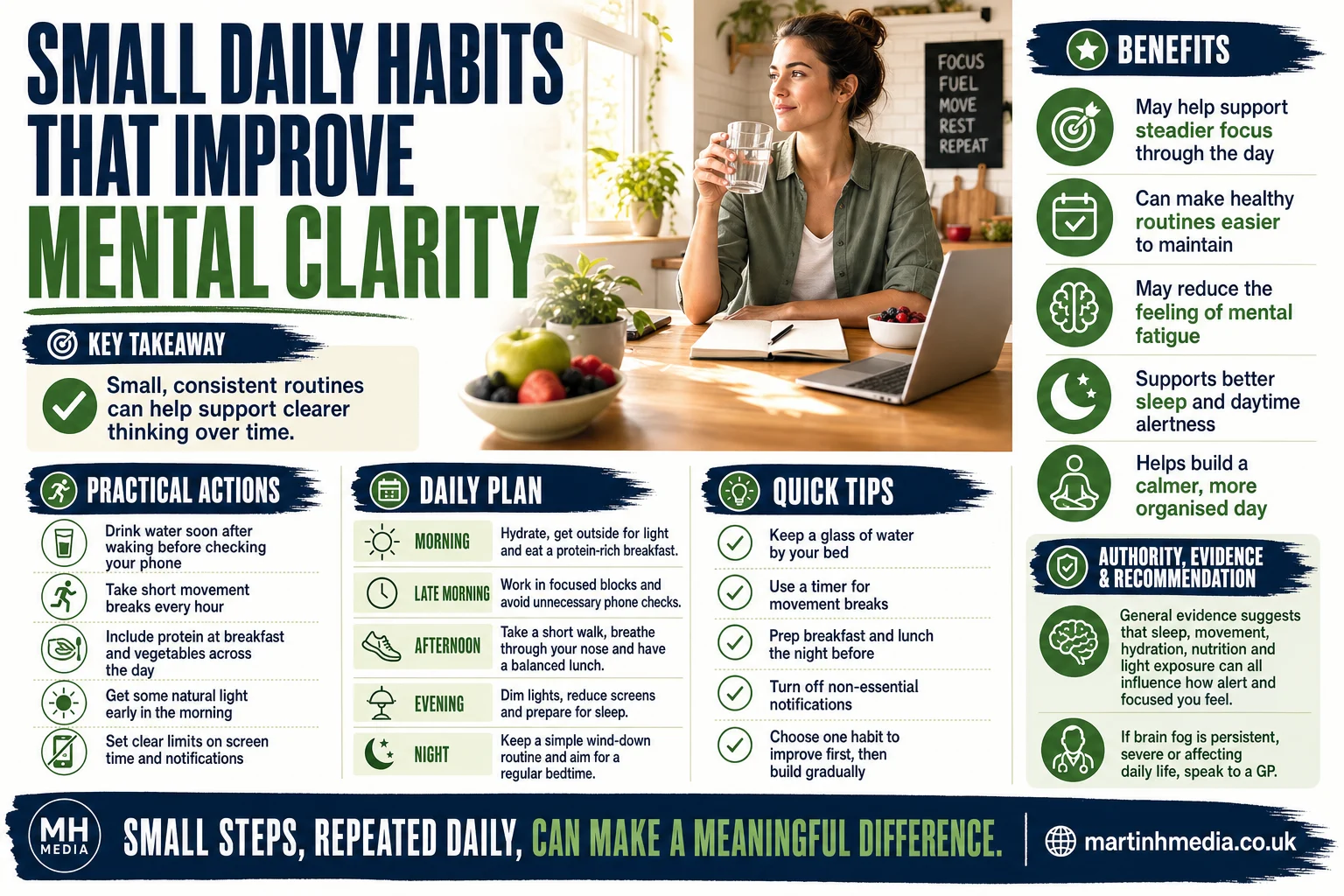
Why Your Brain Fog Persists Despite Good Sleep
Your brain feels foggy by midday even after eight hours of sleep. You reach for another coffee but the clarity never arrives. Small Daily Habits That Improve Mental Clarity work better than stimulants. The secret lies in patterns your neurons recognize as signals.
How Small Daily Habits That Improve Mental Clarity Reshape Your Brain Chemistry
Your prefrontal cortex burns through glucose faster than any other brain region. It handles decision making and focus. Run it without fuel and mental fog appears within hours.
Neurons communicate through chemical messengers called neurotransmitters. Dopamine drives motivation. Serotonin regulates mood stability. Acetylcholine controls memory formation. Your daily actions determine how efficiently your brain produces these compounds.
Sleep deprivation reduces acetylcholine production by 40 percent. Just one night of poor sleep. Your hippocampus can’t form new memories properly. Information slides through your mind without sticking.
Consistency rewires neural pathways faster than intensity ever could. Your brain adapts to what you do repeatedly. It doesn’t respond to what you do occasionally. A single meditation session changes nothing measurable in your brain structure. Daily meditation for eight weeks increases gray matter density in regions controlling attention.
Most people attack mental clarity like a weekend project. They expect one good night or one healthy meal to fix everything. Your neurons don’t work that way. They respond to sustained patterns over weeks.
Morning Hydration Protocol for Cognitive Function
Your brain tissue contains 73 percent water by weight. Lose just two percent through overnight breathing and cognitive performance drops measurably. You wake up slightly dehydrated every single morning.
Cortisol peaks naturally within 30 minutes of waking. This stress hormone helps you feel alert. Dehydration amplifies cortisol beyond useful levels. You feel anxious instead of energized.
Drink 16 ounces of water before touching your phone. Place a filled glass on your nightstand before bed. Remove the decision from your groggy morning brain. This single action flushes metabolic waste accumulated during sleep.
Your glymphatic system clears cellular debris while you sleep. It needs fluid to transport waste out of brain tissue. Morning hydration completes this overnight cleaning process. Skip it and you’re thinking through yesterday’s metabolic garbage.
Coffee before water doubles your cortisol spike. You get jittery energy that crashes by 10 AM. Water first. Coffee 30 minutes later. This sequence maintains stable mental energy through midday.
The Two-Minute Movement Reset
Sitting for 45 minutes straight reduces blood flow to your prefrontal cortex. Oxygen delivery drops. Your focus weakens. You reread the same paragraph three times without comprehension.
Stand up and walk for two minutes every hour. This sounds trivial. Your brain chemistry disagrees. Movement triggers BDNF release. Brain-derived neurotrophic factor acts like fertilizer for neurons. It promotes new neural connections and protects existing ones.
Set a phone timer for every 55 minutes. Walk to refill your water bottle when it sounds. Return to your desk. That brief movement window prevents the glucose crash that destroys afternoon focus.
Your lymphatic system moves waste products through muscle contractions. It has no pump like your cardiovascular system. Sitting for three hours creates cellular stagnation. Toxins accumulate in tissues. Mental fog follows predictably.
This pattern works better than one long workout for sustained clarity. Your hormone response stays balanced instead of spiking then crashing. Cortisol remains stable. Mental performance follows the same steady line.
Small Daily Habits That Improve Mental Clarity Through Protein Timing
Your brain synthesizes neurotransmitters from amino acids found in protein. Dopamine comes from tyrosine. Serotonin comes from tryptophan. Skip protein at breakfast and your brain lacks raw materials for chemical messengers.
Eat 30 grams of protein within one hour of waking. Eggs provide all essential amino acids your neurons need. Greek yogurt works equally well. Your liver converts these amino acids into neurotransmitter precursors by midmorning.
Most people eat carbohydrates alone at breakfast. Toast. Cereal. Pastries. Blood sugar spikes fast then crashes hard. Your energy and focus follow the same rollercoaster. Protein stabilizes glucose release for hours.
Sustained amino acid availability improves reaction time measurably. Studies show breakfast protein enhances working memory performance through late afternoon. Your brain maintains access to building blocks it needs for optimal function.
Prep hard-boiled eggs on Sunday evening. Store them in your fridge at eye level. You eat what you see first when hungry. Make the right choice the easy choice. Decision fatigue disappears when tiny daily habits that add up to better health become automatic.
Sunlight Exposure and Circadian Rhythm
Your suprachiasmatic nucleus controls your sleep-wake cycle. This tiny brain region responds to light hitting your retinas. Morning sunlight resets your circadian rhythm daily. Skip it and your internal clock drifts.
Get outside within 30 minutes of waking. Ten minutes of natural light is enough. Even on cloudy days. Outdoor light intensity measures 10,000 lux on overcast mornings. Indoor lighting rarely exceeds 500 lux.
This light exposure triggers cortisol production at the right time. Your body learns when to feel alert. It also knows when to produce melatonin 14 hours later. Sleep quality improves that same night. Better sleep means sharper thinking the next day.
Blue light from screens confuses this system. Your brain interprets phone light as sunrise at 10 PM. Melatonin production delays. You can’t fall asleep. Morning grogginess follows inevitably.
Stand outside while drinking your morning water. Combine two habits into one time block. Your compliance rate doubles when behaviors stack together. Your circadian rhythm stabilizes within one week of consistent morning light.
Small Daily Habits That Improve Mental Clarity via Nose Breathing
Your breathing pattern directly affects brain oxygenation. Mouth breathing reduces oxygen absorption by 20 percent. Less oxygen reaches your prefrontal cortex. Mental performance suffers immediately.
Breathe through your nose during all non-exercise activities. Nasal passages warm and filter incoming air. They also produce nitric oxide. This compound dilates blood vessels and improves oxygen delivery to brain tissue.
Set three random phone alarms throughout your workday. Check your breathing when they sound. Are your lips closed? If not, close them. This simple awareness builds the habit within two weeks.
Stress triggers shallow chest breathing automatically. Your body interprets this as danger. Cortisol climbs. Mental clarity drops. Nasal breathing activates your parasympathetic nervous system. This signals safety to your brain. Cortisol decreases. Focus returns.
Practice this during your two-minute movement breaks. Walk slowly while breathing only through your nose. Count four seconds in. Count six seconds out. This rhythm maximizes carbon dioxide tolerance. Better CO2 levels mean more efficient oxygen release to neurons.
The Five-Vegetable Framework for Brain Health
Your gut bacteria produce 90 percent of your body’s serotonin. These microbes need fiber to survive. Feed them properly and they manufacture neurotransmitters that improve mood and cognition. Starve them and mental fog appears within days.
Eat five different colored vegetables daily. Each color represents different polyphenols your microbiome needs. Red peppers feed different bacterial strains than purple cabbage. Diversity matters more than quantity.
Prep all five vegetables on Sunday evening. Store them in clear containers at eye level in your fridge. Add one vegetable to breakfast. Spinach in eggs takes 30 seconds. Tomatoes on toast requires zero cooking skill.
Pack three vegetables in your lunch container. Eat the fifth with dinner. This distribution maintains stable blood sugar all day. Your brain runs on glucose but crashes happen when levels spike too fast. Fiber slows glucose absorption perfectly.
Beneficial gut bacteria also produce short-chain fatty acids. These compounds cross the blood-brain barrier and reduce neuroinflammation. Less inflammation means faster neural signaling. Your thoughts move quicker. Connections form easier. Learning happens faster when you consistently follow small changes that support wellbeing over time.
Screen Boundaries and Attention Recovery
Your attention span shrinks every time you switch tasks. Checking email mid-project fragments your focus. Your brain needs 23 minutes to fully re-engage with complex work after an interruption.
Set your phone to airplane mode during your first two work hours. This single boundary protects your peak cognitive window. Most people experience maximum mental clarity between 9 AM and 11 AM. Don’t waste it on notifications.
Close all browser tabs except the one you’re actively using. Visual clutter creates cognitive load. Your working memory capacity is limited. Every open tab consumes a small amount of mental resources. Close them and those resources return to your actual work.
Check messages twice daily at scheduled times. 11 AM and 3 PM work well for most schedules. Your brain stops anticipating interruptions when patterns become predictable. Anxiety about missing something important fades within three days.
Delete social media apps from your phone. Keep the accounts but access them only through a desktop browser. This friction reduces mindless scrolling by 80 percent. The time you reclaim returns directly to mental energy reserves.
Small Daily Habits That Improve Mental Clarity Through Strategic Caffeine Use
Caffeine blocks adenosine receptors in your brain. Adenosine builds up during waking hours and creates sleep pressure. Block it and you feel alert. The effect lasts four to six hours.
Drink coffee between 9:30 AM and 11:30 AM. Not immediately upon waking. Your cortisol is already high in the first hour. Adding caffeine provides no additional benefit. It just builds tolerance faster.
Wait 90 minutes after waking to consume caffeine. Let natural cortisol wake you first. Then add coffee when cortisol naturally dips. This timing extends your mental clarity window by hours.
Stop all caffeine by 2 PM. Adenosine needs to accumulate for quality sleep. Caffeine after 2 PM interferes with this process. Poor sleep tonight means poor focus tomorrow. The cycle compounds quickly.
Pair coffee with a small amount of fat. Add cream or butter. Fat slows caffeine absorption. You avoid the sharp spike and crash pattern. Mental energy stays stable for hours instead of peaking then dropping. This approach mirrors how consistency beats intensity in all health domains.
Evening Wind-Down Sequence
Your brain needs a transition period between work and sleep. Jump straight from screens to bed and sleep quality suffers. Your mind keeps processing the day’s information. You lie awake replaying conversations.
Start your wind-down routine 90 minutes before target sleep time. Dim all lights in your living space. Bright light after sunset delays melatonin production. Your body thinks it’s still daytime.
Write three sentences about tomorrow’s main task. This dumps lingering work thoughts from your working memory. Your brain stops cycling through incomplete tasks. Sleep comes faster when your mind isn’t holding onto open loops.
Read fiction for 20 minutes in bed. Paper books work best. Screens emit blue light that suppresses melatonin. Fiction engages your brain differently than work-related content. It signals that productivity hours have ended.
Keep your bedroom temperature at 67 degrees Fahrenheit. Your core body temperature must drop to initiate sleep. Cool rooms facilitate this process. Warm rooms fight against it. Temperature matters more than most people realize.
Start with one habit from this list tomorrow morning.
Frequently Asked Questions
How long before Small Daily Habits That Improve Mental Clarity show results?
Most people notice improved focus within three to five days of consistent practice. Your brain chemistry responds quickly to hydration and protein timing changes. Structural changes in neural pathways take three to eight weeks. Sleep quality improvements appear within one week of proper light exposure and evening routines.
Can I stack multiple mental clarity habits at once?
Start with one or two habits maximum. Your prefrontal cortex can’t handle too many simultaneous behavior changes. Master morning hydration and protein timing first. Add movement breaks after two weeks. Layer in additional habits once earlier ones become automatic. This approach prevents decision fatigue.
Do these habits work if I already drink coffee daily?
Yes. Adjust your coffee timing to 90 minutes after waking instead of immediately. This change alone improves mental clarity without reducing caffeine intake. Add morning water before coffee for additional benefits. The habits work with your current coffee consumption.
What if I can’t get sunlight exposure in the morning?
Use a light therapy box that provides 10,000 lux. Position it 16 to 24 inches from your face for ten minutes. Do this within 30 minutes of waking. Light therapy boxes reset circadian rhythms as effectively as natural sunlight. They cost between 30 and 100 dollars.
How do I remember to practice these habits consistently?
Stack new habits onto existing behaviors you already do automatically. Drink water right after your alarm sounds. Do movement breaks when your phone timer goes off. Prep vegetables during your usual Sunday meal prep. Use your environment to trigger behaviors instead of relying on willpower.