
Why Walking Burns More Fat Than You Think
Weight loss benefits of walking show up faster than most people expect. You don’t need a gym membership or fancy equipment. Walking burns calories without breaking your body down. The best part is you can start today without any preparation.
How Walking Creates a Calorie Deficit for Weight Loss
Your body burns energy every minute you walk. A 30-minute walk at moderate pace burns roughly 150 calories. Do this daily and you burn 1,050 calories weekly. That’s close to a third of a pound lost from walking alone.
The math gets better when you increase your pace. Walking at 4 miles per hour instead of 3 burns 50% more calories. You cover more ground and burn more fat in the same time.
Most people underestimate how these numbers add up. Walking five days weekly for a year burns about 54,600 calories. That equals over 15 pounds of fat lost without changing your diet.
Your body continues burning extra calories after you finish walking. This effect lasts for 30 to 60 minutes post-walk. Longer walks extend this afterburn period even further.
Weight Loss Benefits of Walking Without Muscle Loss
Running and intense cardio often eat away muscle along with fat. Walking preserves your muscle mass while targeting fat stores. This matters more than most people realize.
Muscle tissue burns calories even when you’re sitting still. Lose muscle and your metabolism slows down permanently. Walking avoids this trap completely.
Your body recognizes walking as low-stress movement. It doesn’t trigger the stress hormones that break down muscle. Fat becomes the primary fuel source during moderate-paced walks.
Studies show people who walk regularly maintain higher muscle percentages than runners. The difference becomes obvious after six months of consistent activity. Walking keeps you lean without making you weak.
Belly Fat Reduction Through Daily Walking
Visceral fat around your organs responds particularly well to walking. This dangerous fat increases disease risk more than subcutaneous fat. Regular walking attacks this problem zone directly.
Research shows people who walk 30 minutes daily lose more belly fat than those doing crunches. The movement pattern and hormone response specifically target abdominal stores. You can’t spot-reduce fat with exercises. But walking comes surprisingly close for belly fat.
Your stress hormone cortisol drops during and after walks. High cortisol tells your body to store belly fat. Lower cortisol means less fat accumulation around your midsection.
Walking after meals provides an additional benefit for belly fat. Your body uses recently consumed food for energy during the walk. Less glucose gets converted to abdominal fat storage. A 15-minute walk after dinner prevents much of that meal from becoming belly fat.
Weight Loss Benefits of Walking Combined With Fasting
Walking during a fasted state accelerates fat burning dramatically. Your glycogen stores run lower in the morning before eating. Walking at this time forces your body into fat-burning mode.
Many people practice intermittent fasting for weight loss and add morning walks for faster results. The combination produces effects neither method achieves alone. Your insulin stays low while movement increases fat oxidation.
You don’t need intense fasted cardio to see benefits. A gentle 20-minute walk works perfectly. Your body burns fat without triggering hunger or muscle breakdown.
Some people worry about exercising on an empty stomach. Walking doesn’t stress your system enough to cause problems. The activity level stays well within what your body handles easily while fasted.
Timing your walks during your fasting window maximizes results. Your body has already depleted easy energy sources. Walking becomes the trigger that releases stored fat for fuel.
Metabolic Improvements That Support Weight Loss
Walking improves your insulin sensitivity within weeks of starting. Better insulin response means your body stores less food as fat. Glucose goes to muscles instead of fat cells.
Your resting metabolic rate increases with regular walking habits. This means you burn more calories throughout the entire day. The effect persists even on days you don’t walk.
Blood sugar regulation improves significantly with daily walking. Stable blood sugar prevents the energy crashes that trigger overeating. You feel satisfied with normal portions instead of constantly hungry.
Walking activates genes involved in fat metabolism. These genetic changes make your body more efficient at burning fat. The adaptations continue improving for months after you start walking regularly.
Weight Loss Benefits of Walking at Different Intensities
Easy walking at a conversational pace burns mostly fat for fuel. Your body can access fat stores efficiently at this comfortable intensity. This pace works best for longer 45 to 60-minute sessions.
Brisk walking that slightly elevates your heart rate burns more total calories. You tap into both fat and glycogen stores. Sessions of 30 to 40 minutes at this pace produce excellent results.
Adding short faster intervals amplifies calorie burn even further. Walk normally for three minutes then speed up for one minute. Repeat this pattern throughout your walk. The varied pace keeps your metabolism elevated for hours afterward.
Incline walking multiplies the weight loss effect without joint stress. Walking uphill or on an incline treadmill engages more muscle groups. You burn significantly more calories at the same speed.
Most people see best results mixing different intensities throughout the week. Three easy longer walks plus two brisk shorter sessions works well. Your body never fully adapts to a single pattern.
How Walking Reduces Appetite and Cravings
Walking regulates the hormones ghrelin and leptin naturally. Ghrelin triggers hunger while leptin signals fullness. Regular walking keeps both hormones properly balanced.
Many people notice reduced appetite for hours after walking. The appetite suppression happens without conscious effort. You simply feel less interested in snacking.
Evening walks particularly help prevent nighttime eating. The movement and fresh air often eliminate cravings completely. You go to bed satisfied instead of raiding the kitchen.
Walking provides a healthy distraction when cravings hit. Taking a 10-minute walk resets your mental state. Most cravings disappear before you return home.
The relationship between intermittent fasting weight loss and walking works both ways. Walking makes fasting easier by controlling hunger. Fasting makes walks more effective by increasing fat burning.
Building a Sustainable Walking Routine for Weight Loss
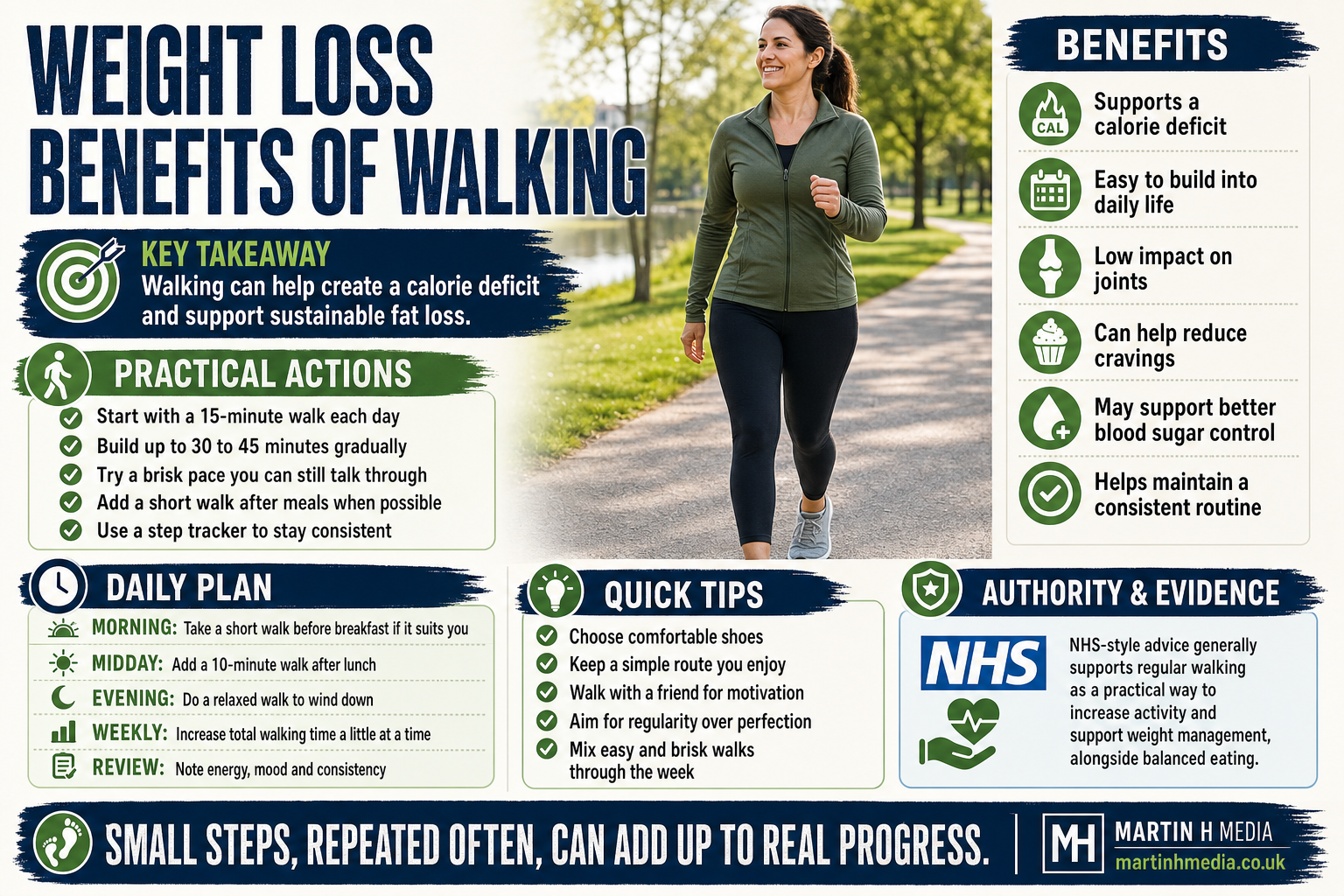
Start with 15 minutes daily if you’re currently inactive. Add five minutes weekly until you reach 45 to 60 minutes. Gradual increases prevent burnout and injury.
Schedule walks at the same time daily. Consistency builds the habit faster than sporadic longer walks. Your body and mind expect the movement.
Morning walks work best for most people’s schedules. You finish before other obligations arise. The metabolism boost carries through your entire day.
Track your steps if you need motivation to stay consistent. Seeing daily totals provides tangible progress markers. Many people naturally increase their walking once they start tracking.
Walking doesn’t require special conditions to maintain your routine. Rain or heat just means adjusting your route or timing. Indoor walking works fine when outdoor conditions aren’t ideal.
Find routes you actually enjoy walking. Interesting scenery or good lighting matters more than perfect distance. You’ll stick with walks you look forward to taking.
Weight Loss Benefits of Walking Versus Other Exercise
Walking produces zero joint impact compared to running or jumping. Your knees and hips last decades longer with walking habits. Injury risk stays minimal even with daily walking.
You can walk even when you’re tired or sore. The low intensity allows for daily activity without overtraining. Other exercises require rest days to prevent breakdown.
Walking requires no learning curve or special skills. You already know how to do it properly. Other exercises need form coaching and practice before becoming effective.
The time investment for walking stays manageable long-term. Most people can’t maintain intense workouts indefinitely. Walking remains doable throughout your entire life.
Social opportunities exist with walking that gym workouts don’t offer. Walking with friends or family makes the activity enjoyable. The social element improves consistency dramatically.
Maximizing Fat Burn During Walking Sessions
Walking fasted in the morning pushes your body into fat-burning mode fastest. Your overnight fast already depleted glycogen stores partially. Walking finishes the job and switches to fat fuel.
Avoid eating right before walks if you want maximum fat burn. Give yourself two to three hours after meals before walking. Your body prioritizes burning recently consumed food over stored fat.
Maintaining a pace where you can still talk but feel slightly challenged works best. This zone keeps you burning fat while increasing total calorie expenditure. Too easy wastes time while too hard isn’t sustainable.
Longer walks burn more total fat than short intense bursts. Fat oxidation peaks between 30 and 60 minutes of continuous walking. Your body needs time to fully shift into fat-burning mode.
Combining walking with intermittent fasting weight loss strategies produces results faster than either approach alone. The synergy between fasting and walking amplifies fat loss significantly.
Start your first walk tomorrow morning before breakfast and notice how your body responds.
Frequently Asked Questions
How much walking do I need daily to lose weight?
Most people see weight loss results with 30 to 45 minutes of walking daily. This burns enough calories to create a deficit without requiring diet perfection. Walking five days weekly produces noticeable changes within three to four weeks. You can split walks into two shorter sessions if needed. Consistency matters more than duration for sustainable weight loss.
Is walking better than running for losing weight?
Walking and running both create calorie deficits but walking offers better sustainability. Running burns calories faster but increases injury risk and appetite significantly. Walking preserves muscle mass better while being easier to maintain long-term. Most people can walk daily but can’t run daily without breaking down. For lifelong weight management walking wins clearly.
Should I walk before or after eating for weight loss?
Walking before eating burns more stored fat since your body has no recent food to use first. Morning fasted walks provide the strongest fat-burning effect. Walking after meals helps control blood sugar and prevents food storage as fat. Both approaches work but fasted morning walks typically produce faster visible results.
Can I lose belly fat just by walking?
Walking reduces belly fat more effectively than spot exercises like crunches do. Regular walking lowers stress hormones that cause belly fat storage. You’ll notice waist measurements decreasing within four to six weeks of daily walking. Combining walking with reasonable eating habits accelerates belly fat loss significantly. Walking targets visceral fat around organs particularly well.
How fast should I walk to lose weight?
Walking at 3 to 4 miles per hour produces good weight loss results. You should feel slightly challenged but still able to hold a conversation. Faster isn’t always better since you can’t maintain extreme speeds long enough. Focus on duration over speed for maximum fat burning. A comfortable brisk pace sustained for 45 minutes beats sprinting for 15 minutes.