
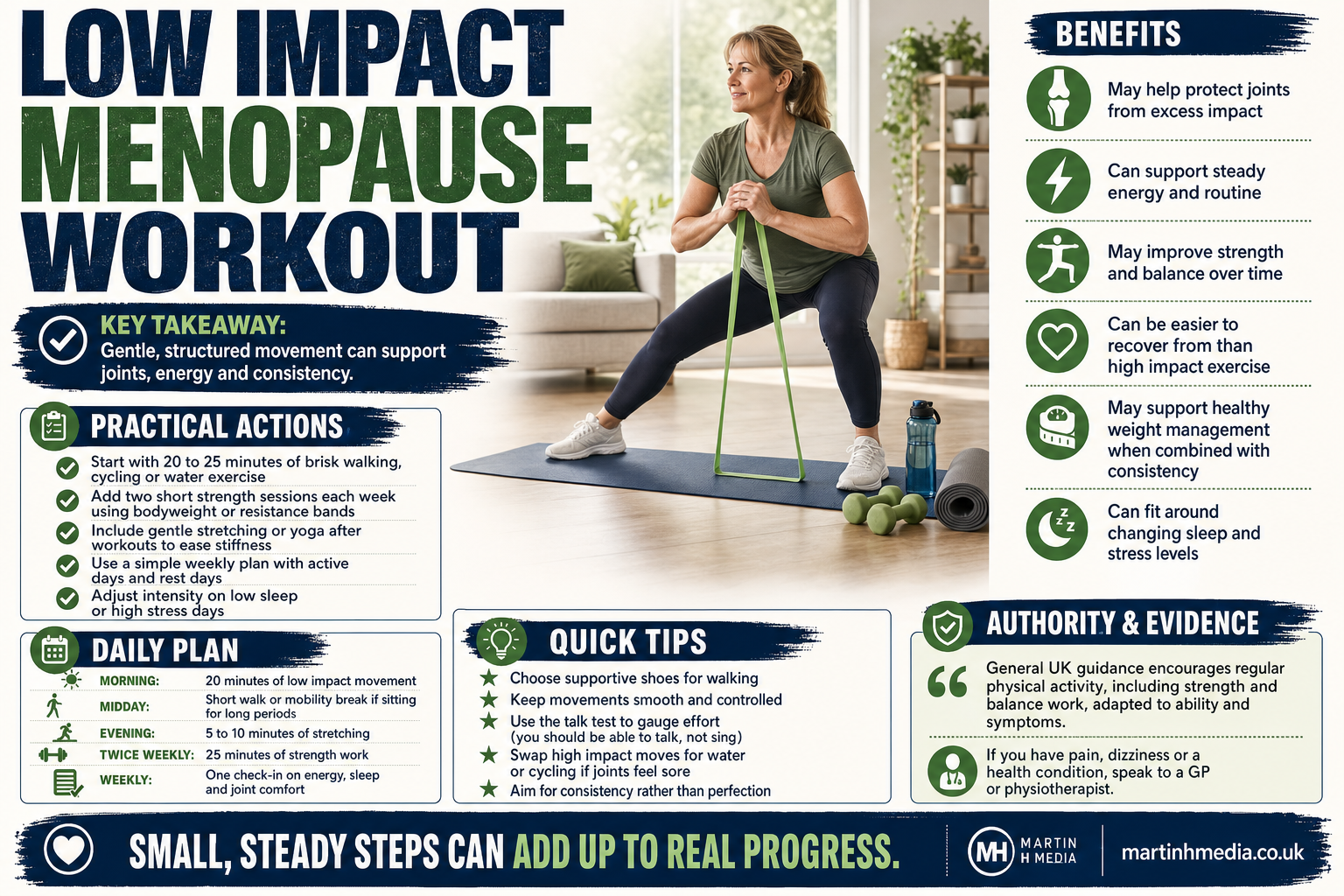
Why Low Impact Workouts Beat Intense Exercise During Menopause
Your body changed faster than your workout plan adapted. A low impact menopause workout solves joint stress without sacrificing results. Most women push through pain instead of switching methods. The right approach burns fat while protecting aging joints.
Why Low Impact Menopause Workout Methods Work Better Now
Your joints feel different because hormone shifts thin cartilage and reduce lubrication. Estrogen loss affects connective tissue throughout your body. High impact movements create inflammation instead of fitness gains. Your knees and hips need gentler stress patterns now.
Low impact doesn’t mean low intensity. You can work hard without jumping or pounding. Water resistance, controlled strength moves, and walking variations all qualify. Each protects joints while challenging muscles and cardiovascular systems.
Recovery takes longer after 50 than it did at 35. Your body needs more time between hard sessions. Impact adds stress that extends recovery periods unnecessarily. Removing impact speeds up your bounce back time.
Inflammation increases naturally during menopause. High impact exercise makes this worse. Chronic inflammation blocks fat loss and increases injury risk. Smart training reduces inflammatory load while building fitness.
Walking Structure Creates Low Impact Menopause Workout Results
Random daily walks burn calories but miss the fat loss target. Your body adapts to the same comfortable pace within three weeks. You need planned variation in speed and duration. Structured patterns trigger metabolic changes that stick.
Morning walks before breakfast tap into stored fat more effectively. Your glucose runs lower after overnight fasting. This forces your body to pull energy from fat reserves. Even 20 minutes creates measurable changes over four weeks.
Three easy walks paired with two power walks work best weekly. Easy means full sentence conversation while moving. Power means single word responses only. This mix balances cortisol while burning stubborn midsection fat.
A walking plan designed for hormonal changes targets visceral fat specifically. Hill climbing adds resistance without joint impact. Intervals create metabolic spikes that continue burning after you finish. Time based goals work better than distance targets for consistency.
Water Exercise as a Low Impact Menopause Workout Option
Pool workouts remove 90 percent of body weight stress from joints. You can move faster and harder than on land. Water resistance challenges muscles in every direction simultaneously. Temperature regulation improves because water dissipates heat efficiently.
Water walking in chest deep pools burns significant calories. Push harder by moving your arms through the resistance. Add intervals of faster movement for 30 second bursts. Twenty minutes creates a complete cardiovascular session.
Aqua aerobics classes provide structure without requiring swimming skills. Most gyms offer senior friendly sessions at comfortable temperatures. The social element improves consistency for many women. Group energy makes effort feel easier.
Swimming laps works if you enjoy it. Freestyle and backstroke engage core muscles throughout each length. Breaststroke protects shoulders better for women with upper body issues. Even slow swimming maintains heart rate in fat burning zones.
Strength Training for Low Impact Menopause Workout Plans
Muscle loss accelerates after menopause without resistance training. You lose about eight percent of muscle mass per decade after 40. This drops metabolism and increases fall risk. Strength work reverses both problems simultaneously.
Bodyweight exercises eliminate equipment needs and joint compression. Wall pushups protect wrists and shoulders better than floor versions. Chair squats teach proper form without knee strain. Step ups on low platforms build leg strength safely.
Resistance bands create tension without heavy weights. They allow natural movement patterns your body recognizes. Bands work well for upper body pulling motions. These movements counteract the forward posture that develops with age.
Two 25 minute strength sessions weekly produce visible changes within six weeks. Target major muscle groups rather than isolation movements. Legs, back, chest, and core take priority. Smaller muscles get worked as stabilizers during compound movements.
Rest days matter as much as training days. Your muscles grow during recovery periods, not during workouts. Schedule at least one full rest day between strength sessions. Active recovery like gentle walking speeds healing without adding stress.
Cycling as a Low Impact Menopause Workout Choice
Stationary bikes remove fall risk and weather obstacles. You control resistance, speed, and duration completely. Heart rate stays elevated while joints stay protected. Most women can bike longer than they can walk comfortably.
Recumbent bikes support your back during the entire session. Upright bikes engage core muscles more for balance. Both styles burn similar calories at equivalent effort levels. Choose based on your current lower back condition.
Interval patterns on bikes create metabolic benefits similar to running. Alternate two minutes easy with one minute hard for 20 minutes total. This pattern elevates metabolism for hours after you finish. Your body continues burning extra calories during regular daily activities.
Outdoor cycling adds variety and mental health benefits. Flat routes keep effort manageable while covering more distance. Avoid technical trails with obstacles that require quick reactions. Smooth paved paths work best for joint protection.
Yoga and Stretching in Your Low Impact Menopause Workout Week
Flexibility declines rapidly during hormonal transition without deliberate practice. Tight muscles pull joints out of alignment. This creates pain during daily movements and exercise. Regular stretching prevents this cascade of problems.
Yoga builds strength through held positions while improving range of motion. Balance poses prevent falls by training proprioception. Breathing techniques reduce cortisol and improve stress management. The combination addresses multiple menopause challenges at once.
Gentle yoga styles work better than power or hot variations. Hatha and restorative classes move slowly through positions. You hold stretches long enough for tissue changes to occur. These styles calm your nervous system instead of stimulating it.
Ten minutes of stretching after every workout prevents next day stiffness. Focus on hips, hamstrings, and chest areas. These tighten most during menopause and daily sitting. Consistent short sessions beat occasional long ones.
Creating Your Low Impact Menopause Workout Weekly Schedule
Structure prevents the randomness that kills results. Plan five active days with two complete rest days weekly. Mix different activities rather than repeating the same workout daily. Your body needs varied stimulus to keep changing.
Monday might start with 25 minutes of structured walking at moderate pace. Wednesday adds strength training for upper body. Friday brings water exercise or cycling. This pattern distributes stress across different systems.
Morning sessions work best for consistency and hormonal benefits. Set one alarm for wake time and another for movement start. Remove decision making from your routine. Automatic patterns outlast motivation by months.
Track completion rather than performance in the first month. Check off each completed session regardless of how you felt. This builds habit strength before pushing for improvements. Consistency creates the foundation for all future progress.
Adjust intensity based on sleep quality and stress levels. Hard workouts on low sleep days spike cortisol excessively. Swap planned power sessions for easy movement when needed. This flexibility prevents burnout and maintains long term adherence.
Measuring Progress Beyond Scale Weight
Body composition changes faster than scale weight during menopause training. You might lose inches while weight stays stable. Muscle gains offset fat loss on the scale. Measurements tell the real story of your progress.
Waist circumference tracks visceral fat changes more accurately than total weight. Measure at belly button level first thing each Monday. A reduction of two inches in eight weeks indicates excellent progress. This metric matters more than pounds for health outcomes.
Energy levels throughout the day reflect metabolic improvements. Notice if afternoon crashes diminish after three weeks. Better sustained energy means your body uses fuel more efficiently. This happens before visible physical changes appear.
Sleep quality often improves within two weeks of starting movement. You fall asleep faster and wake less during the night. Exercise regulates circadian rhythms disrupted by hormone changes. Better sleep then accelerates all other improvements.
Joint pain should decrease rather than increase with proper training. Initial mild soreness differs from sharp or persistent pain. Good soreness fades within 48 hours. Lasting discomfort means you need to modify your approach.
Start your first session tomorrow morning before breakfast for 20 minutes.
Frequently Asked Questions
How long does a low impact menopause workout take to show results?
Most women notice energy improvements within two weeks of consistent training. Visible body composition changes appear between four and six weeks. Waist measurements typically decrease before scale weight changes. Consistency matters more than workout duration for creating these changes.
Can I do low impact menopause workouts every day?
Five active days with two rest days works better than seven consecutive days. Your body needs recovery time to adapt and strengthen. Easy walking counts as active recovery on lighter days. Complete rest means no structured exercise, just normal daily movement.
What if my joints hurt during low impact exercise?
Mild muscle soreness differs from joint pain during movement. Sharp or persistent discomfort means you need to modify intensity. Water exercise removes almost all joint stress for severe cases. Proper form prevents most exercise related joint problems.
Do I need equipment for low impact menopause workouts?
Walking requires only comfortable shoes with good support. Bodyweight exercises need no equipment at home. Resistance bands cost under fifteen pounds and expand options significantly. Gym access adds variety but isn’t necessary for results.
How does low impact exercise help with menopause belly fat?
Structured movement patterns regulate cortisol levels that drive belly fat storage. Morning sessions before breakfast tap stored fat more effectively. Varied intensity prevents metabolic adaptation that stalls progress. Consistency over eight weeks produces measurable waist reduction.