

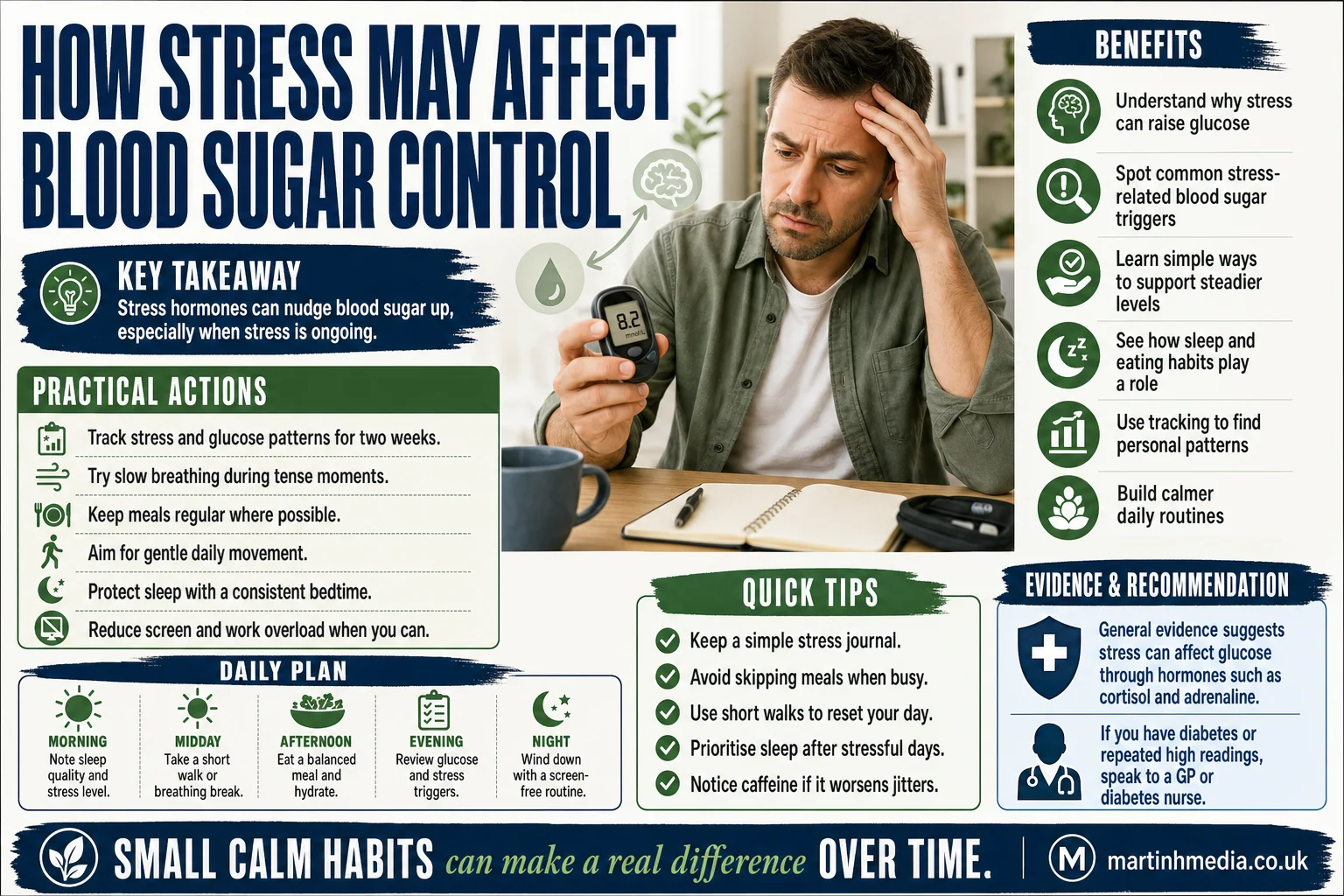
Why Your Stress May Be Sabotaging Your Blood Sugar
How Stress May Affect Blood Sugar Control matters when everyday tension triggers unexpected glucose spikes. Your body treats tight deadlines like physical threats. This response changes how cells process sugar.
How Stress May Affect Blood Sugar Control Through Hormone Release
Your body releases cortisol and adrenaline during stressful moments. These hormones prepare you for quick action. They tell your liver to release stored glucose. This gives muscles immediate energy for fight or flight.
The problem starts when stress becomes constant. Your liver keeps releasing sugar into your bloodstream. Your pancreas works harder to produce insulin. Over time, cells become less responsive to insulin signals.
Think about a typical work deadline scenario. Your heart rate increases as the clock ticks down. Cortisol floods your system for hours. Blood sugar rises even if you haven’t eaten anything.
Studies show cortisol directly interferes with insulin function. It blocks insulin receptors on cell surfaces. Sugar can’t enter cells efficiently. Glucose accumulates in your blood instead.
Physical Symptoms That Connect Stress and Glucose Levels
You might notice shakiness during high-pressure situations. This feels similar to low blood sugar symptoms. Your body actually has elevated glucose at that moment. The stress response creates confusing physical sensations.
Rapid heartbeat often accompanies stress-related glucose changes. Your pulse quickens as hormones signal danger. Blood vessels constrict to redirect blood flow. This affects how quickly sugar reaches different tissues.
Sweating happens when stress hormones peak. Your body temperature regulation shifts during fight-or-flight mode. This sweating differs from exercise-related perspiration. It comes with cold, clammy skin.
Headaches frequently develop from sustained stress. Blood sugar fluctuations contribute to this pain. Dehydration from stress compounds the problem. Your brain needs steady glucose to function properly.
How Stress May Affect Blood Sugar Control During Sleep Deprivation
Sleep loss creates a double stress on your body. You face mental stress from fatigue. You also experience physiological stress from disrupted rhythms. Both factors raise cortisol levels significantly.
One night of poor sleep changes insulin sensitivity. Your cells need more insulin to process sugar. This effect persists throughout the following day. Research shows just four hours of sleep impairs glucose metabolism.
Chronic sleep problems worsen blood sugar patterns over time. Your body never fully recovers between stressful days. Sleep quality directly impacts glucose regulation in measurable ways. Cortisol stays elevated when you don’t rest properly.
Night shifts create particularly challenging conditions. Your circadian rhythm fights against your schedule. Hormones release at inappropriate times. Blood sugar control becomes unpredictable.
How Stress May Affect Blood Sugar Control Through Eating Patterns
Stress changes what you want to eat. Cortisol increases cravings for quick energy foods. You reach for cookies instead of vegetables. These choices create rapid glucose spikes.
Many people skip meals when overwhelmed with tasks. Your body interprets meal skipping as another stressor. It releases more glucose from storage. Blood sugar rises despite eating nothing.
Emotional eating often follows stressful events. You consume larger portions without noticing. Food becomes a coping mechanism rather than fuel. This pattern disrupts normal hunger and fullness signals.
Stress also affects digestion speed. Your stomach empties more slowly under pressure. This changes how quickly sugar enters your bloodstream. The usual timing of meals becomes less predictable.
Workplace Stress and Daily Glucose Patterns
Office environments create sustained stress exposure. You sit for hours facing constant demands. Your muscles don’t use the released glucose. Blood sugar stays elevated without physical activity.
Meeting anxiety triggers immediate hormonal responses. Your glucose jumps before you even speak. This happens regardless of your last meal. The anticipation alone changes your metabolism.
Commute stress starts your day with elevated cortisol. Traffic jams activate your stress response unnecessarily. You arrive at work with already-high blood sugar. This sets a challenging baseline for the day.
Email notifications create repeated micro-stresses. Each ping triggers a small cortisol release. These add up over eight hours. Your body never returns to a truly relaxed state.
How Stress May Affect Blood Sugar Control in Different Age Groups
Young adults often experience stress from social pressures. Their bodies typically recover quickly from glucose spikes. Resilience decreases if stress becomes chronic. Early patterns set the stage for future metabolism.
Middle-aged individuals face compound stressors simultaneously. Career demands peak during these years. Family responsibilities add another layer of tension. The body’s stress response becomes less efficient with age.
Older adults show greater glucose sensitivity to stress. Their cells already respond more slowly to insulin. Added cortisol from stress worsens this resistance. Recovery from stress takes longer at this stage.
Children’s bodies react strongly to emotional stress. School pressure can raise their blood sugar measurably. Growth hormones already affect glucose naturally. Stress hormones add complexity to this process.
Relationship Between Mental Health and Glucose Stability
Anxiety disorders keep stress hormones constantly active. Your body stays in alert mode daily. This sustained cortisol elevation prevents normal glucose regulation. Mental health directly shapes metabolic health.
Depression changes how your brain signals hunger. It also affects motivation for healthy behaviors. You move less and eat differently. These changes compound stress-related blood sugar problems.
Post-traumatic stress creates unpredictable hormone surges. Triggers can happen without warning. Your glucose spikes at unexpected moments. This makes managing blood sugar especially difficult.
Panic attacks cause massive adrenaline releases. Your blood sugar rockets upward within minutes. The body mobilizes all available energy stores. This extreme response can last for hours afterward.
How Stress May Affect Blood Sugar Control Through Exercise Habits
Stress often eliminates time for physical activity. You skip workouts to handle pressing tasks. Your muscles stop using glucose efficiently. Reduced movement combined with poor sleep creates metabolic problems.
Some people exercise excessively when stressed. They push too hard without adequate recovery. This overtaxes the stress response system. Cortisol stays elevated even after workouts end.
Moderate movement actually reduces stress hormones. A short walk lowers cortisol within minutes. Your muscles consume excess blood sugar. This dual benefit helps regulate glucose effectively.
Consistency matters more than intensity for stress management. Daily gentle movement beats occasional intense sessions. Your body learns to handle stress better. Blood sugar patterns become more stable over weeks.
Testing and Monitoring Stress-Related Glucose Changes
Continuous glucose monitors reveal stress patterns clearly. You see spikes during challenging moments. These devices track changes without finger pricks. The data shows connections you might otherwise miss.
Keeping a stress journal alongside glucose readings helps. You record major stressors and corresponding blood sugar. Patterns emerge after several weeks of tracking. You identify your specific triggers and responses.
Morning fasting glucose often reflects previous day stress. High readings suggest elevated nighttime cortisol. Your body processed stress while you slept. Sleep patterns and glucose readings show clear relationships.
Post-meal readings tell you about stress timing. Sugar should peak within two hours of eating. Stress can delay or accelerate this pattern. You learn how your body uniquely responds.
Practical Stress Reduction for Better Glucose Management
Breathing exercises lower cortisol within five minutes. You take slow, deep breaths through your nose. Your nervous system switches from stress to calm. Blood sugar begins dropping as hormones shift.
Setting work boundaries protects your stress response. You define clear start and end times. Your body gets predictable recovery periods. This regularity helps stabilize daily glucose patterns.
Social connection reduces stress hormone production. Talking with trusted friends calms your nervous system. Laughter actually lowers cortisol measurably. These interactions benefit blood sugar indirectly.
Nature exposure provides quick stress relief. Even five minutes outside changes hormone levels. Your body relaxes when away from screens. Blood sugar regulation improves with regular outdoor time.
Track your stress levels for two weeks and note corresponding glucose patterns to find your personal triggers.
Frequently Asked Questions
Can stress cause blood sugar to rise without eating?
Yes, stress hormones signal your liver to release stored glucose. This happens even when you haven’t consumed any food. Your body prepares for physical action by making energy available. The glucose enters your bloodstream automatically during stress responses.
How quickly does stress affect blood sugar levels?
Blood sugar can rise within minutes of a stressful event. Adrenaline and cortisol release almost immediately when you feel threatened. The glucose response peaks within 15 to 30 minutes. Effects can last several hours depending on stress duration.
Does reducing stress lower blood sugar permanently?
Consistent stress management improves long-term glucose control. Your cells become more sensitive to insulin over time. Cortisol levels normalize with regular stress reduction practices. You need sustained changes rather than occasional stress relief for lasting benefits.
Why does stress affect blood sugar differently in different people?
Genetic factors influence how strongly you respond to stress. Your baseline insulin sensitivity plays a major role. Age, fitness level, and existing health conditions also matter. Some people naturally produce more cortisol during stressful situations than others.
Can chronic stress lead to diabetes?
Long-term stress increases diabetes risk through multiple pathways. Sustained cortisol elevation promotes insulin resistance over years. Stress also influences behaviors like eating and exercise habits. Combined factors raise your likelihood of developing blood sugar problems significantly.