
The 5-Minute Activity Trick Busy People Don’t Know About
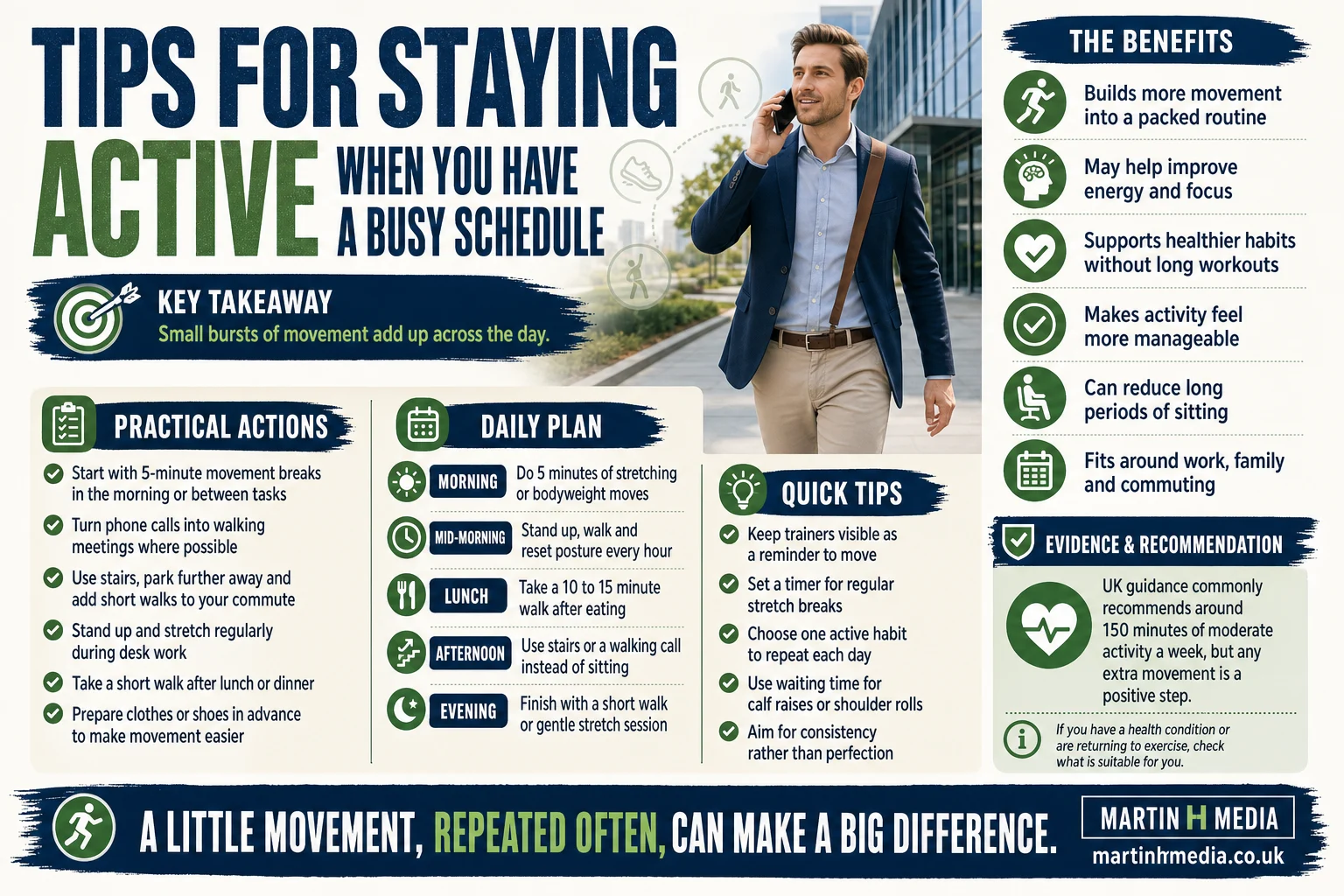
You stare at your calendar and see back-to-back meetings until dinner. The gym feels like another planet when work bleeds into evening. Tips for Staying Active When You Have a Busy Schedule start with movement hidden inside routines you already follow.
Tips for Staying Active When You Have a Busy Schedule Using Morning Minutes
Your alarm goes off 15 minutes earlier than usual. This gives you time for a quick movement session before anyone else wakes up. You don’t need equipment or a plan.
Push-ups against your kitchen counter take 60 seconds. Squats while your coffee brews add another minute. Lunges down the hallway to your bedroom work your legs. These movements raise your heart rate before your day starts.
The shower runs hot for five minutes anyway. Do calf raises while you wait for the temperature to adjust. Stretch your hamstrings while brushing your teeth. Movement fits into gaps you never noticed before.
Morning activity changes your energy for hours afterward. Your metabolism runs higher through lunch. Blood flows better to your brain during morning tasks. You feel sharper in early meetings.
Set out workout clothes the night before. This removes one decision from your morning. You see the clothes and remember your commitment. Friction disappears when preparation happens in advance.
Walking Meetings Replace Sitting
Phone calls don’t require chairs. Grab your phone and walk outside instead. Your thinking improves when your body moves. Ideas flow differently during walking conversations.
One-on-one meetings work perfectly as walking sessions. Suggest a route around your office building. Most colleagues appreciate the change. Fresh air beats conference room stuffiness.
You log 2,000 steps during a 20-minute walking call. Three calls like this add 6,000 steps to your day. This happens without blocking calendar time for exercise. Similar to simple daily habits that support natural fat loss, these small actions compound over weeks.
Track your steps with your phone. No fancy device needed. Your phone counts automatically in your pocket. Check the number before bed each night.
Tips for Staying Active When You Have a Busy Schedule Through Desk Movement
Sitting for eight hours straight damages your body. Your hip flexors tighten. Your back aches. Blood pools in your legs.
Stand up every 25 minutes. This breaks the sitting cycle. Walk to the water fountain. Stretch your arms overhead. Movement resets your posture.
Desk exercises take seconds but prevent hours of pain. Roll your shoulders backward ten times. Squeeze your shoulder blades together. Tilt your head side to side slowly.
Keep resistance bands in your desk drawer. Loop one around your thighs while sitting. Press your knees apart against the resistance. Your hip muscles activate without leaving your chair.
Set a timer on your computer. Every hour triggers a movement reminder. Two minutes of stretching or walking happens automatically. The timer decides so you don’t have to remember.
Commute Time Becomes Activity Time
Park at the far end of every lot. Those extra 200 steps happen twice daily. That’s 400 steps you wouldn’t take otherwise. Small distances add up fast.
Public transit users can get off one stop early. Walk the final ten minutes to your destination. This adds 20 minutes of daily walking automatically. Your commute time stays the same.
Bike commuting cuts travel time in many cities. You skip traffic jams entirely. The ride counts as your daily cardio session. Shower facilities at work make this realistic.
Stairs beat elevators for anything under four floors. Your legs burn slightly by the top. That burning means muscles working. Take stairs twice daily for weeks and your endurance doubles.
Tips for Staying Active When You Have a Busy Schedule During Lunch Breaks
Your lunch break probably lasts 30 to 60 minutes. Eating takes 10 minutes when you’re actually eating. The remaining time usually disappears into scrolling. Reclaim it.
Walk for 15 minutes after eating your lunch. This aids digestion naturally. Your afternoon energy stays more stable. Blood sugar doesn’t crash as hard.
Find a colleague who wants the same thing. Walking together creates accountability. You both show up because someone else expects you. Social connection makes movement enjoyable.
Bodyweight circuits work in empty conference rooms. Twenty squats, ten push-ups, and a 30-second plank take three minutes. Repeat this sequence three times. You finish a workout in ten minutes total.
Pack workout clothes in your car. Change during lunch for a quick gym session. Many gyms sit within five minutes of office buildings. A 20-minute lifting session beats zero activity.
Evening Routines Include Active Recovery
You collapse on the couch after dinner most nights. This feels earned after a long day. But sitting all evening compounds the sitting you did all day.
Walk around your block after dinner. Just 10 minutes helps your body process the meal. Food gets stored differently when you move afterward. The practice mirrors walking after meals to manage blood sugar naturally.
Stretch on the floor while watching television. Your hip flexors open up from hours of sitting. Your lower back releases tension. You still enjoy your show without guilt.
Play active games with your kids instead of passive ones. Tag in the backyard burns more calories than board games. Everyone moves together. Family time doubles as activity time.
YouTube offers 10-minute yoga videos for every skill level. Follow along before bed. This calms your nervous system for better sleep. Better sleep improves energy for tomorrow’s activity.
Tips for Staying Active When You Have a Busy Schedule With Weekend Strategy
Weekends offer larger blocks of unscheduled time. Don’t waste this advantage. One longer activity session on Saturday morning sets your week up differently.
Hiking takes you outside for two hours. You cover miles without noticing because scenery distracts you. Your body works harder on uneven terrain. Trail walking builds different muscles than sidewalk walking.
Farmers markets require lots of walking between stalls. You carry bags of produce back to your car. This counts as functional fitness. Shopping becomes a workout.
Home projects burn serious calories. Gardening works your whole body. Raking leaves raises your heart rate. Cleaning gutters challenges your arms and core. Productive work doubles as exercise.
Schedule active social plans instead of restaurant meetups. Suggest a bike ride with friends. Try a new climbing gym together. Activity plus socializing beats passive hangouts.
Habit Stacking Makes Movement Automatic
Tying new habits to existing ones removes the decision burden. Your brain already does certain things automatically. Attach movement to those automatic actions.
Do ten squats every time you use the bathroom. You already go several times daily. The squats happen automatically after the existing habit. No willpower needed.
Stretch while your dinner cooks. Food takes 20 minutes in the oven anyway. You stand there waiting. Use that time for hip stretches and arm circles.
Walk to your mailbox the long way around your property. This adds 100 extra steps to a task you do daily. The habit piggybacks on mail checking. Just like the approach in building sustainable daily habits for health, consistency matters more than intensity.
Calf raises happen while washing dishes. Your hands stay busy with plates. Your legs work independently. Two tasks happen simultaneously.
Preparation Beats Motivation
Motivation fades by Wednesday most weeks. Preparation works when feelings don’t. Set up your environment for automatic activity.
Leave sneakers by your office door. You see them when leaving for lunch. The visual cue triggers your walking habit. Shoes ready means excuses disappear.
Prep your gym bag Sunday night for the whole week. Everything sits ready in your car. You drive past the gym anyway. Stopping takes zero extra planning.
Calendar blocking protects movement time from meetings. Treat workout slots like client appointments. Nobody schedules over blocked time. Your activity becomes non-negotiable.
Find activities you actually enjoy rather than forcing yourself through misery. Enjoyable movement happens consistently. Hated workouts get skipped. Experiment until something clicks.
Start moving for five minutes today instead of planning the perfect routine for next Monday.
Frequently Asked Questions
How much daily activity do I actually need for health benefits?
Most health organizations recommend 150 minutes of moderate activity weekly. This breaks down to about 20 minutes daily. Even 10-minute sessions provide measurable benefits. Consistency matters more than duration for building sustainable habits.
Can short bursts of activity really replace longer workouts?
Research shows that accumulated activity throughout the day produces similar benefits to single sessions. Three 10-minute walks improve cardiovascular health comparably to one 30-minute walk. Your body responds to total movement volume regardless of timing.
What counts as activity when I’m trying to stay active?
Any movement above sitting qualifies as activity. Walking counts. Housework counts. Playing with kids counts. Gardening counts. Your heart rate rising slightly above resting level means you’re being active.
How do I stay consistent when my schedule changes every week?
Focus on flexible habits rather than fixed schedules. Attach movement to daily constants like meals or commutes. These happen regardless of your calendar. Build a menu of 5-minute options you can deploy anywhere.
Should I exercise when I’m already exhausted from work?
Light movement often increases energy rather than depleting it further. A 10-minute walk typically improves mood and alertness. Save intense workouts for when you feel rested. Gentle activity works better than complete rest on tired days.