
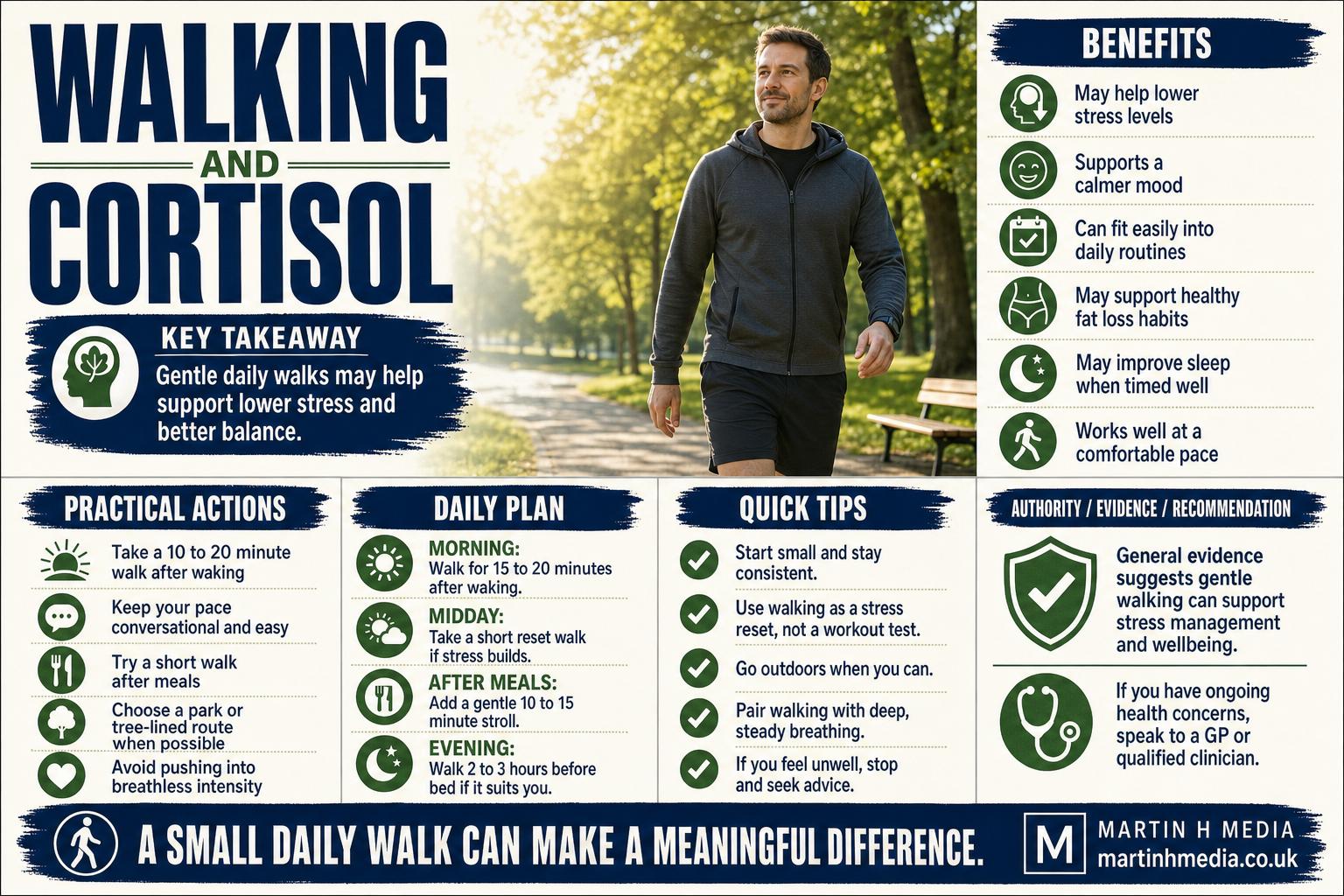
Why Walking Lowers Cortisol More Than Running
Your body dumps cortisol into your bloodstream when stress hits. Walking and cortisol have a direct relationship most people ignore. A short walk drops stress hormones faster than sitting still. This happens within minutes of starting your walk.
How Walking and Cortisol Levels Connect in Your Body
Cortisol floods your system when you face deadlines or arguments. Your adrenal glands release this hormone to prepare for threats. The problem starts when cortisol stays elevated for hours.
Walking triggers a physiological shift in hormone production. Your body interprets steady movement as a signal to lower threat response. Blood cortisol measurements drop by 15 to 20 percent after a 20-minute walk.
This isn’t about intense exercise or pushing yourself hard. Gentle walking at a conversational pace produces the cortisol-lowering effect. Your nervous system switches from fight-or-flight to rest-and-digest mode.
The rhythm of walking matters more than speed or distance. Your breath naturally syncs with your steps during a walk. This pattern calms your nervous system and signals safety to your brain.
Most people feel the difference before any lab test confirms it. Tension releases from your shoulders within five minutes of walking. Your mind stops racing and thoughts become clearer and calmer.
Morning Walks and Cortisol: Why Timing Changes Everything
Your cortisol naturally peaks 30 to 45 minutes after waking. This morning surge helps you feel alert and ready to move. Problems arise when this spike stays too high for too long.
A morning walk helps your body process this cortisol surge properly. Movement uses the energy cortisol releases into your bloodstream. Without activity, excess cortisol lingers and creates problems throughout your day.
People who walk within two hours of waking report better moods. They experience fewer energy crashes in the afternoon compared to non-walkers. The weight loss benefits of walking compound when you time walks with natural hormone rhythms.
You don’t need a long walk to see results. Fifteen minutes outside brings cortisol levels into a healthy range. Sunlight exposure during morning walks provides an additional hormone-balancing benefit.
Some people worry about exercising before breakfast. Walking doesn’t stress your system like intense cardio does. Your body handles a gentle morning walk without any fuel problems.
Walking and Cortisol Reduction Compared to Other Exercise
High-intensity workouts actually spike cortisol temporarily during the session. Running hard or lifting heavy weights triggers a stress response. Your body can’t tell the difference between exercise stress and life stress.
Walking keeps cortisol from spiking while still providing movement benefits. The moderate intensity never pushes you into a stress state. Your hormones stay balanced throughout the entire walk.
This makes walking superior for people with chronically elevated cortisol. Adding more intense exercise often backfires for stressed individuals. Walking provides movement without adding to your stress load.
Studies comparing different exercise types show walking wins for cortisol management. Runners show higher cortisol levels than walkers after six months. The difference becomes even more pronounced in people over 40.
You can walk daily without needing recovery days. Intense exercise requires rest periods to prevent cortisol buildup. Walking never pushes your system hard enough to need breaks.
The Connection Between Walking and Cortisol in Fat Storage
High cortisol tells your body to store fat around your midsection. This visceral fat accumulates when stress hormones stay elevated for weeks. Your body interprets constant cortisol as a sign of ongoing threat.
Walking breaks this fat-storage signal by lowering cortisol consistently. Your body stops receiving the message to pack on belly fat. Existing abdominal fat becomes easier to lose when cortisol drops.
The relationship between walking and cortisol explains why some people lose belly fat faster than others. Stressed individuals who start walking see dramatic changes in body composition. Their cortisol drops and abdominal fat follows within weeks.
A 20-minute walk after meals provides double benefits for fat storage. Movement lowers cortisol while also improving how your body handles food. Less glucose converts to fat when cortisol stays in check.
Many people try to diet their way out of stress-related belly fat. This approach fails because cortisol overrides calorie deficits. Walking addresses the hormone problem that dieting alone can’t fix.
How Long You Need to Walk to Lower Cortisol
Measurable cortisol drops happen after just 10 minutes of walking. Your body responds quickly to the movement signal. Longer walks provide greater reductions but aren’t always necessary.
Most research uses 20 to 30-minute walks as the standard. This duration consistently produces significant cortisol decreases across different populations. You don’t need to walk for hours to see real results.
Breaking your walk into two shorter sessions works just as well. A 15-minute morning walk plus a 15-minute evening walk lowers cortisol effectively. Your body responds to the total daily movement, not single long sessions.
Some days you might only manage five minutes outside. This still provides benefits compared to sitting all day. Any walking beats no walking for cortisol management.
Consistency matters more than duration for long-term cortisol control. Walking 20 minutes daily produces better results than walking 90 minutes once weekly. Your body adapts to regular movement patterns and maintains lower baseline cortisol.
Walking and Cortisol Changes in Nature Versus Urban Settings
Walking in green spaces lowers cortisol more than urban walking. Trees and natural scenery provide additional stress-reduction benefits beyond movement alone. Your nervous system responds differently to natural environments.
Studies measuring cortisol in nature walkers versus city walkers show clear differences. Nature walks produce 12 to 15 percent greater cortisol reductions. The effect holds true even when walking speed and duration match exactly.
You don’t need wilderness to get these benefits. A local park or tree-lined street works better than concrete sidewalks. Even small patches of green space enhance the cortisol-lowering effects of walking.
City dwellers without easy nature access still benefit from walking. Urban walking lowers cortisol compared to staying indoors all day. Nature amplifies the effect but isn’t absolutely required.
The combination of movement, fresh air, and natural scenery creates optimal conditions. Your senses engage differently outdoors than they do on a treadmill. This sensory variety contributes to deeper cortisol reduction.
Walking Speed and Its Effect on Cortisol Response
Walking too fast can actually raise cortisol instead of lowering it. Your body interprets very brisk walking as mild stress. The sweet spot sits at a comfortable, sustainable pace.
You should be able to hold a conversation during your walk. This conversational pace keeps your heart rate in the ideal zone. Your nervous system stays calm rather than entering a stress state.
Slow, deliberate walking works just as well as moderate-paced walking. Some research suggests very slow walking might lower cortisol even more. The key is staying below the intensity that triggers stress hormones.
Many fitness trackers encourage faster walking and higher heart rates. This advice conflicts with cortisol management goals. For stress reduction, ignore the prompts to speed up or hit target zones.
Your natural comfortable pace is probably perfect for cortisol reduction. Listen to your body instead of following rigid speed guidelines. Walking should feel easy and sustainable, not challenging.
Evening Walks and Cortisol Before Sleep
Cortisol should naturally drop in the evening as bedtime approaches. Many people experience the opposite due to work stress and screen time. Elevated evening cortisol destroys sleep quality and prevents deep rest.
An evening walk helps your body follow its natural cortisol rhythm. Movement signals the end of the active day to your hormones. Cortisol begins its descent toward nighttime lows where it belongs.
Walking after dinner specifically helps with next-morning cortisol patterns. Better sleep from lower evening cortisol means healthier morning hormone levels. The benefits of walking for weight loss multiply when your sleep improves alongside stress reduction.
Timing evening walks two to three hours before bed works best. This allows cortisol to drop gradually rather than spiking right before sleep. Your body temperature also normalizes by the time you lie down.
Some people find evening walks too energizing close to bedtime. Experiment with timing to find what works for your body. Most people can walk up until 90 minutes before sleep without problems.
Combining Walking and Cortisol Management With Fasting
Fasting alone can raise cortisol if you push too hard. Adding gentle walking during fasted periods prevents this cortisol spike. Movement signals to your body that you’re safe despite not eating.
Morning fasted walks provide cortisol benefits without triggering hunger hormones. Your body burns fat for fuel while keeping stress hormones in check. This combination explains why walking produces faster fat loss results when paired with intermittent fasting.
The key is keeping fasted walks gentle and short. Intense fasted exercise raises cortisol and causes problems. A relaxed 20-minute walk works perfectly during your fasting window.
Some people worry about exercising without food in their system. Walking doesn’t deplete your energy stores enough to cause stress responses. Your body handles fasted walking easily without cortisol spikes.
Breaking your fast after a morning walk optimizes both cortisol and blood sugar. Your insulin sensitivity improves and cortisol stays controlled. This pattern creates ideal conditions for fat loss and stress management.
Start with a 20-minute walk tomorrow morning to lower your cortisol naturally.
Frequently Asked Questions
Does walking immediately lower cortisol or does it take weeks?
Walking drops cortisol within 10 to 20 minutes of starting. You don’t need to wait weeks to feel the effect. However, consistent daily walking creates even lower baseline cortisol levels over time. Immediate and long-term benefits both exist for regular walkers.
Can walking raise cortisol if I push myself too hard?
Yes, walking at an intense pace can spike cortisol temporarily. Your body interprets hard physical effort as stress. Keep your walking pace comfortable and conversational to avoid this problem. You should never feel breathless or pushed during cortisol-lowering walks.
How does walking compare to meditation for lowering cortisol?
Both walking and meditation lower cortisol through different mechanisms. Walking provides physical movement benefits that meditation lacks. Meditation creates mental stillness that walking doesn’t fully achieve. Combining both practices produces the strongest cortisol reduction of all.
Will treadmill walking lower cortisol as much as outdoor walking?
Treadmill walking lowers cortisol but not as much as outdoor walking. Fresh air and changing scenery provide additional stress-reduction benefits. Natural environments enhance the cortisol-lowering effect beyond indoor treadmill sessions. Use a treadmill when necessary but prioritize outdoor walks when possible.
Can I lower cortisol by walking at night in the dark?
Night walking still lowers cortisol compared to sitting indoors. However, darkness reduces some of the nervous system benefits of outdoor walking. Evening walks work best before full darkness sets in. Safety concerns at night can actually raise stress instead of lowering it.