
You went to bed late and woke up craving sugar and carbs. Why sleep affects belly fat is something most people discover by accident. Poor sleep changes how your body stores energy. The less you sleep, the more fat ends up around your middle.
Why Sleep Affects Belly Fat Through Hormone Changes
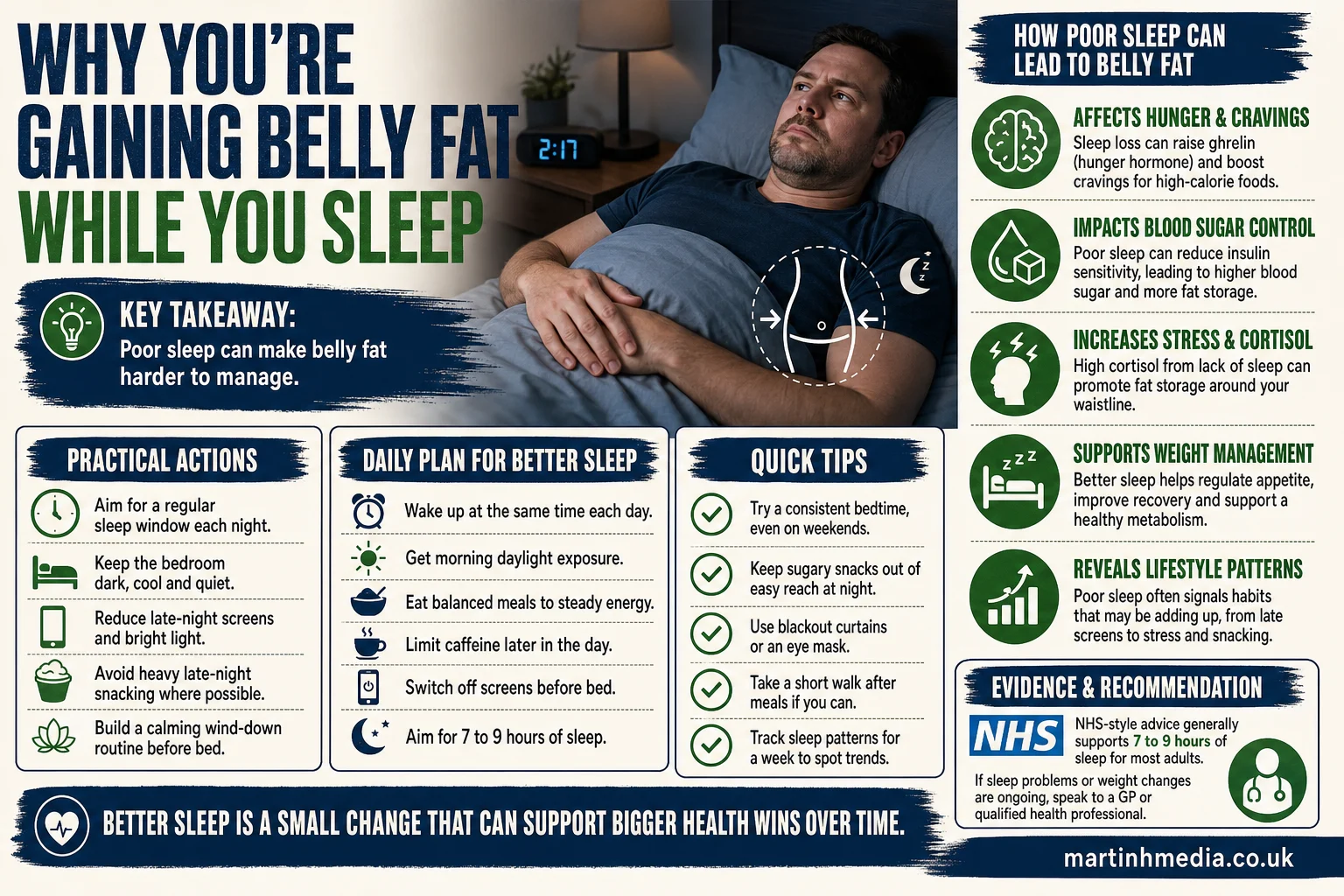
Your body releases cortisol when you don’t get enough rest. This stress hormone tells your body to store fat around your waist. It happens even if you eat the same amount of food.
Cortisol levels stay high when sleep is short or broken. Your body thinks it’s under threat. It holds onto belly fat as a survival response.
Two other hormones shift when sleep drops below seven hours. Ghrelin goes up and leptin goes down. Ghrelin makes you hungry. Leptin tells you when you’re full.
This combination is brutal for weight control. You feel hungrier throughout the day. You don’t feel satisfied after eating. Your body pushes you toward high-calorie foods.
The effect isn’t small. One night of poor sleep can increase ghrelin by 15 percent. Leptin can drop by the same amount. These changes make you eat more without realizing it.
Why Sleep Affects Belly Fat After 40 More Than Before
Your metabolism slows down as you age. Sleep becomes even more important for weight control. The combination hits people in their 40s and 50s hard.
Younger bodies can recover from one bad night of sleep. They bounce back quickly. Older bodies don’t have the same flexibility. The impact lasts longer.
Many people notice weight gain around their midsection after 40 despite eating the same way. Poor sleep often plays a bigger role than diet changes. Your body becomes more sensitive to sleep loss.
Growth hormone production drops with age. This hormone helps burn fat during sleep. Less sleep means even less growth hormone. Fat storage increases around the belly.
Sleep quality often declines after 40 for multiple reasons. Hormonal changes affect how deeply you sleep. Stress levels tend to be higher. These factors compound the problem.
Why Sleep Affects Belly Fat Through Blood Sugar Control
Sleep deprivation makes your cells less responsive to insulin. This is called insulin resistance. Your body produces more insulin to compensate.
High insulin levels signal your body to store fat. The storage happens mostly around your abdomen. This type of fat is called visceral fat.
Even one night of poor sleep can reduce insulin sensitivity. Studies show a 30 percent drop after just four hours of sleep. Your body processes sugar like someone with prediabetes.
This creates a dangerous cycle. Poor sleep leads to insulin resistance. Insulin resistance increases belly fat. More belly fat disrupts sleep further.
People who sleep less than six hours regularly have higher blood sugar levels. They also carry more weight around their waist. The connection is clear and measurable.
Why Sleep Affects Belly Fat Through Food Choices
Your brain’s decision-making center gets impaired when you’re tired. The prefrontal cortex doesn’t function properly. This part controls impulse control and rational thinking.
At the same time, your reward centers become more active. Foods high in sugar and fat look more appealing. Your brain seeks quick energy to compensate for tiredness.
Research shows sleep-deprived people eat about 300 extra calories per day. Most of these calories come from snacks and sweets. The choices happen almost automatically.
You’re more likely to skip breakfast when you sleep poorly. Then you overeat later in the day. Evening snacking increases significantly with sleep loss.
The body also craves dense, high-calorie foods specifically. A salad won’t cut it when you’re exhausted. You want pizza, cookies, or chips. These foods promote belly fat storage more than other options.
Why Sleep Affects Belly Fat During Deep Sleep Stages
Your body does most of its repair work during deep sleep. This includes breaking down stored fat for energy. Less deep sleep means less fat burning.
Deep sleep occurs mostly in the first half of the night. Going to bed late reduces these precious hours. You might still sleep seven hours total but miss the important stages.
Your metabolism actually increases during certain sleep phases. Your body uses energy to repair tissues and consolidate memories. This process burns calories throughout the night.
People who get more deep sleep lose more fat when dieting. They also preserve more muscle mass. The quality of sleep matters as much as the quantity.
Sleep trackers can show you how much deep sleep you’re getting. Most adults need 90 to 120 minutes per night. Anything less affects fat loss negatively.
Why Sleep Affects Belly Fat Through Physical Activity Levels
Exhaustion makes you move less throughout the day. You take fewer steps. You avoid stairs. You sit more often.
This isn’t just about skipping the gym. Your daily movement drops without you noticing. Scientists call this non-exercise activity thermogenesis. It accounts for hundreds of calories daily.
Tired people also exercise less intensely when they do work out. You can’t push as hard. Your body doesn’t respond as well to training.
Recovery from exercise depends heavily on sleep quality. Your muscles don’t repair properly without adequate rest. This limits how much you can train over time.
The fatigue from poor sleep creates a sedentary lifestyle gradually. Each day you move a bit less. Over weeks and months, this adds significant belly fat. Understanding how lifestyle factors interact with metabolism helps explain stubborn weight gain.
Why Sleep Affects Belly Fat Through Inflammation
Chronic sleep loss triggers inflammation throughout your body. Inflammatory markers rise in your bloodstream. This creates an environment where fat storage increases.
Inflammation interferes with how your cells respond to signals. Fat cells become less responsive to hormones that break down fat. They become more responsive to storage signals.
Belly fat itself produces inflammatory compounds. More inflammation leads to more belly fat. More belly fat causes more inflammation. The cycle reinforces itself.
Sleep helps your body clear inflammatory molecules. This happens through the lymphatic system during rest. Shortened sleep doesn’t give your body enough time to clean up.
People with chronic inflammation struggle more with belly fat. They also tend to have worse sleep quality. Addressing one problem often helps solve the other.
Why Sleep Affects Belly Fat When Timing Is Off
Your body operates on a 24-hour rhythm called your circadian clock. This clock controls when you feel hungry and when you burn fat. Poor sleep throws off this entire system.
Eating late at night confuses your circadian rhythm. Your body isn’t prepared to process food during those hours. More calories get stored as fat instead of being used.
Shift workers and people with irregular schedules have higher rates of obesity. Their circadian clocks never stabilize. Belly fat accumulates faster even with the same calorie intake.
Light exposure at night also disrupts your internal clock. Blue light from screens suppresses melatonin. This delays sleep and reduces sleep quality.
Getting sunlight in the morning helps reset your circadian rhythm. It improves sleep quality at night. Better sleep timing leads to better fat metabolism throughout the day.
Why Sleep Affects Belly Fat More in Women
Women’s bodies respond differently to sleep loss than men’s bodies. Hormonal fluctuations make women more vulnerable to sleep-related weight gain.
Estrogen and progesterone both affect sleep quality and fat storage. These hormones fluctuate monthly and decline with age. Sleep problems often worsen during perimenopause and menopause.
Women tend to store fat differently based on their hormonal state. Poor sleep combined with hormonal changes directs more fat to the belly. This wasn’t as common in younger years.
Research shows women gain belly fat faster than men with the same sleep deficit. The hormonal connection makes sleep even more important for women’s weight management. Many discover this connection when searching for answers about unexplained weight gain in their 40s and beyond.
Sleep quality often affects mood and stress more severely in women. Higher stress means higher cortisol. Higher cortisol means more belly fat.
Get seven to nine hours of sleep in a completely dark room starting tonight.
Frequently Asked Questions
How many hours of sleep do you need to prevent belly fat?
Most adults need seven to nine hours of quality sleep per night. Anything less than seven hours consistently increases belly fat storage. The quality matters as much as the quantity.
Can one night of bad sleep cause belly fat gain?
One night won’t cause permanent belly fat but it does affect your hormones immediately. Your insulin sensitivity drops and hunger hormones shift. These changes make you eat more the next day.
Does sleeping more help you lose existing belly fat?
Better sleep supports fat loss when combined with proper diet. Your body burns more fat during deep sleep stages. Sleep alone won’t remove belly fat but poor sleep prevents fat loss.
Why do I crave junk food when I’m tired?
Sleep deprivation activates your brain’s reward centers more strongly. Your prefrontal cortex works less effectively. This combination makes high-calorie foods irresistible when you’re exhausted.
Can naps make up for lost nighttime sleep?
Naps can help reduce some effects of sleep deprivation temporarily. They don’t provide the same deep sleep stages as nighttime rest. Regular nighttime sleep is far more effective for controlling belly fat.