
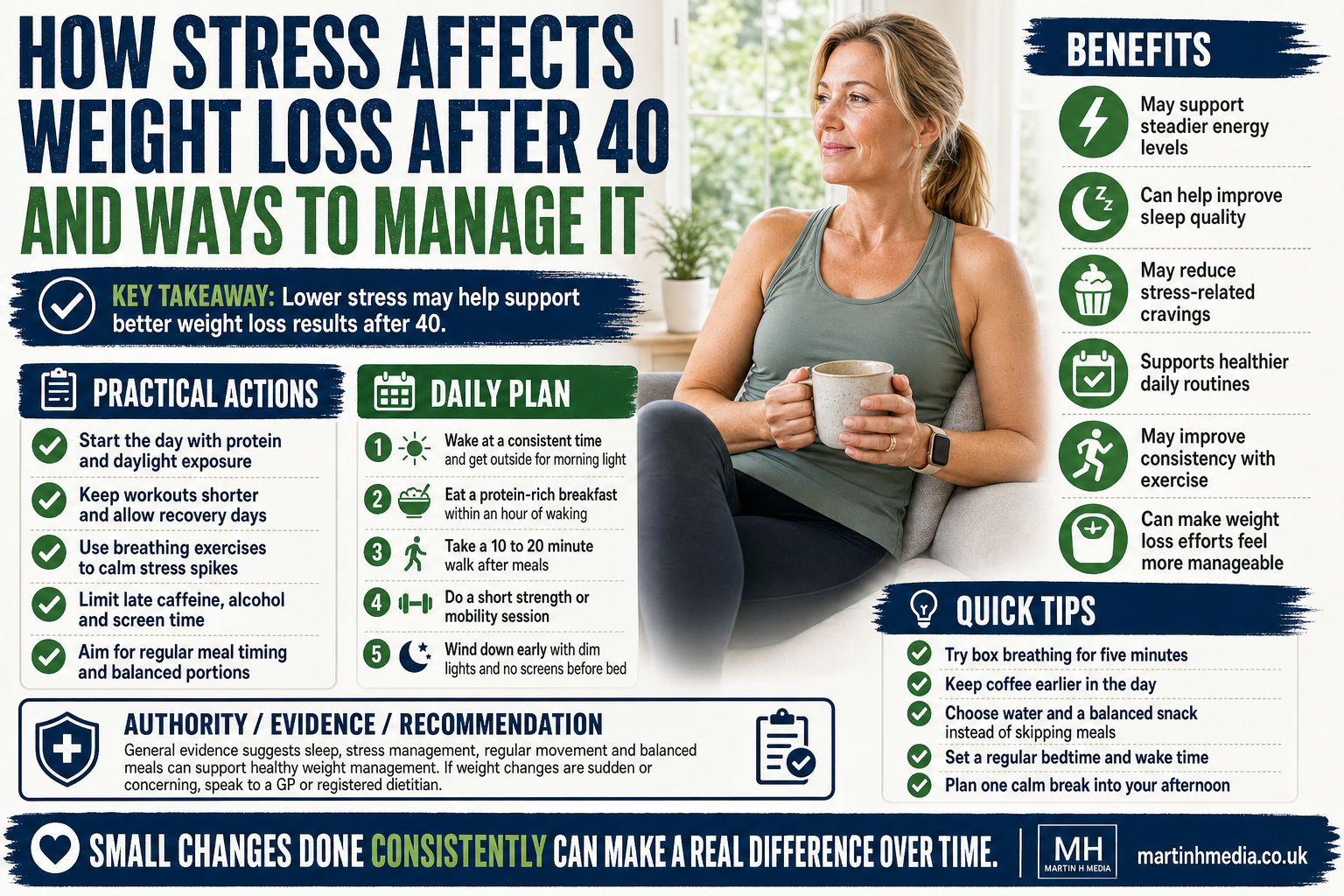
Why Stress Sabotages Weight Loss After 40 (And How to Stop It)
Your jeans fit perfectly at thirty-eight. Now your waistband pinches despite eating less. How Stress Affects Weight Loss After 40 and Ways to Manage It starts with cortisol. Your stress hormone changes how your body stores fat after forty.
How Stress Affects Weight Loss After 40 Through Cortisol Changes
Your adrenal glands produce more cortisol per stressful event after age forty. The hormone output increases even when your lifestyle stays identical. This happens because receptor sensitivity changes with age.
Cortisol signals your body to store fat around your midsection. Visceral fat cells contain four times more cortisol receptors than subcutaneous fat. The hormone binds directly to abdominal tissue.
Your insulin sensitivity drops simultaneously. Cortisol blocks insulin from moving glucose into muscle cells. Sugar stays in your bloodstream longer. Your pancreas releases more insulin to compensate.
Now two hormones prevent fat burning. Elevated insulin stops fat release from storage. High cortisol directs energy toward fat storage. The combination creates stubborn weight that resists calorie restriction.
This metabolic shift explains why your previous diet strategies stop working. Your body operates under different hormonal rules after forty. Cutting calories further raises cortisol even more.
How Morning Habits Affect Stress and Weight After Forty
Your cortisol peaks naturally thirty minutes after you wake. This surge should follow a consistent schedule. Irregular wake times disrupt your entire daily hormone pattern.
Checking your phone immediately triggers an artificial cortisol spike. Email notifications register as threats to your nervous system. Your adrenal glands respond before you finish reading the message.
Eating protein within one hour of waking stabilizes blood sugar. This prevents a secondary stress hormone release mid-morning. Your body doesn’t need cortisol to manufacture emergency energy.
Morning sunlight exposure for ten minutes resets your circadian rhythm. Natural light lowers afternoon cortisol by eighteen percent. The effect works even on overcast days.
A fifteen-minute walk after waking drops cortisol for hours. Gentle movement signals safety to your brain. Your nervous system interprets activity as confirmation that immediate danger passed.
Cold water on your face for thirty seconds activates your vagus nerve. This switches your body from fight-or-flight mode to rest mode. The temperature shock provides immediate cortisol regulation.
How Stress Affects Weight Loss After 40 Through Sleep Disruption
Poor sleep raises next-day cortisol by forty percent after one bad night. Chronic sleep problems keep the hormone elevated constantly. Your body uses cortisol as artificial energy when rest-deprived.
You feel wired despite exhaustion. The stress hormone masks fatigue signals. Your brain stays alert when it should wind down.
Going to bed at different times confuses cortisol regulation. Your adrenal glands can’t predict when to reduce hormone production. They continue releasing cortisol past your ideal sleep time.
Room temperature above sixty-eight degrees prevents deep sleep stages. Your core temperature must drop for proper rest. Heat blocks this natural decline.
Blue light after sunset delays melatonin production by two hours. Low melatonin means high cortisol at bedtime. Your body maintains daytime hormone levels into the night.
Eating within three hours of sleep raises overnight cortisol. Digestion activates your sympathetic nervous system. Stress hormones stay elevated when they should naturally drop.
Seven hours of consistent sleep lowers baseline cortisol by twenty-five percent. This creates more fat loss than any diet change. Sleep provides the biggest hormonal return for weight management.
How Meal Timing Controls Stress Hormones and Fat Storage
Skipping breakfast raises cortisol by eleven AM. Your body interprets morning fasting as a stress signal. The adrenal glands release hormones to access stored energy.
Eating every two hours keeps insulin constantly elevated. Frequent meals prevent insulin from ever dropping to baseline. Your body never enters fat-burning mode.
Three meals spaced four to five hours apart allows insulin to fall between eating. Lower insulin permits cortisol to release fat for energy. The hormones work together instead of against each other.
Eating your largest meal at lunch instead of dinner improves cortisol patterns. Your body processes food more efficiently earlier in the day. Metabolism naturally slows after sunset.
Late-night eating raises morning cortisol by thirty percent. Your body struggles to complete digestion during sleep. The stress response activates to manage unfinished metabolic work.
A twelve-hour overnight fast gives your system time to clear glucose. Lower blood sugar in the morning means less cortisol release. Your adrenal glands don’t need to compensate for insulin problems.
How Stress Affects Weight Loss After 40 and Ways Exercise Helps
Intense workouts lasting over forty-five minutes spike cortisol significantly. Long cardio sessions signal physical stress to your body. The hormone stays elevated for hours after you finish.
Strength training for thirty minutes lowers baseline cortisol over time. Muscle tissue improves insulin sensitivity. Better insulin function reduces the need for stress hormone compensation.
Walking for twenty minutes after meals drops post-eating glucose spikes. Lower blood sugar means less insulin release. Reduced insulin means cortisol doesn’t need to counterbalance the hormone.
Exercising in a fasted state raises cortisol by fifty percent. Your body perceives the combination as extreme stress. The adrenal response becomes exaggerated.
Working out within two hours of eating provides glucose for fuel. Your body doesn’t need cortisol to manufacture emergency energy. The stress response stays moderate.
Rest days allow cortisol levels to return to baseline. Constant training without recovery keeps the hormone chronically elevated. Your body never exits stress mode.
Managing weight loss over 40 with a specific focus on cortisol means choosing shorter workouts more frequently. Three twenty-minute sessions beat one ninety-minute workout for hormone balance.
How Daily Stress Management Changes Fat Loss Results
Five minutes of breathing exercises lowers cortisol by twenty percent immediately. Box breathing involves four counts in and four counts out. The pattern activates your parasympathetic nervous system.
Social media scrolling raises cortisol within three minutes. Comparison triggers and negative news register as personal threats. Your adrenal glands respond to digital stress like physical danger.
Setting your phone to grayscale reduces stimulation that triggers cortisol. Color images create stronger emotional responses. Muted screens generate less stress hormone activation.
Spending time in nature for twenty minutes drops cortisol by fifteen percent. Trees and green spaces signal safety to your nervous system. The effect happens even in small parks.
Listening to music below sixty beats per minute slows your heart rate. A slower pulse tells your brain the environment is safe. Cortisol production decreases in response.
Laughing for ten minutes lowers stress hormones for up to two hours. Genuine laughter triggers endorphins that counteract cortisol. The physical act changes your hormone balance.
Planning worry time for fifteen minutes daily contains stress to one period. Your brain stops generating cortisol spikes throughout the day. Contained stress creates predictable hormone patterns.
How Stress Affects Weight Loss After 40 Through Hidden Triggers
Caffeine after two PM extends cortisol elevation into evening. The stimulant stays in your system for six hours. Late-day coffee disrupts the natural cortisol decline before bed.
Alcohol disrupts deep sleep even in small amounts. Poor sleep quality raises next-day cortisol. One drink can affect stress hormones for forty-eight hours.
Perfectionism creates constant low-level stress that elevates cortisol daily. Unrealistic standards keep your nervous system in alert mode. Your body never registers tasks as complete.
Saying yes to every request overloads your schedule. A packed calendar signals chronic time pressure. Your adrenal glands respond with sustained cortisol output.
Multitasking forces rapid attention shifts that trigger stress responses. Each task switch creates a micro-dose of cortisol. Twenty switches per hour add up to sustained elevation.
Skipping meals to save calories backfires after forty. Food restriction registers as famine stress. Your body releases cortisol to protect against perceived scarcity.
Understanding cortisol patterns after 40 reveals why weight loss requires different strategies. Your metabolism responds more to stress management than calorie counting. Hormone balance creates the foundation for fat loss.
How Nutrition Choices Lower Stress and Support Fat Loss
Vitamin C supplementation lowers cortisol response to stress by thirty percent. The nutrient supports adrenal gland function. Five hundred milligrams daily shows measurable effects.
Magnesium deficiency increases cortisol production. The mineral regulates stress hormone receptors. Four hundred milligrams before bed improves sleep and hormone balance.
Omega-3 fatty acids reduce cortisol spikes from psychological stress. Fish oil dampens the adrenal response. Two grams daily provides therapeutic effects.
Eating protein at every meal stabilizes blood sugar throughout the day. Stable glucose means less cortisol release for energy management. Twenty to thirty grams per meal works best.
Refined sugar creates blood sugar crashes that trigger cortisol release. The hormone compensates for rapid glucose drops. Eliminating added sugar removes a major cortisol trigger.
Fiber slows glucose absorption and prevents insulin spikes. Lower insulin means cortisol doesn’t need to counterbalance the hormone. Thirty grams daily improves hormone patterns.
Fermented foods support gut bacteria that regulate cortisol production. Your microbiome communicates with your adrenal glands. Kimchi and sauerkraut provide beneficial strains.
Learning practical approaches to cortisol management transforms weight loss efforts after forty. Small habit changes create bigger results than aggressive calorie restriction. Your hormones determine whether your body releases or stores fat.
Start with one morning routine change and track your stress levels for two weeks.
Frequently Asked Questions
Why does stress cause belly fat specifically after age forty?
Cortisol receptors concentrate in visceral abdominal fat tissue. After forty your body produces more stress hormone per trigger. The combination directs fat storage to your midsection. Insulin resistance increases simultaneously and blocks fat release. These hormonal changes create stubborn belly fat that resists typical dieting.
Can you lose weight after forty without managing cortisol levels?
Weight loss becomes significantly harder with elevated cortisol. The hormone prevents fat cells from releasing stored energy. High cortisol also increases hunger and cravings for sugar. Managing stress hormones first makes calorie restriction more effective. Most people find dieting alone fails without addressing cortisol.
How long does it take to lower cortisol through lifestyle changes?
Some interventions like breathing exercises lower cortisol within minutes. Consistent sleep improvements show effects within one week. Building new stress management habits takes three to four weeks. Full hormone rebalancing typically requires eight to twelve weeks. Individual results vary based on starting cortisol levels and consistency.
Does cortisol affect muscle mass as you age?
Elevated cortisol breaks down muscle tissue for glucose. The hormone prioritizes immediate energy over muscle preservation. After forty you already lose muscle faster naturally. High stress hormones accelerate this decline. Maintaining muscle requires both strength training and cortisol management.
What time of day is cortisol highest and how does this affect eating?
Cortisol peaks naturally thirty to forty-five minutes after waking. The hormone should decline gradually throughout the day. Eating protein at breakfast prevents a secondary morning spike. Evening cortisol should be lowest for proper sleep. Late-day stress or caffeine disrupts this natural pattern.