

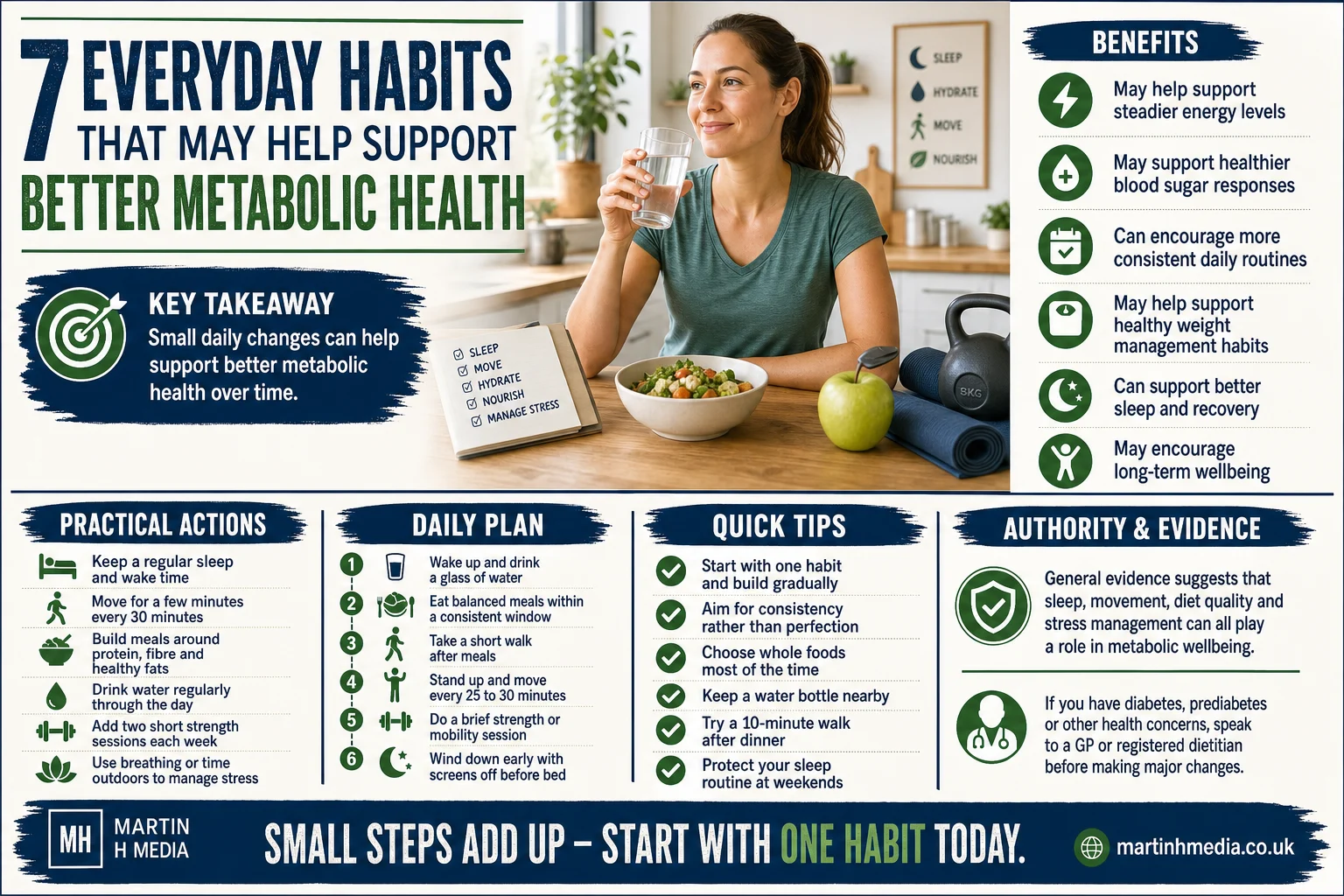
7 Metabolism Habits You’re Probably Doing Wrong
You feel tired by midafternoon even after eating lunch. Your energy crashes without warning. Small changes in daily routines can shift how your body processes fuel. 7 Everyday Habits That May Help Support Better Metabolic Health starts with actions you control right now.
Prioritize Sleep Quality to Help Support Better Metabolic Health
Sleep duration matters less than you think if the quality is poor. Your body repairs insulin receptors during deep sleep phases. Interruptions prevent this repair work from completing properly.
Room temperature affects sleep depth more than most people realize. Keep your bedroom between 65 and 68 degrees Fahrenheit. Your core temperature needs to drop for deep sleep to occur.
Screen time before bed disrupts melatonin production for hours afterward. Put devices away at least 90 minutes before sleep. Read a physical book instead.
Consistent sleep schedules train your metabolic clock to expect rest patterns. Go to bed at the same time every night. Wake up at the same time every morning, including weekends.
Research shows that poor sleep patterns directly affect glucose metabolism within just a few days. Your body becomes less sensitive to insulin signals. This creates a cycle of energy instability.
Manage Meal Timing as Part of Better Metabolic Health Habits
When you eat matters as much as what you eat. Your body expects food during daylight hours based on evolutionary patterns. Eating late confuses these internal signals.
Try confining all meals to a ten-hour window each day. Start eating at 8 AM and finish by 6 PM. This gives your digestive system a break overnight.
Breakfast within an hour of waking jumpstarts your metabolic processes. Skipping it forces your body into conservation mode. You burn fewer calories throughout the morning.
Late-night snacking interferes with overnight repair processes in your cells. Your liver can’t process stored glucose effectively while digesting food. Stop eating three hours before bed.
Weekend meal timing shouldn’t shift more than an hour from weekdays. Large changes confuse your circadian rhythm. Your metabolism works best with predictable patterns.
Stay Hydrated Throughout the Day for Better Metabolic Health
Water helps your cells respond to insulin more effectively. Dehydration thickens your blood and slows nutrient transport. Even mild fluid loss impairs metabolic function.
Drink water before you feel thirsty. Thirst signals appear only after dehydration begins. Keep a water bottle within reach all day.
Coffee and tea count toward daily fluid intake but not fully. Caffeine has mild diuretic effects that increase water loss. Drink one glass of water for every cup of coffee.
Cold water may slightly increase calorie burning as your body warms it. The effect is small but real. Room temperature water absorbs faster if you need quick hydration.
Morning hydration is particularly important after overnight fluid loss. Drink two glasses of water within 30 minutes of waking. This supports the natural cortisol rise that regulates morning metabolism.
Move More Frequently to Support Better Metabolic Health
Sitting for more than 30 minutes slows your metabolic rate noticeably. Blood pools in your legs instead of circulating efficiently. Muscles stop signaling for glucose uptake.
Set a timer to stand and move every 25 minutes. Walk to another room or do ten bodyweight squats. Two minutes of movement resets your metabolic state.
Walking after meals dramatically improves glucose clearance from your bloodstream. A ten-minute walk after dinner prevents blood sugar spikes. Time this walk to start within 15 minutes of finishing your meal.
Fidgeting burns more calories than you’d expect throughout a full day. Tap your feet while working. Shift positions frequently while sitting.
Stairs offer quick metabolic boosts whenever you encounter them. Take stairs instead of elevators for trips under five floors. The intensity spike activates muscle glucose uptake.
Build Muscle to Support Better Metabolic Health Long-Term
Muscle tissue burns calories even while you sleep or sit still. Fat tissue requires almost no energy to maintain. More muscle means a higher baseline metabolic rate.
Resistance training twice weekly produces measurable metabolic improvements within six weeks. You don’t need a gym membership. Bodyweight exercises work effectively at home.
Push-ups, squats, and planks target large muscle groups efficiently. Do three sets of each exercise. Rest one minute between sets.
Protein intake after resistance training determines how much muscle you build. Eat 20 to 30 grams of protein within two hours. Greek yogurt or a chicken breast provides enough.
Progressive overload drives continued muscle growth over months and years. Add one repetition each week to your exercises. Your muscles adapt by growing stronger.
Manage Stress to Help Support Better Metabolic Health Daily
Chronic stress floods your system with cortisol throughout the day. High cortisol tells your body to store fat around your midsection. It also reduces insulin sensitivity.
Five minutes of deep breathing lowers cortisol levels measurably. Breathe in for four counts. Hold for four counts. Exhale for six counts. Repeat ten times.
Nature exposure reduces stress hormones more effectively than indoor relaxation. Spend 20 minutes outside daily. A park visit works better than a city street.
Social connection buffers against stress-related metabolic damage. Call a friend instead of scrolling social media. Face-to-face conversations work best.
Since stress and poor sleep create a harmful cycle for metabolism, addressing both simultaneously produces better results. Stress prevents quality sleep. Poor sleep increases stress hormones the next day.
Choose Whole Foods to Help Support Better Metabolic Health
Processed foods contain additives that confuse your body’s fullness signals. You eat more calories without feeling satisfied. Your metabolism struggles to process artificial ingredients efficiently.
Fiber slows glucose absorption and prevents blood sugar spikes after meals. Vegetables, fruits, and whole grains provide natural fiber. Aim for 25 to 35 grams daily.
Protein requires more energy to digest than carbohydrates or fats do. This is called the thermic effect of food. You burn extra calories just by eating protein-rich meals.
Healthy fats from nuts, avocados, and olive oil improve insulin sensitivity. They also slow digestion and keep you full longer. Include them in every meal.
Understanding how different factors work together to influence metabolic function helps you make better food choices throughout the day. Single foods matter less than overall patterns.
These seven approaches work best when you implement them together gradually. Start with one habit this week. Add another next week. 7 Everyday Habits That May Help Support Better Metabolic Health become automatic with consistent practice. Your body adapts to new patterns within three to four weeks. Small daily actions compound into significant metabolic improvements over months. You don’t need perfection to see results.
Pick one habit from this list and start tomorrow morning.
Frequently Asked Questions
How long does it take to see metabolic improvements from these habits?
Most people notice energy changes within two to three weeks. Measurable metabolic markers like fasting glucose improve after six to eight weeks. Consistency matters more than intensity for lasting results.
Can I focus on just one or two habits instead of all seven?
Yes, starting with one or two habits works well. Sleep quality and meal timing often produce the quickest noticeable changes. Add more habits gradually as the first ones become automatic.
Do these habits work if I have existing metabolic concerns?
These habits may support general wellness but shouldn’t replace medical advice. Consult your doctor before making significant lifestyle changes. They can monitor your progress with appropriate testing.
How much water should I drink daily for metabolic benefits?
Aim for half your body weight in ounces as a baseline. A 160-pound person would target 80 ounces daily. Increase this amount if you exercise or live in hot climates.
What’s the minimum amount of movement needed to affect metabolism?
Two minutes of movement every 30 minutes provides measurable benefits. A total of 30 minutes of moderate activity daily supports long-term metabolic health. Break this into smaller chunks throughout your day.