

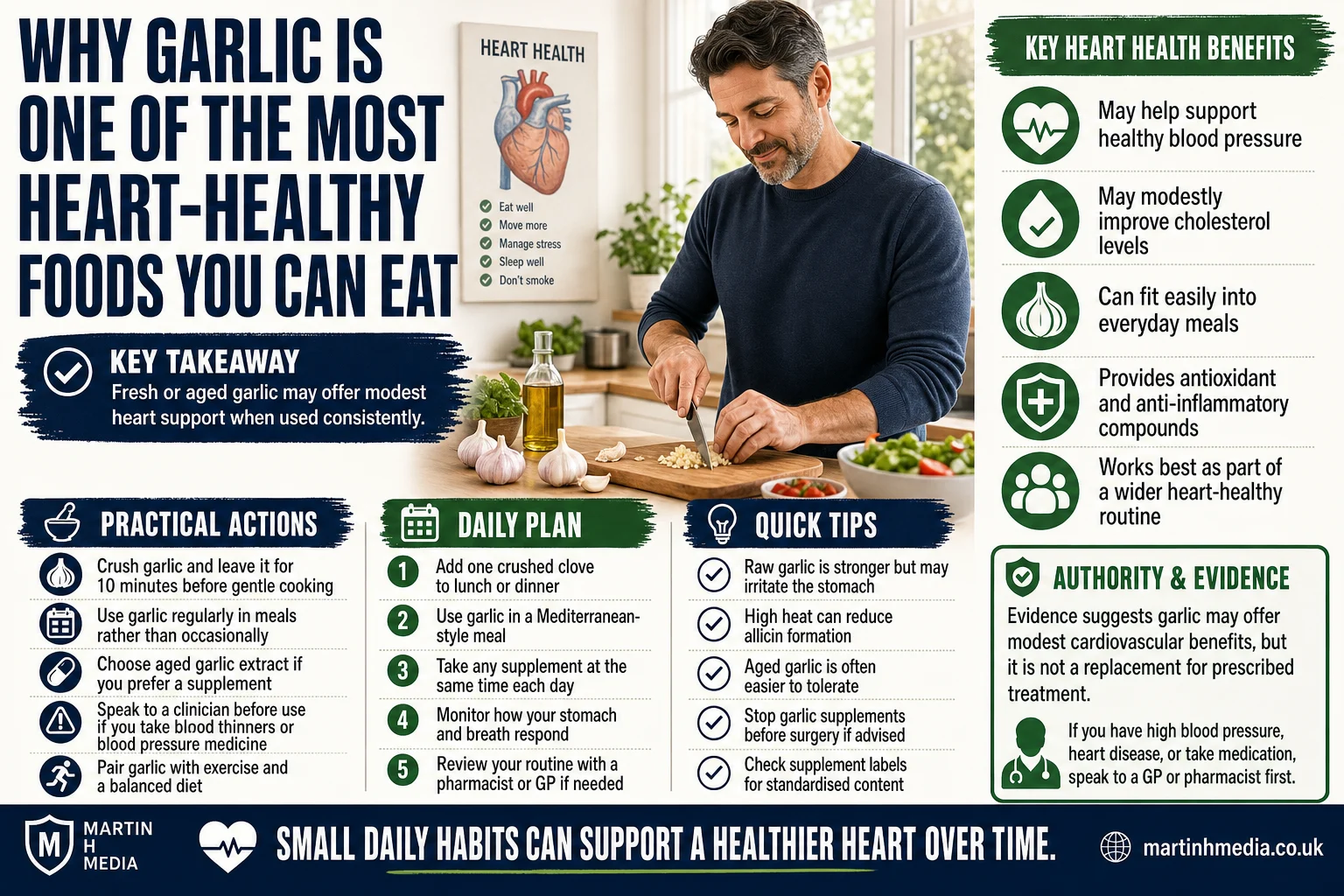
Garlic and Heart Health connects through mechanisms most people overlook in their kitchen. You probably add garlic to pasta without thinking twice about your arteries. Raw cloves contain compounds that change how blood moves through vessels. The preparation method determines whether you get therapeutic effects or just flavor.
How Garlic and Heart Health Link Through Sulfur Compounds
Allicin forms when you crush or chop fresh garlic cloves. This sulfur compound doesn’t exist in whole garlic. The enzyme alliinase creates it only after cell walls break.
Your cardiovascular system responds to allicin within hours of consumption. Blood vessels relax. Pressure drops slightly. Platelets become less sticky.
Cooked garlic loses most allicin before you eat it. Heat deactivates the enzyme needed for formation. This explains why roasted garlic tastes mild and sweet.
Aged garlic extract takes a different path. Manufacturers age raw garlic for months in ethanol. This process creates S-allyl cysteine instead of allicin. The compound remains stable through cooking and digestion.
Most studies showing heart benefits use aged preparations. Fresh garlic works differently in your body. Both offer value through separate mechanisms.
Garlic and Heart Health Through Blood Pressure Reduction
Some studies have found that regular garlic intake may help reduce blood pressure in people with elevated readings. This appears to matter most for people in the pre-hypertension range.
The effect comes from hydrogen sulfide production in your blood vessels. Garlic compounds trigger cells to make this gas. Smooth muscle in artery walls responds by relaxing.
You need consistent intake for results to appear. One clove per day shows measurable changes after three months. Less than that produces inconsistent outcomes.
People taking blood pressure medication should talk to their doctor first. Garlic can amplify the effects of ACE inhibitors. Your pressure might drop too low.
The reduction works best for people with elevated readings. Normal blood pressure doesn’t drop much further. Your body maintains baseline function.
Cholesterol Changes From Regular Garlic Consumption
Total cholesterol decreases by roughly ten percent with aged garlic extract. LDL cholesterol drops slightly more than HDL increases. The ratio improves in favor of heart protection.
Fresh garlic shows smaller effects on cholesterol panels. Studies using raw cloves report mixed results. Preparation consistency affects compound availability.
Garlic blocks an enzyme in your liver called HMG-CoA reductase. This same enzyme gets targeted by statin medications. The blocking effect from garlic is much weaker.
You won’t replace prescribed statins with kitchen garlic. The pharmaceutical versions work hundreds of times stronger. Garlic offers modest support for borderline cases.
Triglycerides respond better than cholesterol to garlic intake. Some people see drops of twenty to thirty points. This benefit appears more reliable across different studies.
Preventing Arterial Plaque With Garlic and Heart Health Strategies
Aged garlic slows calcium buildup in coronary arteries. CT scans show reduced plaque progression over one year. The effect isn’t dramatic but remains measurable.
Plaque stabilization matters as much as size reduction. Unstable plaques rupture and cause heart attacks. Garlic compounds reduce inflammation in arterial walls.
Oxidized LDL cholesterol drives plaque formation more than regular LDL. Garlic provides antioxidant effects against this oxidation process. Less oxidized cholesterol means slower plaque growth.
People who already have significant blockages won’t reverse them with garlic. The compounds work better for prevention than treatment. Early intervention produces better outcomes.
Combining garlic with other circulatory support makes sense for comprehensive approaches. Herbal tea routines focused on circulation pair well with dietary sulfur compounds from alliums.
Garlic and Heart Health Timing for Maximum Effect
Crushed raw garlic needs ten minutes of air exposure before cooking. This waiting period lets alliinase finish creating allicin. Cooking immediately after crushing wastes the enzyme.
Empty stomach consumption increases compound absorption. Some people experience burning sensations this way. Taking garlic with food reduces discomfort without eliminating benefits.
Evening dosing works well for people focused on overnight blood pressure. Your pressure naturally dips during sleep. Garlic taken at dinner supports this nocturnal reduction.
Aged garlic supplements can be taken any time consistently. The stabilized compounds don’t degrade from food interactions. Pick a time you’ll remember daily.
Splitting doses throughout the day maintains steadier blood levels. Half your amount at breakfast and half at dinner works better than once daily. Your body processes the compounds within hours.
Raw Versus Cooked Garlic and Heart Health Outcomes
Raw garlic delivers the highest allicin potential per clove. You get maximum sulfur compound exposure this way. The taste is sharp and burns slightly.
Most people can’t eat raw garlic daily without digestive complaints. Stomach irritation increases with higher amounts. Two cloves raw often causes more discomfort than benefit.
Lightly cooked garlic preserves some beneficial compounds while improving tolerance. Sautéing for one minute after the ten-minute rest period keeps partial activity. You lose about half the allicin.
Roasted garlic at high heat for extended periods becomes mostly inert. The sweet flavor comes from sugar caramelization. Health compounds break down completely above 200 degrees.
Pickled garlic maintains different compounds than fresh preparations. The acidic environment changes sulfur chemistry. Benefits shift toward antioxidant effects rather than blood pressure reduction.
Dosing Guidelines for Garlic and Heart Health Benefits
One medium clove of fresh garlic weighs about four grams. This amount contains roughly five milligrams of allicin potential. Studies showing cardiovascular effects use this baseline daily.
Aged garlic extract studies typically use 600 to 1200 milligrams daily. This equals roughly two to four capsules of standard supplements. Higher doses don’t produce proportionally better results.
Garlic powder in capsules varies wildly in compound content. Some brands contain almost no active sulfur compounds. Look for standardized allicin yield on labels.
Odorless garlic supplements often remove the compounds that provide benefits. Manufacturers strip out sulfur to eliminate smell. You sacrifice effectiveness for social comfort.
Starting with lower amounts and increasing gradually reduces side effects. Begin with half a clove daily for one week. Move to a full clove if you tolerate it well.
Side Effects and Interactions Worth Knowing
Breath and body odor are the most common complaints. Sulfur compounds exit through your lungs and skin. Other people notice this before you do.
Digestive upset happens in about five percent of regular users. Heartburn and gas increase with higher doses. Raw preparations cause more problems than aged extracts.
Blood-thinning effects become significant with therapeutic amounts of garlic. The compounds reduce platelet aggregation measurably. People taking warfarin or aspirin need medical guidance.
Surgery requires stopping garlic supplements one week beforehand. The anticoagulant effects increase bleeding risk during procedures. Tell your surgeon about any herbal supplements.
Some people develop contact dermatitis from handling fresh garlic repeatedly. Cooks and food workers see this more often. Wearing gloves during prep prevents skin reactions.
Combining Garlic and Heart Health Approaches With Other Methods
Exercise amplifies garlic’s cardiovascular benefits through complementary pathways. Physical activity improves endothelial function separately from sulfur compounds. The combination produces better outcomes than either alone.
Mediterranean diet patterns include garlic as one component among many. Olive oil and fish provide different heart-protective mechanisms. No single food carries all the benefit.
Stress management affects heart health through inflammation and hormone balance. Creating calm routines with herbal teas addresses the nervous system side of cardiovascular function. Garlic works on the vascular side.
Omega-3 fatty acids from fish target triglycerides more effectively than garlic. Using both provides broader lipid panel improvements. They work through separate mechanisms without interference.
Magnesium supports blood pressure regulation through smooth muscle relaxation. This mineral pairs well with garlic’s nitric oxide effects. Many people run low on magnesium without knowing.
Which Garlic Preparations Have Been Studied Most?
Kyolic aged garlic extract has the most published research behind it. Over 800 studies reference this specific preparation. The aging process creates stable compounds.
Fresh garlic pressed through a crusher gives you immediate allicin formation. You see and smell the reaction happening. This method works if you tolerate raw preparations.
Fermented black garlic undergoes Maillard reactions over weeks at controlled heat. The process changes flavor dramatically and creates different compounds. Heart benefits appear similar to aged extracts.
Garlic oil capsules work only if they contain allicin or ajoene. Many contain just flavoring compounds without therapeutic value. Check for standardization on labels.
Freeze-dried garlic powder retains more compounds than heat-dried versions. The cold process preserves enzyme activity better. This form works well mixed into foods.
What Research Actually Shows About Long-Term Use
Studies following garlic users for twelve months show sustained blood pressure reduction. The effect doesn’t diminish with continued use. Your body doesn’t develop tolerance.
Arterial stiffness measurements improve gradually over six to twelve months. This change indicates better vascular health beyond simple pressure numbers. Stiffer arteries predict heart problems independently.
Inflammation markers like C-reactive protein drop with regular garlic intake. The decrease is modest but consistent across studies. Lower inflammation correlates with reduced heart disease risk.
No major studies extend beyond two years of continuous use. We don’t have data on decade-long supplementation. Traditional use suggests safety but not definitive proof.
People who quit taking garlic see benefits fade over two to three months. The effects are real but require ongoing intake. This matches what we know about compound half-lives.
Consider adding one crushed clove of garlic to your daily meals starting tomorrow.
Frequently Asked Questions
How much garlic do I need daily for heart benefits?
One medium fresh clove or 600 milligrams of aged garlic extract produces measurable cardiovascular effects. This amount reduces blood pressure by several points over three months. Higher doses don’t necessarily work better and may cause more side effects.
Does cooking garlic destroy all the heart-healthy compounds?
High heat cooking eliminates most allicin before you eat it. Crushing garlic and letting it sit for ten minutes before gentle cooking preserves some compounds. Aged garlic preparations maintain activity through cooking better than fresh cloves.
Can garlic replace my blood pressure medication?
No. Garlic produces modest blood pressure reductions but cannot replace prescription medications. It may serve as complementary support alongside medication with doctor approval. Never stop prescribed treatments without medical guidance.
Why does garlic work better for some people than others?
Genetic variations affect how your body processes sulfur compounds from garlic. People with higher baseline blood pressure see more dramatic reductions. Gut bacteria differences also influence compound absorption and conversion.
Is aged garlic extract better than fresh garlic for heart health?
Aged extracts provide more consistent dosing and better tolerability for daily use. Fresh garlic delivers higher allicin potential if prepared correctly. Both offer cardiovascular benefits through slightly different mechanisms and compound profiles.