
Matcha vs Green Tea sits on your counter right now. You’ve probably tried both at coffee shops. Maybe you own a tin of each. The real difference changes how your body processes every sip.
How Matcha vs Green Tea Differ in Growing and Processing
Tea farmers shade matcha plants for three weeks before harvest. The shade forces leaves to produce more chlorophyll. This turns leaves deep green and boosts amino acid content.
Regular green tea grows in full sunlight. Farmers pluck the leaves at maturity. They steam them quickly to stop oxidation. Then they roll and dry the leaves.
Matcha producers pick only the youngest leaves. They remove all stems and veins by hand. Then they grind the leaves into fine powder using stone mills. This takes about an hour per ounce.
Green tea stays in leaf form. You steep it in water and discard the leaves. You never consume the actual plant matter.
When you drink matcha, you ingest the entire leaf. Nothing gets thrown away. This single fact explains most differences between the two.
Caffeine Content in Matcha vs Green Tea
One cup of matcha contains about 70 milligrams of caffeine. The same amount of green tea holds roughly 30 milligrams. That’s more than double.
But matcha caffeine behaves differently. The powder contains high levels of L-theanine. This amino acid slows caffeine absorption.
You get sustained energy without the spike. Most people report four to six hours of focus. No jitters appear.
Green tea provides a gentler lift. The effect peaks within thirty minutes. It fades after two hours.
If you drink coffee daily, matcha replaces it well. Green tea works better as an afternoon option. Your sleep stays undisturbed either way.
Antioxidant Levels When Comparing Matcha vs Green Tea
Some studies have reported that matcha provides significantly more antioxidants per serving than traditionally brewed green tea because you consume the whole leaf. Nothing washes away in brewing.
The catechin called EGCG drives most health benefits. Matcha contains about three times more EGCG per serving. Scientists measure these differences in controlled lab settings.
One serving of matcha equals roughly ten cups of green tea. At least that’s true for antioxidant content. Your body can’t absorb infinite amounts though.
Green tea still provides meaningful antioxidants. Studies show regular drinkers have lower heart disease risk. The benefits appear after months of consistent use.
Both support cardiovascular health through different mechanisms. Research on herbal teas that may support cardiovascular wellbeing confirms green tea’s role in cholesterol management. Matcha likely offers similar advantages at lower volumes.
Preparation Methods for Matcha vs Green Tea
Green tea steeps in hot water for two to three minutes. Water temperature matters. Too hot burns the leaves and creates bitterness.
Use water around 175 degrees Fahrenheit. Let boiling water cool for two minutes first. Pour over leaves in a teapot or cup.
Matcha requires a bamboo whisk. You sift the powder into a bowl first. This removes clumps. Add two ounces of hot water at the same temperature.
Whisk in a zigzag motion for fifteen seconds. The tea should form a light foam on top. No powder should settle at the bottom.
You can make matcha lattes with milk. The powder blends into smoothies easily. Green tea leaves don’t mix into other drinks well.
Most people find matcha more versatile. But green tea asks for less equipment and technique.
Cost Differences in Matcha vs Green Tea Purchases
Quality matcha costs between twenty and forty dollars per ounce. Ceremonial grade reaches sixty dollars or higher. You use about half a teaspoon per serving.
That puts each cup at roughly two dollars. Daily consumption adds up quickly.
Good green tea ranges from ten to twenty dollars per hundred grams. Each serving uses about two grams of leaves. Your cost per cup drops to twenty cents.
Matcha’s price reflects its labor. Hand-processing takes significant time. The shading period reduces farm yield per plant.
Green tea production scales more efficiently. Machines handle most steps. Farmers harvest leaves multiple times per season.
You’ll spend ten times more on matcha for daily use. Budget matters when building a sustainable habit.
Taste Profiles When Sampling Matcha vs Green Tea
Matcha tastes rich and creamy. The flavor resembles spinach with sweetness. High-quality versions finish clean without bitterness.
Lower grades turn bitter fast. They often taste like grass clippings. The umami note becomes overpowering.
Green tea ranges from vegetal to floral. Japanese sencha offers a fresh, grassy flavor. Chinese dragonwell brings nutty, sweet notes.
Most green teas taste lighter than matcha. The flavor stays delicate and subtle. Bitterness appears only when you oversteep.
Matcha works well with sweeteners and milk. The strong flavor holds up to additions. Green tea loses character when you add anything.
Your preference comes down to intensity. Some people want a pronounced tea experience. Others prefer something they barely notice.
Weight Management With Matcha vs Green Tea
Both teas boost metabolism slightly. The catechins increase fat oxidation during exercise. Effects remain modest in research settings.
Matcha might edge ahead due to concentration. Studies show EGCG helps the body burn more calories. But you’d need consistent daily intake for months.
Green tea showed a 26% lower risk of death from heart disease in one large study. Participants drank more than five cups daily. That pattern matters more than single servings.
Neither tea replaces proper diet and exercise. They support existing healthy habits. Think of them as small advantages that compound over time.
The caffeine in both helps suppress appetite temporarily. This effect lasts about two hours. Then normal hunger returns.
Choose based on what you’ll actually drink every day. Consistency beats potency when building long-term health patterns.
Practical Health Benefits in Matcha vs Green Tea
Green tea research spans decades with thousands of participants. Scientists have tracked its effects on cholesterol, blood pressure, and longevity. The evidence remains strong across multiple studies.
Matcha research lags behind. Fewer long-term studies exist. Most conclusions extrapolate from green tea data.
Both improve focus through L-theanine and caffeine combination. This pairing creates alert calmness. You think clearly without feeling wired.
The cardiovascular benefits appear in both varieties. Compounds in tea help prevent plaque buildup. They also support healthy blood vessel function. Many herbal teas that may support cardiovascular wellbeing work through similar antioxidant pathways.
Dental health improves with regular consumption. The catechins fight bacteria that cause cavities. They also reduce bad breath.
Both teas support stable blood sugar. They slow glucose absorption after meals. This prevents energy crashes.
Which One You Should Choose Between Matcha vs Green Tea
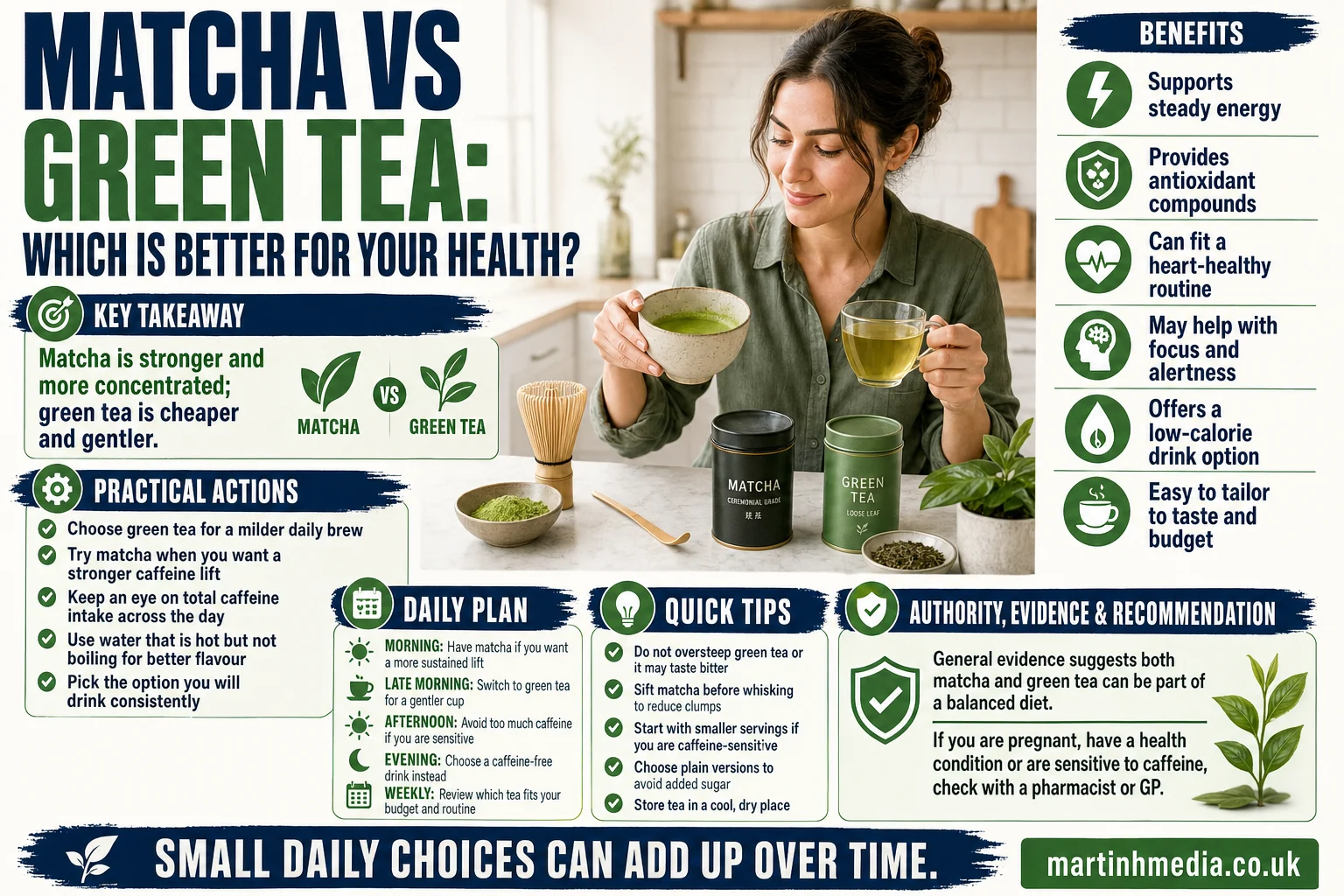
Pick green tea if you want simplicity. It costs less and requires no special tools. You can brew it anywhere with just hot water.
The milder taste suits people new to tea. You won’t face a learning curve or acquire new skills.
Choose matcha when you need sustained energy. The higher caffeine content replaces morning coffee effectively. The ritual of whisking creates a mindful moment.
Matcha fits better into recipes. You can bake with it or blend it into drinks. Green tea stays limited to beverages.
Your budget plays a real role. Daily matcha costs add up to fifty dollars monthly. Green tea runs under ten dollars for the same period.
Some people drink both. Green tea fills afternoon moments. Matcha powers morning routines. This approach captures benefits from each.
The best choice depends on your actual daily life. Not which sounds more impressive. You need something sustainable for months and years. Both options support heart health when consumed regularly. Research on herbal teas that may support cardiovascular wellbeing shows consistent habits matter more than perfect choices.
Start with whichever tea you’ll actually finish each morning.
Frequently Asked Questions
Can I drink matcha and green tea on the same day?
Yes, you can safely drink both in one day. Keep total caffeine under 400 milligrams. That means one matcha and two green teas works fine. Space them several hours apart for steady energy.
Does matcha have more health benefits than green tea?
Matcha contains more antioxidants per serving because you consume the whole leaf. But green tea has more research backing its long-term health effects. Both support heart health and metabolism when consumed regularly.
Why does matcha cost so much more than green tea?
Matcha requires three weeks of shade growing before harvest. Workers hand-remove stems and veins from each leaf. Stone grinding takes an hour per ounce. Green tea production uses machines and requires less labor.
Which tea has less caffeine for evening drinking?
Green tea contains about 30 milligrams of caffeine per cup. Matcha has around 70 milligrams. Choose green tea after 3 PM if you’re sensitive to caffeine. Both clear your system within six hours.
Can I use regular green tea powder instead of matcha?
No, they’re different products. Green tea powder comes from standard leaves ground up. Matcha uses specially grown, shaded leaves with stems removed. The taste and texture differ significantly. Regular powder tastes bitter and gritty.