
Herbal Teas Cardiologists Quietly Recommend Over Pills
Herbal Teas That May Support Cardiovascular Wellbeing can quietly shift your daily health habits. Your morning ritual matters more than most realize. Small changes compound over weeks and months. The right teas may offer meaningful support for heart health.
Herbal Teas That May Support Cardiovascular Wellbeing Through Blood Pressure Management
Hibiscus tea lowered systolic blood pressure compared with placebo in a clinical trial. Studies showing average drops of about 7–10 mmHg systolic remain significant. People with mild hypertension saw the most dramatic results. The deep red tea comes from dried flower petals.
Drinking three cups daily produced measurable changes after six weeks. Participants with higher blood pressure at baseline showed a greater response. The tart flavor resembles cranberries. You can brew it hot or pour over ice.
Its flavonoid and anthocyanin content effectively lower both systolic and diastolic blood pressure. The mechanism involves mild ACE inhibition. This creates a gentler approach than pharmaceutical options. Not everyone needs prescription medication right away.
Worth noting: those taking blood pressure drugs should consult their doctor first. Hibiscus may interact with these medications. The tea shouldn’t replace medical treatment. It works best as a complementary approach. Understanding herbal teas as natural healing tools helps set realistic expectations.
Cholesterol Support From Herbal Teas That May Support Cardiovascular Wellbeing
Forty people at risk of cardiovascular disease had significantly reduced LDL cholesterol levels after drinking rooibos tea. They also showed increased HDL levels. The study lasted six weeks. Participants consumed six cups per day.
This South African tea contains no caffeine. Rooibos is rich in antioxidants like aspalathin. The unique compound doesn’t appear in other plants. It lowers “bad” LDL cholesterol and increases “good” HDL cholesterol, reducing plaque buildup in arteries.
Both acute and chronic consumption of 500 mL daily led to lower triglycerides and total cholesterol. Green rooibos varieties pack more flavonoids than fermented red types. The taste profile runs naturally sweet. No bitterness makes it easy to drink regularly.
Lipid management remains one of heart health’s cornerstones. Rooibos significantly improved the lipid profile in adults at risk for cardiovascular disease. The improvements weren’t marginal. Changes reached statistical significance across multiple markers.
Green Tea’s Role Among Herbal Teas That May Support Cardiovascular Wellbeing
Participants who drank more than five cups of green tea daily had 26% lower risk of death from heart attack or stroke. The Japanese study followed over 40,000 adults. Duration mattered more than intensity. Consistent consumption over years showed the clearest benefits.
Those who drank the most green tea had 28% lower risk of coronary artery disease. The meta-analysis examined thirteen observational studies. Black tea showed no similar effect. Something specific to green tea makes the difference.
Green tea significantly lowered LDL cholesterol and triglyceride levels in controlled trials. Catechins drive these effects. These polyphenols survive the brewing process. They remain active after consumption.
The mechanisms go beyond simple antioxidant activity. Green tea’s antiatherosclerotic effects involve antioxidative, antiinflammatory, antiproliferative, and antithrombotic properties. Multiple pathways work simultaneously. This redundancy may explain the robust results. Herbal teas in natural healing contexts often show such multifaceted action.
Hawthorn Tea Among Herbal Teas That May Support Cardiovascular Wellbeing
Flavonoids and oligomeric proanthocyanidins help dilate blood vessels and improve blood flow. Hawthorn also strengthens heart muscle directly. Studies suggest it can help reduce high blood pressure and cholesterol levels.
Traditional medicine systems used hawthorn for centuries. In Traditional Chinese Medicine, hawthorn has been revered since 659 AD for treating cardiovascular ailments. European herbal medicine used it for heart health dating back to the 1st century AD. Modern research validates these longstanding applications.
Regular consumption may prevent the buildup of plaque in arteries. This reduces atherosclerosis risk. Hawthorn can improve oxygen utilization of the heart and energize cardiac cells. The berries work. Leaves and flowers also contain active compounds.
Hawthorn research has focused on congestive heart failure with several clinical trials emerging. The evidence base continues growing. Safety profiles look favorable across studies. Side effects remain minimal when properly dosed.
Additional Herbal Teas That May Support Cardiovascular Wellbeing
Chamomile tea helps reduce stress and anxiety, which can lower blood pressure. The calming effects extend beyond mental health. Chronic stress damages the cardiovascular system. Managing it protects arteries.
Ginger tea reduces inflammation and helps regulate blood sugar levels. Both factors influence heart disease risk. The spicy root acts as an anti-inflammatory beverage. You can combine it with other herbs.
Most of these herbal teas support natural healing through different mechanisms. Diversity works in your favor. Rotating varieties prevents boredom. It also provides complementary compounds.
Key risk factors like glucose and lipid metabolism improve with herbal tea consumption. The effects accumulate slowly. Don’t expect overnight transformations. Six weeks represents a minimum timeframe. Three months shows clearer patterns.
Practical Application of Herbal Teas That May Support Cardiovascular Wellbeing
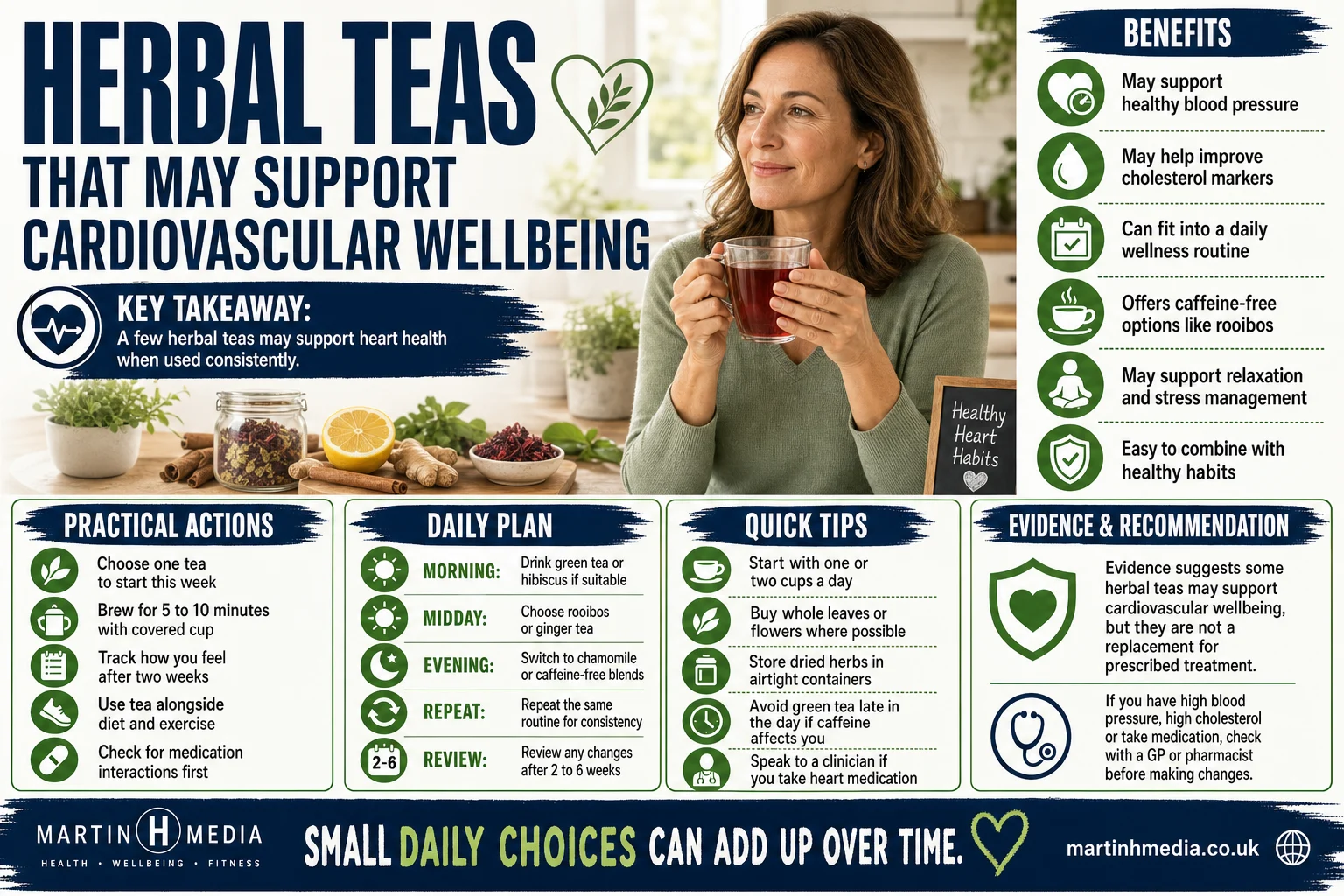
Start with one or two cups daily. Assess how your body responds. Some people tolerate larger quantities immediately. Others need gradual increases. Listen to your system.
Brewing method affects compound extraction. Steeping time matters. Most herbal teas need five to ten minutes. Hotter water pulls more active ingredients. Cover your cup while steeping.
Quality varies significantly between brands. Look for whole flowers and leaves. Dust and fannings contain fewer beneficial compounds. Organic certification reduces pesticide exposure. Fresh tea tastes better and works more effectively.
Timing throughout the day influences results. Green tea contains caffeine. Drink it before afternoon. Chamomile suits evening hours. Rooibos works anytime. Hibiscus pairs well with meals.
Track your consumption patterns. Note how you feel after two weeks. Monitor energy levels and sleep quality. Some people notice subtle improvements quickly. Others need patience.
Combining teas can enhance benefits. Mix hibiscus with rooibos. Add hawthorn to green tea. Experiment with ratios. You might discover personal preferences. Taste preferences matter for long-term compliance.
Remember these teas complement rather than replace medical care. They should not replace important practices such as maintaining a balanced diet and regular exercise. Your doctor needs to know about any herbal regimen. Interactions can occur with certain medications.
Consider your existing cardiovascular risk factors. Family history plays a role. Current blood pressure and cholesterol levels inform choices. Someone with borderline hypertension might prioritize hibiscus. A person concerned about cholesterol might favor rooibos.
The research shows promise but limitations exist. Study populations often differ from general consumers. Doses in trials sometimes exceed practical daily intake. Drinking six cups per day may be necessary to achieve positive health effects. Most people won’t maintain such volume.
Start where you can sustain effort. Two cups daily beats six cups for three days. Consistency trumps intensity. Build habits that fit your schedule. Morning tea becomes automatic after a few weeks.
Consider your baseline starting point when evaluating results. Those with higher cardiovascular risk often see more dramatic improvements. Healthy individuals might notice minimal changes. Prevention remains valuable even without obvious symptoms.
Cost and availability influence practical implementation. Green tea remains widely accessible. Hawthorn costs more and appears in fewer stores. Online sources expand options. Buying in bulk reduces expenses.
Storage affects potency over time. Keep dried herbs in airtight containers. Avoid direct sunlight and heat. Most herbal teas last six to twelve months. Flavor degradation signals declining compound levels.
Make Herbal Teas That May Support Cardiovascular Wellbeing a regular part of your day by choosing one tea this week and brewing it consistently at the same time each morning.
Frequently Asked Questions
How much herbal tea should I drink daily for cardiovascular benefits?
Most studies showing cardiovascular benefits used three to six cups per day. Start with one or two cups daily and gradually increase. Consistency matters more than quantity. Two cups every day provides more benefit than six cups occasionally. Listen to your body and adjust based on your response.
Can herbal teas replace my blood pressure or cholesterol medication?
No. Herbal teas should complement, not replace, prescribed medications. Never stop taking cardiovascular drugs without consulting your doctor. Some herbal teas may interact with medications. Discuss any herbal regimen with your healthcare provider before starting. They work best as part of comprehensive care.
Which herbal tea works fastest for lowering blood pressure?
Hibiscus tea shows the quickest measurable effects on blood pressure. Some studies detected changes after just a few weeks. Most cardiovascular improvements take six weeks or longer to appear. Green tea benefits accumulate over months or years. Patience remains essential with any natural approach.
Are there any side effects from drinking cardiovascular support teas daily?
Most herbal teas show minimal side effects at recommended doses. Green tea contains caffeine which may cause jitters or sleep disruption. Hibiscus can interact with blood pressure medications. Rooibos rarely causes problems. Start slowly to assess your tolerance. Pregnant women should consult their doctor first.
Can I mix different cardiovascular herbal teas together?
Yes. Combining different herbal teas often provides complementary benefits. Mix hibiscus with rooibos for blood pressure and cholesterol support. Add hawthorn to green tea for enhanced cardiovascular effects. Start with equal parts and adjust ratios based on taste preferences. Avoid combining too many at once initially.