

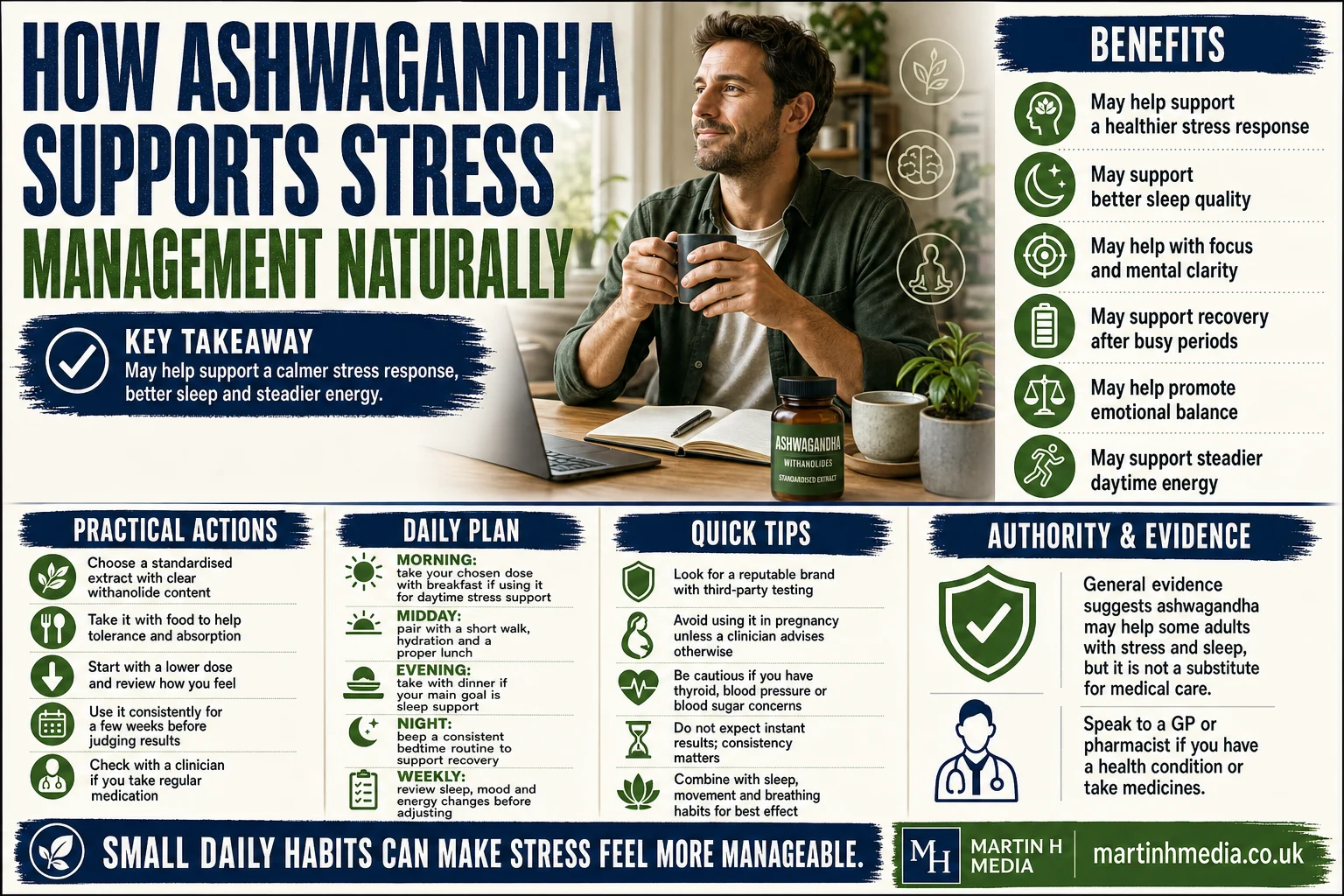
Why Ashwagandha Works Faster Than You’d Expect
Your shoulders stay tense even after the deadline passes. You notice your jaw clenched during simple tasks. How Ashwagandha Supports Stress Management Naturally starts with blocking stress signals before they spiral.
How Ashwagandha Helps Lower Cortisol Levels
Ashwagandha contains compounds called withanolides that directly influence your stress hormone levels. These molecules interact with your adrenal glands where cortisol gets produced. Studies show ashwagandha can reduce cortisol by up to 30 percent.
Your body releases cortisol when it senses danger or pressure. The problem starts when this hormone stays elevated for weeks. Chronic elevation creates the health problems most people associate with burnout.
Ashwagandha doesn’t just mask stress symptoms like caffeine does. It actually modulates the hypothalamic-pituitary-adrenal axis that controls stress response. This means it addresses the root mechanism instead of covering up feelings.
Most people notice changes within two weeks of consistent use. Your body needs time to recalibrate its stress response patterns. The herb works cumulatively rather than providing instant relaxation.
The withanolide content varies significantly between products and preparation methods. Root extracts typically contain higher concentrations than leaf preparations. Quality matters more than dosage when choosing a supplement.
Better Sleep and Recovery
Your racing thoughts at bedtime signal cortisol interference with sleep hormones. Ashwagandha helps lower evening cortisol so melatonin can rise naturally. This creates the hormonal shift your body needs for sleep.
Sleep quality improves before sleep duration changes for most users. You spend more time in deep sleep stages. Your brain gets better restoration even if total hours stay the same.
The herb contains triethylene glycol which promotes sleep onset specifically. This compound works differently than the withanolides that affect cortisol. You get multiple mechanisms working together for better rest.
People taking ashwagandha report fewer middle-of-the-night awakenings. Those 2am or 3am wake-ups often indicate cortisol surges. Stabilizing this hormone prevents those disruptive alerts your brain receives.
Better sleep then creates a positive cycle for stress management. You handle daily pressures more effectively when well-rested. Your stress threshold increases as sleep quality improves.
The Adaptogenic Properties That Make This Herb Different
Adaptogens help your body respond appropriately to different stressors. Ashwagandha doesn’t simply sedate you or amp you up. It helps normalize your response based on what you face.
This means the herb can both calm anxiety and improve energy. Your body uses the active compounds where they’re needed most. Someone exhausted from chronic stress might feel more energized.
Other stress supplements work in one direction only. Sedatives make you drowsy regardless of circumstances. Stimulants increase alertness but can worsen anxiety.
Ashwagandha’s adaptogenic action protects cells from stress damage. The herb increases production of heat shock proteins. These proteins help cells survive when under pressure.
Your resilience to future stressors improves over time with regular use. The herb trains your stress response system to react proportionally. You stop overreacting to minor triggers.
Improved Focus and Mental Clarity
Brain fog lifts when cortisol drops to healthy levels. Ashwagandha improves memory formation in the hippocampus region. This area gets damaged by prolonged exposure to stress hormones.
People report better word recall during conversations after several weeks. The frustrating tip-of-the-tongue moments happen less frequently. Your brain accesses stored information more efficiently.
The herb also increases acetylcholine receptor activity. This neurotransmitter plays a key role in learning and memory. Better receptor function means clearer thinking throughout your day.
Focus improves because your prefrontal cortex gets better blood flow. High cortisol reduces circulation to frontal brain regions. Normalizing this hormone restores the oxygen your brain needs.
Decision fatigue decreases as your mental resources stop getting depleted. You make choices more easily late in the day. This happens because stress isn’t constantly draining your cognitive capacity.
Physical Performance Improvements From Reduced Stress Hormones
Your workout recovery speeds up when cortisol stays balanced. This hormone breaks down muscle tissue when chronically elevated. Ashwagandha protects the gains you work hard to achieve.
Athletes using ashwagandha show increased strength and muscle mass in studies. The herb doesn’t work like steroids or stimulants. It simply prevents stress from sabotaging your training adaptations.
Endurance improves because your cardiovascular system functions better under pressure. Maximum oxygen uptake increases in people supplementing with the herb. Your body delivers oxygen more efficiently to working muscles.
Joint pain often decreases as inflammation markers drop. Ashwagandha has anti-inflammatory properties separate from its stress effects. You feel less soreness after challenging workouts.
Energy levels stabilize throughout the day instead of crashing at 3pm. The typical afternoon slump relates to cortisol patterns and blood sugar. Steadier hormones mean steadier energy without caffeine spikes.
Better Emotional Balance and Resilience
Your irritability decreases as your nervous system finds equilibrium. Ashwagandha affects GABA receptors that calm neural activity. This creates a buffer against emotional overreactions.
The herb helps regulate the amygdala which processes fear and anxiety. An overactive amygdala makes you perceive threats everywhere. Calming this region helps you respond rather than react.
People notice they don’t snap at family members over minor issues. Your patience extends further before frustration appears. This happens because your baseline stress load decreases.
Anxiety symptoms reduce without the sedation that prescription medications cause. You stay alert and functional while feeling calmer. The herb provides relief without impairing your daily performance.
Social situations feel less draining when your stress response isn’t hyperactive. You have more capacity for interaction and connection. Your nervous system isn’t constantly signaling danger during normal conversations.
Dosage Considerations and Timing for Maximum Effect
Dosage Considerations and Timing for Maximum Effect
Most research uses doses between 300 and 600 milligrams daily. Extracts standardized to contain specific withanolide percentages work most reliably. Look for products listing at least 5 percent withanolide content.
Taking ashwagandha with food improves absorption of the active compounds. Fat-soluble components need dietary fat to enter your bloodstream effectively. Morning or evening dosing both work depending on your goals.
Evening doses may help more with sleep quality specifically. Morning doses might provide better daytime stress resilience. Some people split their daily dose between morning and night.
Results accumulate over weeks rather than appearing immediately. Your stress response patterns took time to develop. Reversing them requires consistent use for at least two weeks.
Cycling off periodically may help maintain effectiveness for some users. Taking weekends off or one week per month prevents adaptation. Your body stays responsive to the herb’s effects.
How Ashwagandha Compares With Other Stress Remedies
Prescription anti-anxiety medications work faster but create dependency issues. Benzodiazepines provide immediate relief but cause withdrawal problems. Ashwagandha takes longer but doesn’t create addiction.
SSRIs affect serotonin broadly throughout your brain and body. Side effects include sexual dysfunction and emotional blunting. The herb targets stress pathways more specifically with fewer unwanted effects.
Simple relaxation techniques help but don’t address biochemical imbalances. Meditation and breathing exercises support stress management wonderfully. They work even better when cortisol levels aren’t sabotaging your efforts.
Other herbal supplements like valerian root primarily cause sedation. They make you drowsy rather than balancing your stress response. Ashwagandha provides calm alertness instead of sleepiness.
Magnesium helps with stress but doesn’t directly lower cortisol production. B vitamins support your nervous system without adaptogenic properties. Ashwagandha addresses stress through multiple complementary mechanisms simultaneously.
Safety Profile and Potential Interactions to Consider
Ashwagandha has a strong safety record in traditional use. Millions of people have used it for centuries. Modern studies confirm low risk of serious side effects.
Some people experience mild digestive upset when first starting. Taking the herb with food usually prevents this issue. Starting with lower doses and increasing gradually helps too.
The herb can lower blood sugar and blood pressure slightly. This benefits most people but matters if you take medications. Monitor levels if you use diabetes or hypertension drugs.
Thyroid hormone levels may increase with ashwagandha supplementation. People with hyperthyroidism should use caution or avoid it. Those with underactive thyroid might see improvements.
Pregnant women should avoid ashwagandha due to insufficient safety data. The herb has traditionally been considered inappropriate during pregnancy. Wait until after breastfeeding to use it.
Real-World Application for Different Stress Scenarios
Work deadline pressure responds well to ashwagandha supplementation. Your ability to handle competing priorities improves. You stay focused without the cortisol spike that causes mistakes.
Relationship stress becomes more manageable as emotional regulation improves. You communicate more effectively when not flooded by stress hormones. Conflicts resolve more easily with a calmer nervous system.
Financial worries still exist but don’t consume your thoughts constantly. The herb doesn’t solve money problems obviously. It prevents stress about money from destroying your health while you address the situation.
Sleep deprivation stress gets partially buffered by ashwagandha’s effects. New parents dealing with interrupted nights report better daytime functioning. The herb can’t replace sleep but helps you cope better.
Exercise-induced stress becomes productive rather than destructive. Your training creates positive adaptations instead of breaking you down. Recovery improves so your workouts actually make you stronger.
Consider adding ashwagandha to your routine if stress controls your days.
Frequently Asked Questions
How long does ashwagandha take to reduce stress symptoms?
Most people notice initial changes within two to four weeks of daily use. Cortisol levels begin decreasing within this timeframe. Full benefits often appear after six to eight weeks of consistent supplementation. Your individual response depends on stress severity and overall health status.
Can you take ashwagandha with other supplements or medications?
Ashwagandha generally combines safely with most supplements and medications. Exceptions include thyroid medications, diabetes drugs, and blood pressure medications. The herb may enhance effects of sedatives or anti-anxiety drugs. Consult your doctor if you take prescription medications regularly.
Does ashwagandha cause weight gain or weight loss?
Ashwagandha typically helps reduce stress-related belly fat over time. Lowering cortisol prevents the fat accumulation pattern around your midsection. Some people lose weight as stress eating decreases. The herb doesn’t directly cause weight gain in most users.
What time of day works best for taking ashwagandha?
Evening doses help more with sleep quality and nighttime cortisol levels. Morning doses provide better daytime stress resilience and focus. Some users split their dose between morning and evening. Experiment to find what timing works best for your goals.
Are there any side effects from long-term ashwagandha use?
Long-term use appears safe based on traditional use and modern research. Some people experience mild digestive issues when first starting. Thyroid hormone levels may increase slightly with extended use. Taking breaks periodically may help maintain effectiveness over time.