
Tomatoes and Lycopene turn redder as they ripen on the vine. That colour change matters for your health. Cooked tomatoes deliver even more benefits than raw ones. Your body absorbs this red pigment best with fat.
How Tomatoes and Lycopene Work in Your Body
Lycopene is a naturally occurring carotenoid predominantly found in tomatoes. It’s a chemical called a carotenoid. As a red carotenoid, lycopene is widely found in red and pink fruits and vegetables.
Lycopene’s main health benefit is its antioxidant function. Antioxidants are molecules that fight free radicals in our bodies. Free radicals cause cell damage in high levels. This damage links to cancer, diabetes, and heart disease. By stabilizing these free radicals, scientists believe that lycopene may reduce the risk of developing chronic illnesses.
The liver and adipose tissues are the main storage organs for lycopene. The prostate gland and adrenal glands also store it. Human plasma concentration of lycopene ranges from 0.22 to 1.06 nmol/mL. It has a half-life of 2–3 days inside the body.
How Lycopene May Support Heart Health
Several observational studies have found that higher lycopene intake is associated with a lower risk of cardiovascular disease. Research also suggests lycopene may help support healthy blood pressure, reduce markers of inflammation and contribute to normal blood vessel function.
Individuals with metabolic disease who had the highest blood lycopene levels had up to a 39% lower risk of dying prematurely. This finding came from a 10-year study. Diets rich in this nutrient were linked to a 17–26% lower risk of heart disease. High blood levels of lycopene associate with a 31% lower risk of stroke.
Men who eat lots of tomatoes and tomato-based products may have a 55% lower risk for stroke. The connection appears strongest in people with low antioxidant levels. Smokers benefit most. People with diabetes see better results. Those with existing heart disease show improved outcomes.
Prostate Cancer Risk and Tomatoes and Lycopene
Lycopene is best known for its role in helping reduce the risk of prostate cancer. Lycopene is one of the most effective oxygen radical quenching agents among the carotenoids. It is found in relatively high concentrations in the prostate gland.
Participants in the highest quartile of lycopene intake displayed a significant 54% lower risk of prostate cancer. This came from a study of men at high cardiovascular risk. Subjects consuming lycopene in appreciable amounts had 44% fewer chances of getting tumours. They had 25% fewer chances of developing prostate cancer specifically.
Most of the reviewed in vivo studies confirmed the anti-cancer activities of lycopene. The reported mechanisms of lycopene action included regulation of oxidative and inflammatory processes. It induced apoptosis. It inhibited cell division, angiogenesis, and metastasis formation.
Mental Health Benefits of Tomatoes and Lycopene
Lycopene increases the levels of BDNF and the activity of its TrkB receptor. This strengthens the system within your brain involved in mental health. Lycopene helps alleviate depression symptoms by promoting healthier synaptic plasticity through the BDNF-TrkB pathway.
Research suggests that lycopene mitigates memory loss, cognitive decline and neuronal damage often associated with ageing. It combats age-related oxidative stress in the brain by reducing lipid peroxidation. It also boosts the activity of antioxidant enzymes. Dietary lycopene is even linked to a reduction in age-related neuroinflammation.
Higher blood levels of lycopene were linked to longer telomere length. Telomeres are used as a standard marker of cellular ageing. Shorter telomeres mean faster ageing. Longer telomeres suggest slower cellular decline.
Cooking Changes Tomatoes and Lycopene Content
Cooked tomatoes contain more lycopene than raw ones. Cooked tomatoes become more concentrated when they lose some water. One cup of cooked tomatoes has about 7,300 micrograms of lycopene. Raw tomatoes have about 4,600 micrograms.
The heat involved in cooking tomatoes breaks down their cell walls, making the lycopene more accessible. Trans-lycopene content of the cooked tomatoes increased by 54, 171 and 164 percent, respectively. The study tested different cooking times. Levels of cis-lycopene rose by 6, 17 and 35 percent, respectively. The body absorbs this form easily.
Lycopene content in canned tomatoes was two-fold higher than in raw tomatoes. Sun-dried tomatoes concentrate the compound even more. A tablespoon of sun-dried tomatoes has about 2 mg of lycopene. Tomato paste ranks highest. Processing removes water and concentrates the pigment.
Fat Improves Tomatoes and Lycopene Absorption
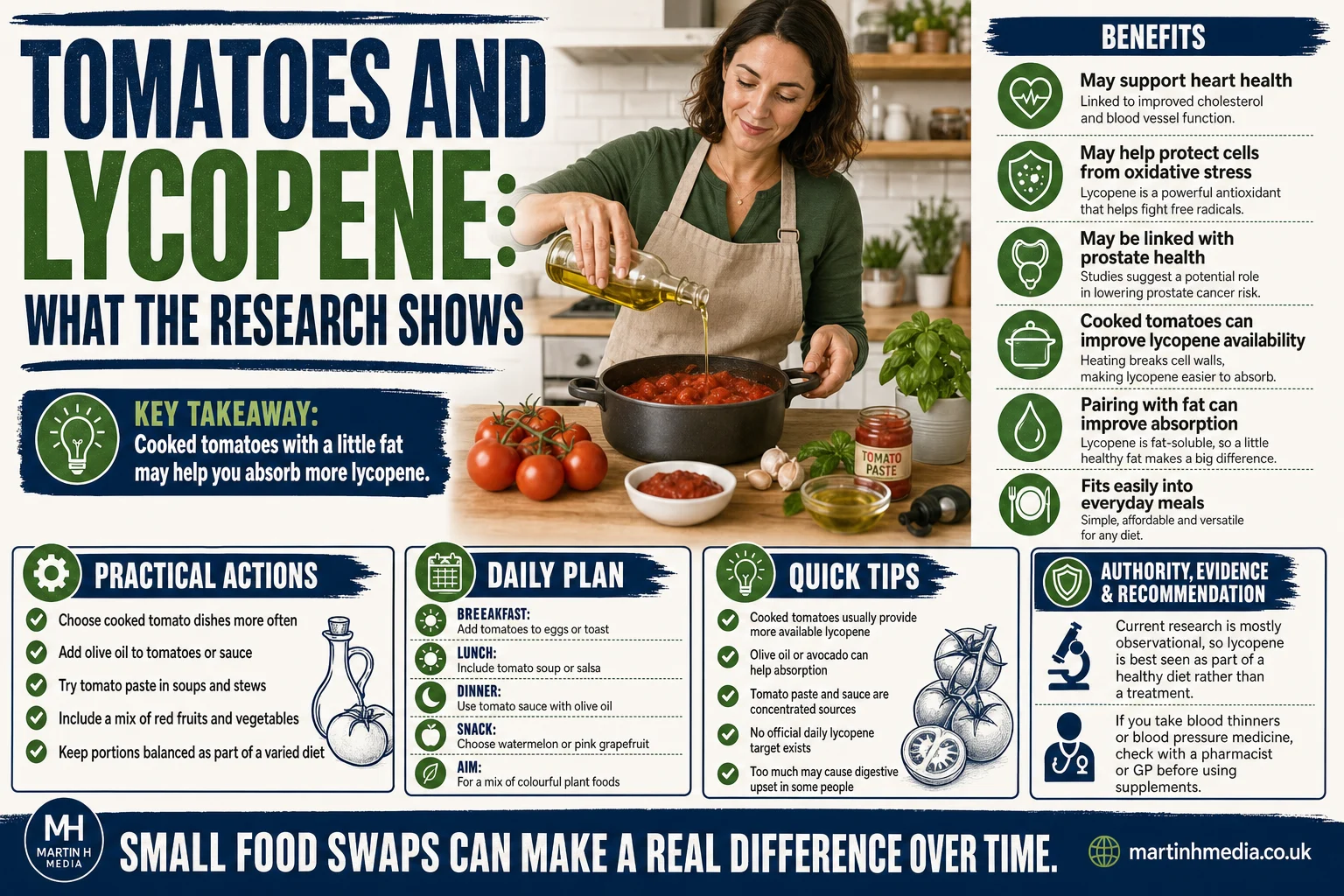
Lycopene is a lipid-soluble compound, meaning it requires fat to be properly absorbed by the body. Research has shown that consuming lycopene-rich foods with dietary fat significantly enhances its bioavailability.
The absorption of lycopene is enhanced when consumed with a meal containing dietary fat. You need about 10 grams with cooked tomatoes. You need about 15 grams with uncooked tomatoes. Absorption is affected by the amount of ingested fat and not by the type or source of fat.
Consumption of tomato salsa with avocado led to a 4.4-fold increase in lycopene absorption. This compared to salsa without avocado. Eating tomatoes along with a bit of healthy fat can help your body absorb the lycopene. She recommended drizzling tomatoes with olive oil. Pairing them with avocado works equally well.
Foods Beyond Tomatoes and Lycopene Content
Red fruits and vegetables such as tomatoes, pink guavas, apricots, watermelons, and pink grapefruits are important sources of lycopene. About 85% of dietary intake of lycopene comes from tomato and tomato-based sauces and other products.
Watermelon is a juicy, sweet source of lycopene. Red watermelon has the most lycopene. Watermelon delivers up to 7.2 mg per 100 grams. This puts it in the same range as cooked tomato products. Pink guava provides around 5.2 to 5.5 mg per 100 grams.
Pink grapefruit contains moderate amounts of the compound. Papaya offers smaller but meaningful doses. Red bell peppers provide some lycopene when cooked. Some vegetables, such as asparagus, although not red, also have high levels of lycopene. Baked beans contain it despite their brown color.
Dosage and Safety for Tomatoes and Lycopene
There is currently no recommended daily intake for lycopene. However, from the current studies, intakes between 8–21 mg per day appear to be most beneficial. Long-term use of lycopene should be generally safe in doses up to seventy-five mg per day.
Over 80% of the lycopene consumed in the U.S. comes from processed tomato products. Food sources carry minimal risk. There are cases of intolerance or allergic reaction to dietary lycopene. This may cause diarrhea, nausea, stomach pain or cramps, gas, and loss of appetite.
Lycopene may increase the risk of bleeding when taken with anticoagulant drugs. It may interact with blood pressure medications. Eating it in excess amounts can cause lycopene to deposit in the tissues. This causes skin to turn yellow. The liver can also show yellow coloration. The condition reverses when intake decreases.
Add cooked tomatoes with olive oil to your next meal.
Frequently Asked Questions
What is the best way to eat tomatoes for maximum lycopene?
Cook tomatoes with oil or fat for best absorption. Heat breaks down cell walls and releases more lycopene. Tomato paste and sauce provide higher concentrations than fresh tomatoes. Add olive oil when cooking to improve how much your body absorbs.
Can you get enough lycopene without eating tomatoes?
Yes, but it takes more effort. Watermelon provides substantial amounts at 7.2 mg per 100 grams. Pink guava offers around 5.2 mg per serving. Pink grapefruit and papaya contribute smaller doses. You need larger portions of these foods compared to tomato products.
How much lycopene do you need daily for health benefits?
Studies show benefits from 8 to 21 mg per day. One cup of cooked tomatoes provides about 7.3 mg. Two tablespoons of tomato paste gives similar amounts. Safety studies confirm doses up to 75 mg daily are well tolerated. No official requirement exists.
Does lycopene help prevent all types of cancer?
Research focuses mainly on prostate cancer with the strongest evidence there. Some studies suggest benefits for other cancers but results vary. Most cancer prevention research remains observational rather than clinical. The prostate accumulates high lycopene concentrations which may explain specific protective effects.
What happens if you take too much lycopene?
Excessive intake causes lycopenemia where skin turns yellowish-orange. The liver can also show discolouration. This condition is harmless and reverses when you reduce intake. Some people experience digestive upset including nausea or diarrhoea. Blood thinning medications may interact with high doses.