

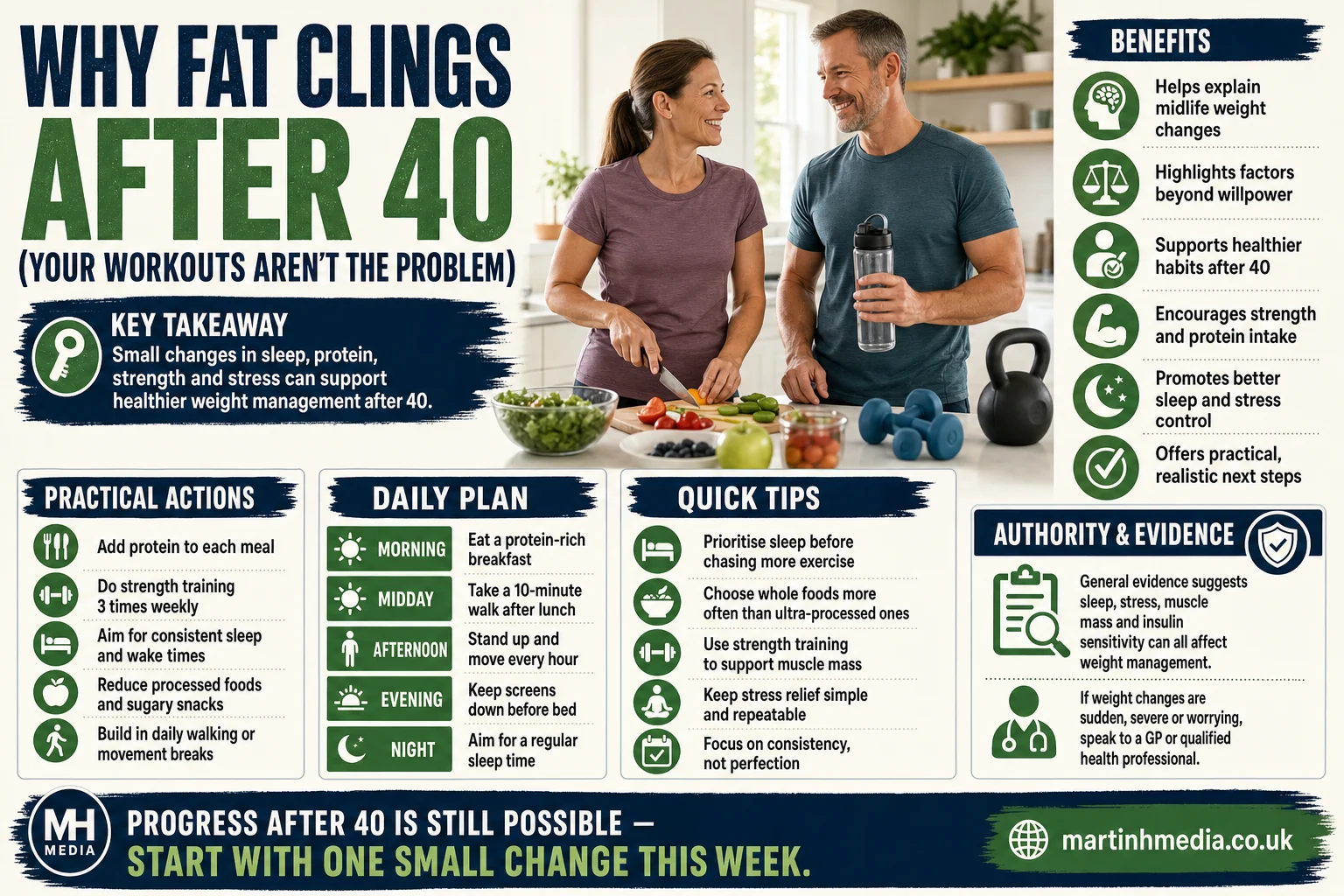
Why Fat Clings After 40
You’re eating the same meals you ate five years ago. You’re still walking every day. Why Your Body Holds Onto Fat More After 40 (Even When You’re Doing Everything Right) isn’t about willpower. Your hormones shifted without asking permission.
Why Your Body Holds Onto Fat More After 40 Starts With Insulin Resistance
Your cells stop listening to insulin as well as they used to. Insulin is the hormone that tells your body to use glucose for energy. When cells ignore insulin, your pancreas makes more of it. High insulin levels tell your body to store fat instead of burning it.
This happens gradually. You don’t wake up one day with insulin resistance. It builds over years of stress, poor sleep, and processed foods. By your 40s, the damage shows up as stubborn belly fat.
Your muscle mass also drops as you age. Muscle tissue uses glucose efficiently. Less muscle means worse blood sugar control. Worse blood sugar control means more insulin. More insulin means more fat storage.
You can reverse this. Strength training builds muscle back. Eating protein with every meal stabilizes blood sugar. Cutting back on sugar and refined carbs reduces insulin spikes.
Your Hormones Change Whether You Notice Or Not
Estrogen and testosterone decline after 40 in both men and women. These hormones help you maintain muscle mass and burn fat. When they drop, your metabolism slows down.
Women experience this more dramatically during perimenopause and menopause. Estrogen drops sharply. Fat shifts from your hips and thighs to your belly. This visceral fat surrounds your organs and increases health risks.
Men lose testosterone gradually starting around age 30. By 40, the decline becomes noticeable. Lower testosterone means less muscle mass and more fat storage. It also reduces energy and motivation to exercise.
Cortisol is another problem. This stress hormone rises as you age. High cortisol breaks down muscle tissue and stores fat around your middle. Chronic stress keeps cortisol elevated all day long.
Sleep affects all these hormones. Poor sleep raises cortisol and lowers testosterone and estrogen. It also increases hunger hormones like ghrelin. You end up eating more and burning less.
Why Your Body Holds Onto Fat More After 40 Involves Your Mitochondria
Mitochondria are the power plants inside your cells. They convert food into energy. As you age, mitochondria become less efficient and fewer in number.
Damaged mitochondria produce less energy from the same amount of food. Your body stores the excess as fat. You feel tired even though you’re eating enough calories.
Free radicals damage mitochondria over time. These unstable molecules come from normal metabolism, stress, and environmental toxins. Antioxidants help protect mitochondria, but most people don’t eat enough of them.
Exercise is the best way to improve mitochondrial function. High-intensity interval training creates new mitochondria. Strength training makes existing mitochondria work better. Walking alone isn’t enough to trigger these changes.
Certain nutrients support mitochondrial health. Magnesium, CoQ10, and B vitamins are all needed for energy production. Deficiencies become more common as you age because absorption decreases.
Your Gut Bacteria Shift As You Age
The bacteria in your intestines control more than just digestion. They influence how many calories you extract from food. They also affect inflammation and hormone production.
Research shows that overweight people have different gut bacteria than lean people. Some bacterial strains extract more calories from the same food. Others trigger inflammation that leads to insulin resistance.
Your gut bacteria change as you age. Diversity decreases. Beneficial strains decline. Harmful bacteria increase. This shift makes weight gain easier and weight loss harder.
Antibiotics, processed foods, and stress all damage gut bacteria. Most people over 40 have taken multiple courses of antibiotics. Each one disrupts the bacterial balance for months.
Supporting gut health with specific dietary changes can help restore balance. Fermented foods add beneficial bacteria. Fiber feeds the good bacteria you already have. Avoiding artificial sweeteners protects bacterial diversity.
Why Your Body Holds Onto Fat More After 40 Includes Inflammation
Chronic low-grade inflammation increases with age. This isn’t the same as acute inflammation from an injury. It’s a constant background buzz that damages cells and tissues.
Inflammatory chemicals interfere with insulin signaling. They make your cells more resistant to insulin’s message. This creates the same fat storage problem described earlier.
Fat tissue itself produces inflammatory chemicals. The more fat you carry, the more inflammation you create. This becomes a vicious cycle. Inflammation causes fat storage. Fat storage causes more inflammation.
Your diet directly affects inflammation levels. Processed foods, sugar, and vegetable oils increase inflammation. Fish, vegetables, and olive oil reduce it. Most people eat far more inflammatory foods than anti-inflammatory ones.
Lack of movement also drives inflammation. Sitting for hours raises inflammatory markers. Moving throughout the day lowers them. Even standing or walking slowly makes a difference.
Your Body Prioritizes Survival Over Appearance
Your metabolism doesn’t care how you look in jeans. It cares about keeping you alive. After 40, your body becomes more cautious about using fat stores.
This made sense for our ancestors. Older adults needed energy reserves to survive famines. Your genes still follow this ancient programming. They tell your body to hold onto fat just in case.
Extreme diets make this worse. Cutting calories too low triggers survival mode. Your metabolism slows down dramatically. You lose muscle instead of fat. When you start eating normally again, you gain back more than you lost.
Your body also adapts to exercise. The same workout burns fewer calories over time. You need to change your routine regularly to keep seeing results. Most people do the same exercises for years.
Understanding how metabolism adapts after 40 helps you work with your body instead of against it. Small consistent changes work better than drastic overhauls. Your metabolism responds better to gentle adjustments than extreme restrictions.
Why Your Body Holds Onto Fat More After 40 Links To Stress And Sleep
Sleep deprivation disrupts every hormone involved in weight management. Growth hormone, which burns fat and builds muscle, is released during deep sleep. Less sleep means less growth hormone.
Lack of sleep also increases hunger. Your brain craves quick energy from sugar and carbs. You eat more calories without realizing it. Studies show that one bad night adds 300 extra calories the next day.
Chronic stress keeps your body in fight-or-flight mode. Cortisol stays elevated. Blood sugar remains high. Insulin resistance gets worse. Fat accumulates around your organs.
Most people over 40 deal with more stress than ever. Work demands increase. Family responsibilities pile up. Financial pressures grow. Your body pays the price through weight gain.
Improving sleep quality doesn’t require perfect conditions. Keeping your bedroom cool helps. Avoiding screens before bed makes a difference. Consistent sleep and wake times regulate your hormones better than sleeping in on weekends.
Your Thyroid Function Declines Gradually
Your thyroid gland controls your metabolic rate. It determines how many calories you burn at rest. Thyroid function naturally decreases with age.
Subclinical hypothyroidism becomes common after 40. Your thyroid still works but not as well as before. Standard blood tests might show normal results. You still experience symptoms like weight gain and fatigue.
Thyroid hormones need specific nutrients to function properly. Iodine, selenium, and zinc are all needed. Deficiencies in these minerals slow down thyroid hormone production.
Stress and inflammation also suppress thyroid function. High cortisol blocks the conversion of inactive thyroid hormone to active hormone. Your blood tests look normal but you can’t use the hormone effectively.
Environmental toxins interfere with thyroid receptors. Chemicals in plastics, personal care products, and food packaging mimic thyroid hormones. They block real thyroid hormones from working properly.
Why Your Body Holds Onto Fat More After 40 Reflects Lifestyle Accumulation
The choices you made in your 20s and 30s catch up by 40. Years of poor sleep add up. Decades of processed foods damage your metabolism. Skipping strength training leads to muscle loss.
Your body has less resilience now. You can’t bounce back from a weekend of bad eating. You can’t skip workouts for a month without consequences. The margin for error shrinks every year.
But this also means small improvements create bigger results. Adding ten minutes of walking helps more than it would have at 25. Eating protein at breakfast makes a noticeable difference. Going to bed 30 minutes earlier changes your energy levels.
Exploring targeted approaches for weight management after 40 provides specific strategies that address these age-related changes. You need different tools now than you did a decade ago. Generic advice about eating less and moving more doesn’t address hormonal shifts or metabolic changes.
Consistency matters more than intensity. A moderate workout you do three times per week beats an extreme workout you quit after two weeks. A healthy meal you enjoy beats a restrictive diet you abandon after a month.
Start with one change that addresses your biggest problem. Fix your sleep if you’re tired. Add protein if you’re always hungry. Start strength training if you’ve lost muscle. Build from there once that change becomes automatic.
Frequently Asked Questions
Why do I gain weight after 40 even though I eat the same?
Your metabolism slows as muscle mass decreases and hormones change. Insulin resistance increases with age. Mitochondrial function declines. These factors mean your body needs fewer calories than before. The same diet that maintained your weight at 30 leads to fat storage at 45.
Can I reverse metabolic changes after 40?
Yes. Strength training rebuilds lost muscle mass. Better sleep improves hormone balance. Reducing processed foods lowers inflammation. These changes improve insulin sensitivity and metabolic rate. Results take time but metabolic improvements are possible at any age.
How much exercise do I need to lose fat after 40?
Aim for three strength training sessions per week. Add daily movement like walking for 30 minutes. High-intensity intervals once or twice weekly help. More isn’t always better. Recovery becomes more important as you age. Consistency matters more than volume.
Does menopause make weight loss impossible?
No. Menopause makes weight loss harder but not impossible. Estrogen decline shifts fat to your belly. Muscle loss accelerates. But strength training, protein intake, and stress management still work. You need more precision than before menopause but results are achievable.
What’s the biggest mistake people make trying to lose weight after 40?
Cutting calories too low triggers metabolic adaptation. Your body slows down to match reduced intake. You lose muscle instead of fat. Eating enough protein while creating a small calorie deficit works better. Extreme restriction backfires after 40.
Choose one metabolic factor from this article and address it this week.