

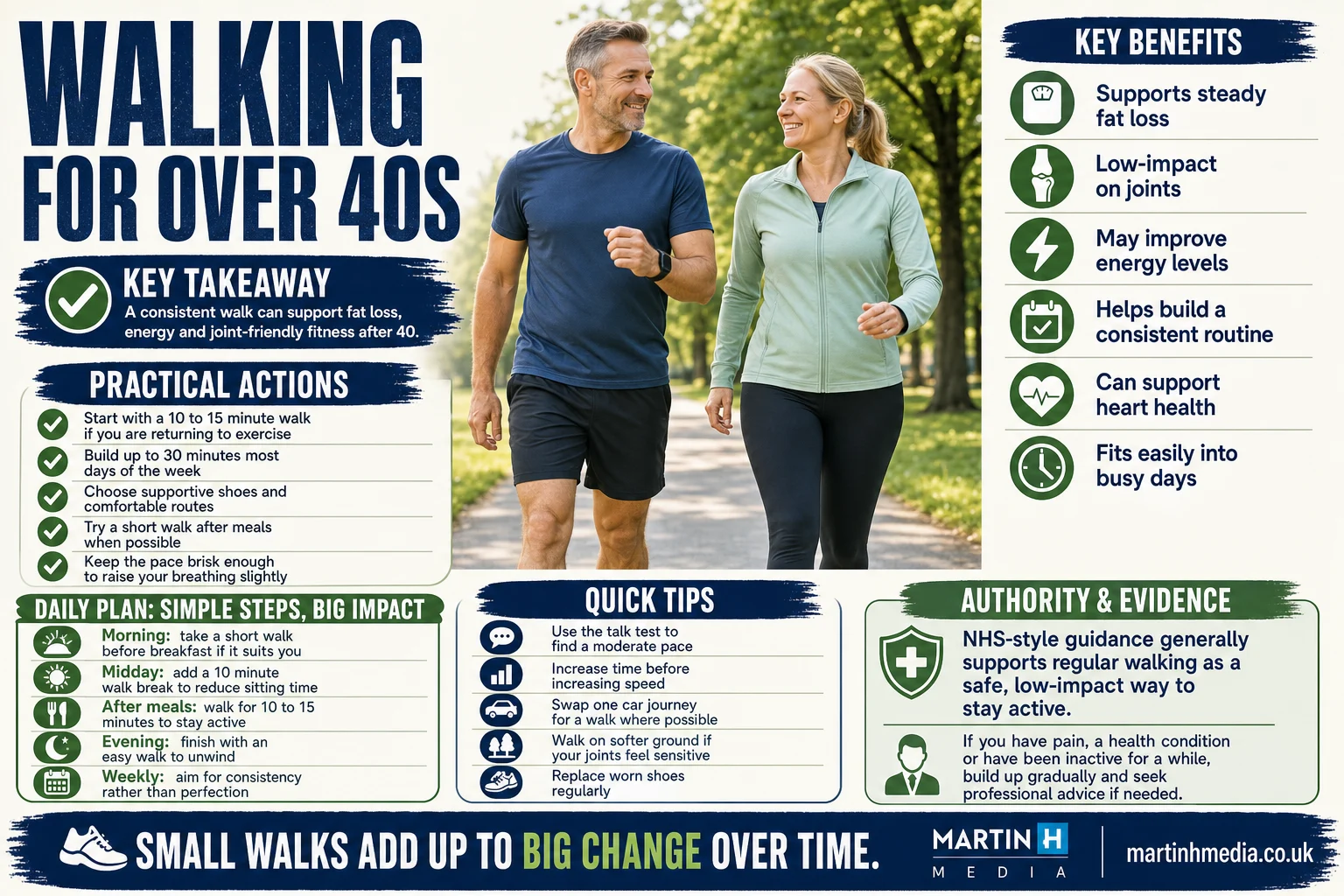
Walking Over 40 Transforms Your Body Better Than Running
Your knees hurt less than they did in your twenties. Your recovery time doubled since turning forty. Walking for over 40s works better than running ever did. The secret is consistency without injury.
Why Walking for Over 40s Beats High-Impact Exercise
Your joints have absorbed decades of impact. Every run adds stress your body recovers from more slowly now. Walking delivers cardiovascular benefits without the punishment.
High-impact exercise increases injury risk after forty. Your cartilage has thinned. Your ligaments have less elasticity. Walking sidesteps these problems entirely.
You burn fat during walks without triggering the stress hormones that plague older bodies. Cortisol levels spike less with walking compared to intense cardio. Lower stress hormones mean better recovery and less muscle breakdown.
Most people over forty who start running programs quit within three months. Pain stops them. Walking programs see completion rates above 80%. You can’t lose weight from exercise you abandon.
How Your Metabolism After Forty Responds to Walking
Your resting metabolism drops about 2% per decade after thirty. You burn fewer calories sitting still than you did years ago. Movement becomes more important as the years pass.
Walking creates a calorie deficit your slower metabolism needs. A thirty-minute walk burns roughly 150 calories. Do this five days weekly and you’ve burned 3,000 calories monthly.
Your body composition changes after forty even at stable weight. You lose muscle and gain fat without intervention. Walking preserves muscle mass while targeting fat stores.
Muscle tissue burns calories around the clock. Lose muscle and your metabolism slows permanently. Walking maintains the muscle you have without the breakdown intense cardio causes.
The afterburn effect from walking lasts thirty to sixty minutes post-exercise. Your body continues burning extra calories after you finish. Longer walks extend this period further.
Walking for Over 40s and Hormonal Changes
Insulin sensitivity decreases as you age. Your cells respond less efficiently to insulin signals. This makes fat storage easier and fat burning harder.
Walking improves insulin sensitivity at any age. The effect is more pronounced in people over forty. Your muscles pull glucose from your bloodstream during and after walks.
Women experience estrogen decline during perimenopause and menopause. This shift promotes belly fat accumulation. Walking counteracts this hormonal fat storage pattern.
Men see testosterone levels drop gradually after forty. Lower testosterone means easier fat gain and harder fat loss. Regular walking helps maintain healthier hormone ratios.
Growth hormone production slows with age. Walking stimulates growth hormone release naturally. This hormone supports fat burning and muscle maintenance.
Best Times to Walk for Maximum Fat Loss Over Forty
Morning walks on an empty stomach accelerate fat burning. Your glycogen stores run lowest before breakfast. Your body switches to fat as primary fuel faster.
Fasted walking doesn’t require intense effort to work. A gentle twenty-minute pace delivers results. Your insulin stays low while movement increases fat oxidation.
Post-meal walks prevent glucose spikes that lead to fat storage. A fifteen-minute walk after dinner uses recently consumed food for energy. Less gets converted to belly fat.
Evening walks reduce stress accumulated throughout the day. Lower evening cortisol means better sleep quality. Better sleep supports the hormonal balance you need for fat loss.
Consistency matters more than perfect timing. Walking at the same time daily builds an unbreakable habit. Your body adapts to expect and benefit from regular movement.
Walking for Over 40s Without Triggering Joint Pain
Your stride changes naturally with age. Your gait shortens and your foot placement shifts. Accept this instead of fighting it.
Proper footwear prevents most walking-related pain. Replace walking shoes every 400 miles. Worn cushioning transmits shock directly to your joints.
Hard surfaces like concrete stress your knees more than softer ground. Grass and dirt trails absorb impact better. Your joints feel the difference after a few weeks.
Start with ten-minute walks if you’ve been sedentary. Add five minutes weekly until you reach thirty minutes. Gradual progression prevents overuse injuries.
Pay attention to pain signals your body sends. Discomfort that worsens during a walk means stop. Rest prevents minor issues from becoming chronic problems.
How Walking Pace Affects Fat Loss After Forty
Walking at four miles per hour burns 50% more calories than three. You cover more distance and burn more fat in identical time. Speed matters for results.
You should be able to talk but not sing during effective fat-burning walks. This pace keeps you in the optimal heart rate zone. Too slow provides minimal benefit.
Interval walking boosts calorie burn without constant high intensity. Walk fast for two minutes then moderate for three. Repeat this pattern throughout your walk.
Your perceived exertion matters more than exact speed measurements. What feels moderately challenging delivers results. Listen to your body instead of obsessing over pace data.
Gradual pace increases prevent adaptation plateaus. Your body becomes efficient at any repeated activity. Small speed increases every few weeks maintain progress.
Walking for Over 40s Combined With Eating Patterns
You don’t need to change your diet to see results from walking. Movement alone creates a calorie deficit. But combining both accelerates progress significantly.
Intermittent fasting pairs exceptionally well with morning walks. Your fasting window keeps insulin low. Walking during this window forces your body into fat-burning mode.
You don’t need intense fasted cardio to benefit. Walking doesn’t stress your system enough to cause problems. The activity level stays comfortable even on an empty stomach.
Protein intake becomes more important after forty. Your body needs more protein to maintain muscle mass. Walking creates the stimulus but protein provides the building blocks.
Timing your walks during your fasting window maximizes fat loss. Your body has already used easy energy sources. Walking triggers the switch to stored body fat.
Visceral Fat Loss Through Consistent Walking
Belly fat increases disease risk more than fat elsewhere. This visceral fat surrounds your organs and releases inflammatory compounds. Walking targets this dangerous fat directly.
Research shows daily thirty-minute walks reduce belly fat better than abdominal exercises. The movement pattern and hormone response specifically attack this area. You can’t spot-reduce fat except walking comes surprisingly close.
Cortisol promotes belly fat storage throughout life. This effect intensifies after forty. Walking lowers cortisol during and after each session.
Your waist measurement decreases faster than your scale weight with walking. You lose inches while the number drops slowly. Waist size predicts health outcomes better than total weight.
Visceral fat responds to consistent moderate activity better than intense bursts. Daily walks work better than occasional long hikes. Your body recognizes walking as sustainable low-stress movement.
Realistic Walking Results You Can Expect
Walking five days weekly for a year burns about 54,600 calories. That equals over fifteen pounds of fat lost without dietary changes. The numbers add up faster than most people expect.
Your first month shows minimal scale movement. Your body is adapting and building walking-specific endurance. Don’t quit during this adaptation phase.
Month two typically shows two to four pounds of fat loss. Your clothes fit differently before the scale reflects changes. Trust the process during slow periods.
Six months of consistent walking reshapes your body composition noticeably. You maintain higher muscle percentages than people doing intense cardio. The difference becomes obvious in how you look and feel.
One year of daily walking creates permanent habit patterns. The fat loss continues as long as you maintain consistency. You’ve built something sustainable instead of a temporary fix.
Start your first walk today before finding reasons to delay.
Frequently Asked Questions
How long should people over 40 walk each day for weight loss?
Aim for thirty minutes daily at a moderate pace. This duration burns enough calories to create fat loss without excessive joint stress. You can split this into two fifteen-minute sessions if needed. Consistency matters more than duration when starting out.
Is walking enough exercise after turning 40?
Walking provides excellent cardiovascular benefits and promotes fat loss effectively. Adding light resistance training twice weekly optimizes muscle maintenance. But walking alone delivers significant health improvements for most people. You don’t need complex exercise programs to see real results.
Should I walk before or after eating for better fat loss?
Morning walks before breakfast maximize fat burning since glycogen stores run low. Walking after meals prevents blood sugar spikes that promote fat storage. Both timing strategies work well. Choose the option that fits your schedule most consistently.
How fast should I walk to lose belly fat after 40?
Walk at a pace where you can talk but not sing comfortably. This typically equals three to four miles per hour for most people. The exact speed matters less than maintaining consistent effort. Your body adapts over time and your comfortable pace naturally increases.
Can walking reverse age-related weight gain?
Walking creates the calorie deficit needed to reverse gradual weight gain. It also improves insulin sensitivity and maintains muscle mass. Results appear within two to three months of consistent daily walking. The activity counteracts many metabolic slowdowns associated with aging.