

The 3-Day Body Reset Before Your Fruit Fast Works
You wake up excited to start a fruit fast tomorrow. By noon you’re dizzy and questioning everything. How to Prepare Your Body for a Fruit Fast determines whether you succeed or quit within hours. Preparation matters more than willpower.
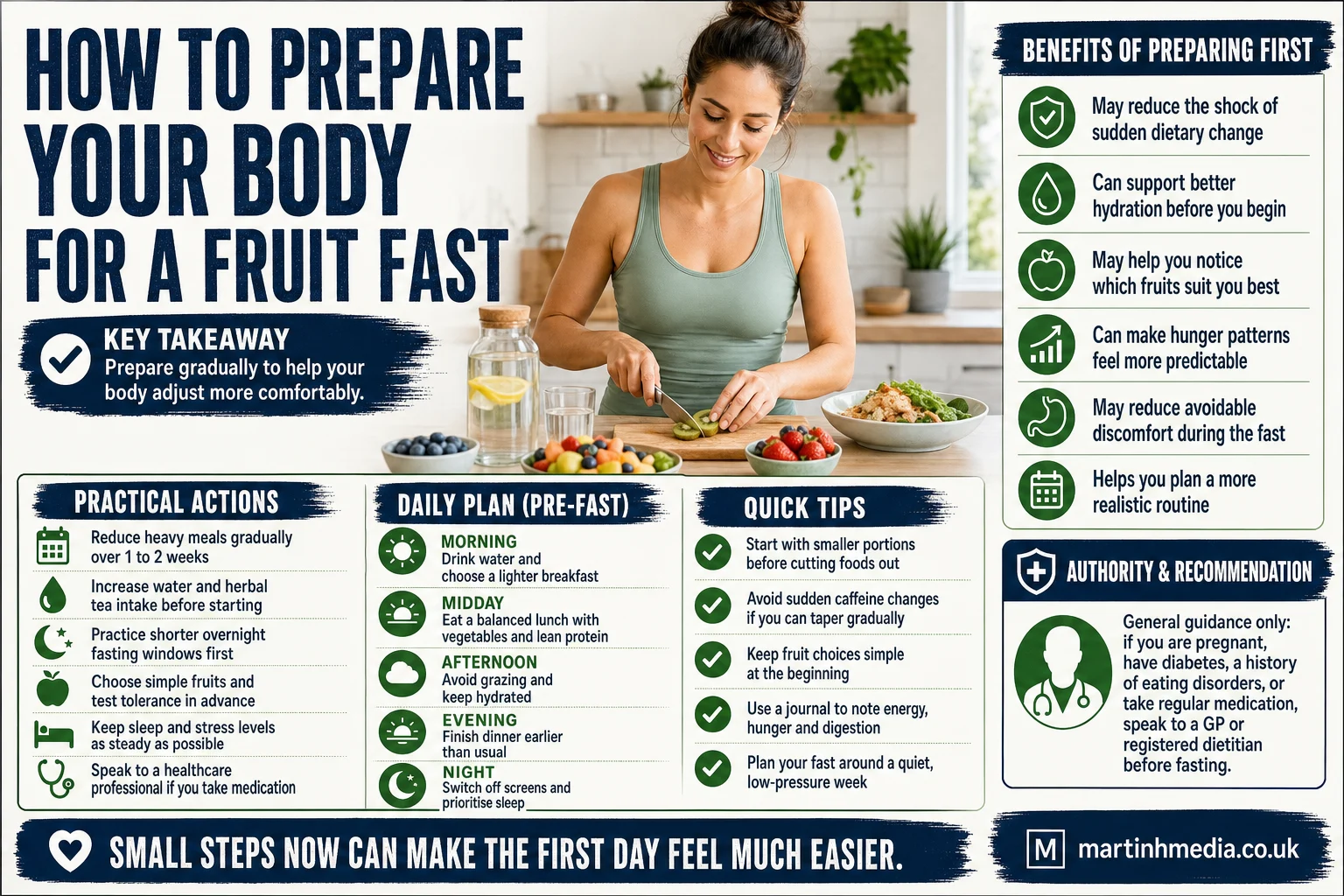
How to Prepare Your Body for a Fruit Fast Through Gradual Food Reduction
Your digestive system currently processes heavy proteins and complex carbohydrates daily. Switching to fruit overnight creates shock. Your body doesn’t know what hit it.
Start reducing portions two weeks before your fruit fast. Cut your normal meal size by one quarter. Your stomach begins adapting to less volume.
Week two involves eliminating heavy foods completely. No red meat. No fried foods. No processed snacks. Focus on lighter proteins like fish and chicken.
The final three days before your fast matter most. Eat only vegetables and small amounts of lean protein. Your digestive enzymes start shifting toward simpler foods.
This gradual approach prevents the metabolic panic most people experience. Your body learns to expect less without going into crisis mode.
People who skip this preparation phase report headaches and fatigue immediately. They blame the fruit fast. The real problem was jumping in unprepared.
Hydration Strategies Before Starting a Fruit Fast
Most people walk around mildly dehydrated every single day. Adding a fruit fast on top of that creates serious problems.
Water intake needs to increase one week before you begin. Aim for half your body weight in ounces daily. A 160-pound person needs 80 ounces minimum.
Your urine color tells you everything. Pale yellow means you’re doing well. Dark yellow or amber means drink more immediately.
Herbal teas count toward your hydration goals. Peppermint and chamomile work particularly well. They calm your digestive system while adding fluid volume.
Skip caffeine three days before your fruit fast starts. Coffee and black tea dehydrate you faster than you realize. The withdrawal headache passes within 48 hours.
Coconut water helps balance electrolytes during preparation. One glass daily in the final week primes your system. It provides minerals you’ll need during the actual fast.
How to Prepare Your Body for a Fruit Fast by Adjusting Your Eating Schedule
Eating six times daily makes fasting feel impossible. Your body expects constant fuel input. Breaking that cycle takes deliberate practice.
Consolidate your meals to three times daily starting ten days out. No snacks between breakfast, lunch, and dinner. Your insulin levels stabilize between eating periods.
Push your breakfast one hour later each day. Start at 7 AM and gradually move to 9 AM. This mirrors what gentle fasting preparation methods teach beginners.
Your evening meal should finish earlier too. Move from 8 PM to 6 PM over the same period. You create a longer overnight fasting window naturally.
This schedule adjustment trains your hunger hormones. Ghrelin stops spiking every few hours. You feel genuine hunger only at meal times.
The gap between meals teaches your body to burn stored energy. This skill becomes vital during your fruit fast when calories drop significantly.
Blood Sugar Stabilization Before Your Fruit Fast
Refined sugar creates wild blood sugar swings throughout your day. Those swings make fruit fasting absolutely miserable.
Eliminate all added sugars two weeks before starting. No candy. No cookies. No sweetened yogurt or flavored drinks. Read every label carefully.
Natural sugars in whole foods stay on the menu. An apple contains sugar but also fiber. The fiber slows absorption and prevents spikes.
Your body runs on glucose constantly right now. Teaching it to access stored glycogen takes time. This metabolic flexibility develops over days.
Complex carbohydrates should decrease gradually too. Trade white rice for brown rice first. Then reduce the portion size over several days.
By day ten, your meals look completely different. Vegetables fill half your plate. Protein takes one quarter. Minimal grains occupy the rest.
This composition keeps blood sugar remarkably steady. You avoid the crashes that make people abandon fasts prematurely.
How to Prepare Your Body for a Fruit Fast Through Digestive Rest
Your stomach works hard digesting three full meals plus snacks daily. It never gets true downtime. Building in rest periods improves function.
Practice a 12-hour overnight fast one week before starting fruit. Stop eating at 7 PM. Don’t eat again until 7 AM. Sleep covers most of this period.
Your digestive tract uses this time to complete processing and repair itself. Cells regenerate. Enzyme production rebalances.
Extend to 14 hours three days before your fruit fast. This longer window feels slightly challenging. That challenge builds the mental muscle you’ll need.
Digestive enzymes shift when you fast regularly. Your body produces more lipase for fat burning. It reduces amylase needed for heavy starches.
These enzyme changes make fruit digestion easier when you actually begin. Your system recognizes the simple sugars and processes them efficiently.
Many people report better bowel movements during preparation. Lighter foods move through faster. Bloating decreases noticeably.
Mental Preparation and Environment Setup
Physical preparation means nothing if your mind isn’t ready. Mental resistance kills more fasts than physical discomfort ever does.
Clear your calendar of food-centered social events during your fruit fast. Restaurants and dinner parties create unnecessary temptation. Schedule them for after you finish.
Tell people close to you about your plan. Their support matters more than you think. Criticism from others undermines your commitment quickly.
Stock your kitchen with approved fruits before you start. Variety prevents boredom. Apples, berries, melons, and citrus provide different flavors and textures.
Remove temptation foods completely. Don’t rely on willpower alone. If chips sit in your pantry, you’ll eat them eventually.
Similar to how you might prepare for intermittent fasting gradually, mindset work happens daily. Visualize yourself succeeding. Write down your reasons for doing this.
Your reasons need specificity. “Get healthier” feels vague and uninspiring. “Reduce inflammation in my joints” gives you something concrete to pursue.
How to Prepare Your Body for a Fruit Fast by Testing Fruit Digestion
Not everyone digests fruit equally well. Some people experience bloating from certain varieties. Finding out during your actual fast creates problems.
Test different fruits during your preparation week. Eat only one type at breakfast. Note how you feel two hours later.
Melons digest fastest and easiest for most people. Bananas provide sustained energy without sugar crashes. Berries pack nutrients into small volumes.
Citrus fruits can irritate empty stomachs in sensitive individuals. If oranges cause discomfort now, they’ll be worse during fasting.
Dried fruits concentrate sugar intensely. They spike blood sugar faster than fresh options. Save them for your eating window if you include any.
Your gut bacteria need time adjusting to increased fruit intake. Sudden fiber increases cause gas and cramping. Gradual introduction prevents this.
Keep a simple journal of which fruits feel best. You’ll build your fruit fast menu from these observations. Personal response beats general advice every time.
Sleep and Recovery Optimization
Poor sleep sabotages every health intervention you attempt. Fruit fasting on insufficient rest feels ten times harder.
Prioritize seven to eight hours nightly starting immediately. Your body heals and balances hormones during deep sleep. Cortisol regulation depends on adequate rest.
High cortisol makes you crave sugar constantly. It works directly against your fasting goals. Sleep deprivation keeps cortisol elevated all day.
Create a consistent bedtime routine one week before starting. Same time every night. Same wind-down activities. Your circadian rhythm locks in faster.
Blue light from screens disrupts melatonin production. Stop scrolling two hours before bed. Read a physical book instead.
Your bedroom temperature affects sleep quality significantly. Keep it between 65 and 68 degrees. Cooler rooms promote deeper sleep cycles.
Well-rested people report dramatically less hunger during fasting periods. They also maintain better mood stability throughout the process.
Pre-Fast Physical Activity Adjustments
Intense workouts drain glycogen stores your body relies on for energy. Maintaining heavy training while preparing for a fruit fast backfires.
Scale back exercise intensity during your two-week preparation. Trade HIIT sessions for moderate walks. Your body conserves energy for the upcoming challenge.
Gentle movement still matters tremendously. Walking aids digestion and maintains insulin sensitivity. Aim for 30 minutes daily at a comfortable pace.
Yoga and stretching prepare you mentally and physically. They build body awareness you’ll use during the fast. You notice subtle signals more easily.
Heavy strength training should pause completely three days before starting. Your muscles need glycogen for recovery. Fruit alone won’t provide enough during the fast.
The preparation phase mirrors principles used in safe fasting approaches that emphasize gradual changes. Listen to your body’s feedback. Adjust activity based on energy levels.
Plan lighter movement during your actual fruit fast too. Expectations need alignment with reduced calorie intake. Pushing too hard creates unnecessary stress.
Supplement and Medication Considerations
Certain supplements need adjustment before starting a fruit fast. Taking them on an empty stomach causes nausea in many people.
Consult your doctor about any prescription medications you take. Some require food for proper absorption. Others affect blood sugar levels significantly.
Multivitamins often contain iron and other minerals that upset empty stomachs. Switch to taking them during your eating window instead.
Probiotic timing matters less than consistency. You can take them anytime without food issues. They actually support the digestive changes you’re making.
Magnesium helps prevent muscle cramps some people experience while fasting. Start supplementing one week early if you’re prone to cramping.
Herbal supplements like ashwagandha or rhodiola support stress response. They help your body handle the fast more smoothly. Begin them during preparation.
Never stop prescription medications without medical supervision. Your doctor needs to know your fasting plans. Some conditions make fruit fasting inappropriate entirely.
Start your fruit fast preparation today by reducing one heavy meal.
Frequently Asked Questions
How long should I prepare before starting a fruit fast?
Two weeks of preparation works best for most people. This gives your digestive system time to adjust gradually. You reduce heavy foods, increase hydration, and practice shorter fasting windows. Rushing this process leads to headaches, fatigue, and early failure. Your body needs time to shift its fuel sources and enzyme production.
Can I drink coffee during fruit fast preparation?
Yes, but you should reduce caffeine gradually during preparation. Stop coffee completely three days before your fruit fast begins. Sudden caffeine withdrawal causes severe headaches that compound fasting discomfort. Switch to green tea first, then herbal tea. This stepped approach prevents withdrawal symptoms from interfering with your fast.
What fruits work best for beginners?
Melons, apples, and berries digest easily for most people. Watermelon hydrates while providing natural sugar. Apples offer fiber that slows sugar absorption. Berries pack nutrients without excessive calories. Test different fruits during preparation to see which ones your body handles best. Avoid citrus if you have a sensitive stomach.
Should I exercise during the preparation phase?
Light exercise like walking helps during preparation. Avoid intense workouts or heavy strength training. Your body needs to conserve glycogen stores for the upcoming fast. Gentle yoga and stretching work well. Stop vigorous exercise three days before starting your fruit fast. Resume normal training only after you finish.
How do I know if I’m ready to start?
You’re ready when you complete 14-hour fasts comfortably during preparation. Your energy should stay stable throughout the day. Hunger pangs should be manageable, not desperate. You’ve eliminated processed foods and increased water intake successfully. Your sleep quality has improved. If you still feel shaky or weak, extend preparation another week.