
You notice your knees protesting during stairs more than they did last year. The jeans that fit six months ago now feel different around the waist. Why Strength Training Becomes More Important After 40 starts with what your body quietly stops doing on its own.
Why Strength Training Becomes More Important After 40 for Muscle Preservation
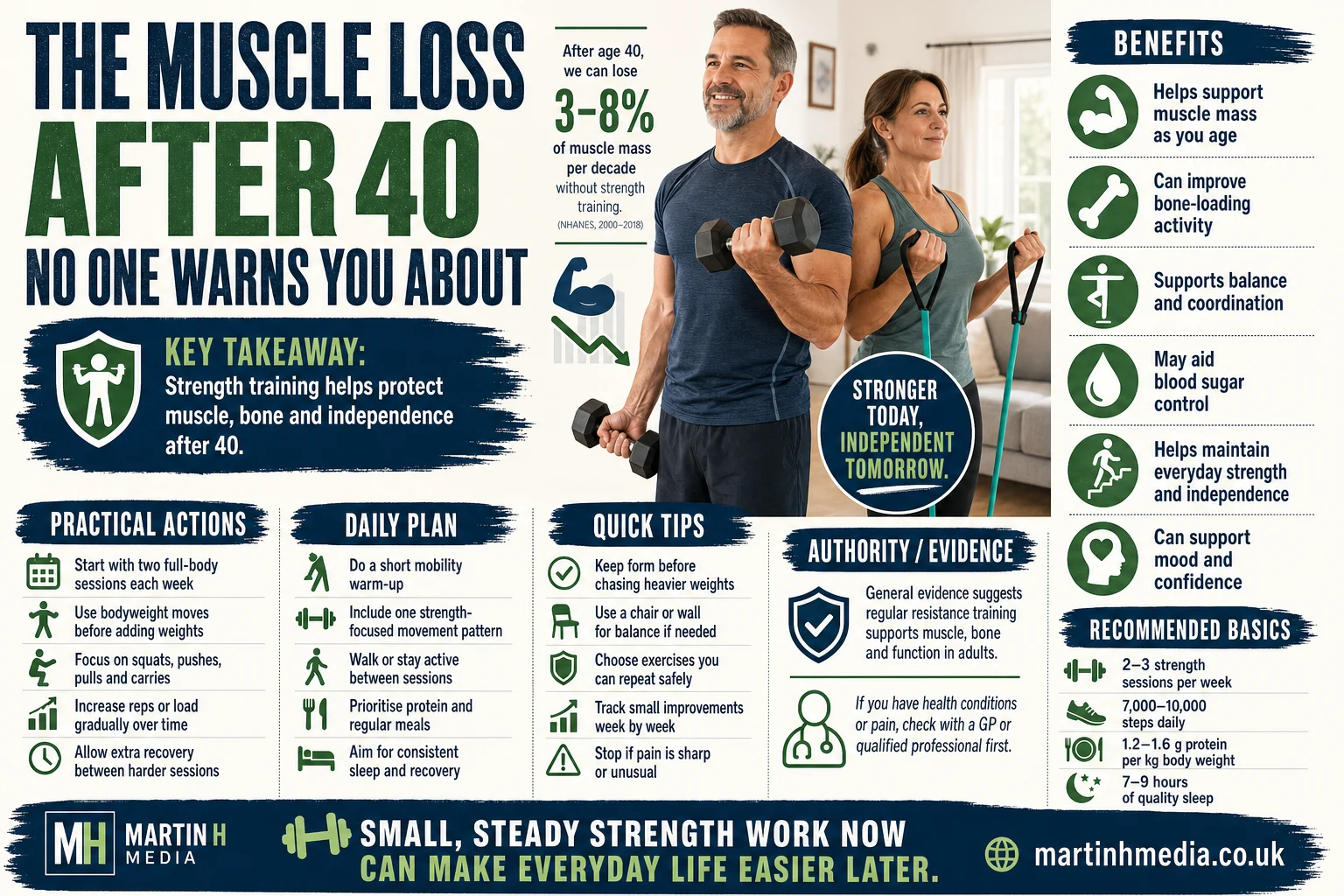
Your body begins losing muscle mass at roughly one percent per year after forty. This process accelerates if you do nothing to stop it. By sixty, you could lose fifteen percent of your strength.
The medical term is sarcopenia. The practical reality is struggling to carry groceries or get up from low chairs. Muscle tissue doesn’t maintain itself the way it did at twenty.
Resistance training reverses this decline at any age. Studies show people in their seventies gaining muscle mass through consistent lifting. Your muscles respond to stress by growing stronger regardless of your birthday.
You need progressive overload to trigger adaptation. This means gradually increasing weight or repetitions over time. Your body won’t change unless you give it reason to.
How Bone Density Changes Make Strength Work Non-Negotiable
Bone mineral density peaks around age thirty and declines afterward. Women lose density faster after menopause due to dropping estrogen levels. Men face slower but steady bone loss throughout middle age.
Weight-bearing exercise stimulates bone formation through mechanical stress. When muscles pull against bones, your skeleton responds by becoming denser. Walking helps but doesn’t create the same intensity as lifting.
Osteoporosis develops silently until a fracture happens. Hip fractures after fifty carry serious complications and long recovery times. Building bone density now protects you decades later.
You need exercises that load your spine and hips. Squats, deadlifts, and overhead presses deliver the stimulus your bones require. Machines that support your back don’t create the same effect.
Why Strength Training Becomes More Important After 40 for Metabolic Health
Muscle tissue burns more calories at rest than fat tissue does. Every pound of muscle you maintain keeps your metabolism higher. Losing muscle means your body needs fewer calories to function.
This explains why people gain weight eating the same portions they always did. Their resting metabolic rate dropped along with their muscle mass. The math changed without them noticing.
Insulin sensitivity declines with age in most people. Muscle cells act as glucose sinks that pull sugar from your bloodstream. More muscle means better blood sugar control after meals.
Research shows resistance training improves insulin response independent of weight loss. Your cells become more receptive to insulin signals. This happens through changes in muscle fiber composition and cellular signaling pathways.
Sleep quality affects metabolic function in ways that compound these changes. Poor rest reduces insulin sensitivity and disrupts glucose metabolism regardless of your exercise routine. You need both good training and adequate recovery.
Joint Protection Through Stronger Supporting Structures
Cartilage doesn’t regenerate well after damage occurs. Your joints depend on surrounding muscles for stability and shock absorption. Weak muscles force joints to handle stress they weren’t designed for.
Knee osteoarthritis develops partly from inadequate quadriceps strength. Strong thighs reduce compression forces on knee cartilage during walking and stairs. The muscle acts as a natural brace.
Rotator cuff problems increase after forty due to shoulder muscle imbalances. Modern life creates forward shoulder posture from desk work and driving. Targeted strength work corrects these imbalances before tears develop.
Lower back pain usually stems from weak core muscles and poor hip mobility. Your spine relies on abdominal and back muscles for support. Deadlifts and planks build this protective muscular corset.
You can’t strength train your way through existing injuries. But you can prevent most common joint problems through consistent work. Prevention costs less pain than rehabilitation.
Why Strength Training Becomes More Important After 40 for Balance and Fall Prevention
Falls become the leading cause of injury-related death in adults over sixty-five. Most falls happen during routine activities at home, not during risky behavior. Your balance system degrades without you realizing it.
Three systems control balance: vision, inner ear, and proprioception from muscles and joints. Muscle proprioceptors give your brain constant feedback about body position. Weaker muscles send weaker signals.
Single-leg exercises improve balance more than machine-based training. Your stabilizer muscles must fire to keep you upright. This trains the neuromuscular patterns you need during slips and trips.
Reaction time slows with age but improves with training. Catching yourself during a stumble requires fast muscle activation. Regular strength work maintains these quick-twitch responses.
Hormonal Changes That Amplify the Need for Resistance Work
Testosterone drops roughly one percent annually in men after thirty. Women’s testosterone also declines, particularly after menopause. This hormone directly affects muscle protein synthesis and recovery capacity.
Growth hormone secretion decreases significantly through your forties and fifties. This hormone helps repair tissue and build muscle overnight. Lower levels mean slower recovery between training sessions.
Strength training naturally boosts both testosterone and growth hormone in the hours after lifting. The effect is temporary but adds up over years of consistent work. You’re working with your endocrine system, not against it.
Thyroid function often decreases with age, slowing your overall metabolism. Muscle tissue supports healthy thyroid function through multiple pathways. Maintaining muscle mass helps preserve metabolic rate despite hormonal changes.
Why Strength Training Becomes More Important After 40 for Daily Function
You don’t notice functional decline until specific tasks become difficult. Lifting luggage into overhead bins. Getting up from the floor while playing with grandchildren. Opening tight jar lids.
These activities require strength in specific movement patterns. A leg press machine doesn’t translate to getting off the ground. You need exercises that mimic real-world demands.
Carrying capacity matters for independence. Groceries, laundry, moving furniture around your home. People lose independence when they can’t manage these tasks alone.
Grip strength predicts overall health outcomes better than many clinical measures. Weak hands correlate with increased mortality risk across multiple studies. Farmers carries and dead hangs build grip alongside other benefits.
Mental Health Benefits That Compound Over Time
Resistance training reduces depression symptoms as effectively as aerobic exercise in clinical trials. The effect size matches some pharmaceutical interventions. Mechanisms include endorphin release and improved sleep quality.
Anxiety levels drop consistently in people who maintain strength routines. The physical act of controlling heavy weights creates psychological confidence. You prove to yourself you’re capable of hard things.
Cognitive function declines less rapidly in people who strength train regularly. Brain-derived neurotrophic factor increases after lifting sessions. This protein supports neuron growth and connectivity.
Your sleep architecture improves with regular resistance training, creating better recovery and mental clarity. Deep sleep stages increase when your body has real physical work to recover from. Better rest means better blood sugar control and hormone balance.
Starting Points When You’re Beginning After Forty
You don’t need a gym membership to start. Bodyweight squats, pushups, and planks build foundation strength at home. Master movement patterns before adding external load.
Form matters more than weight lifted, especially when beginning. Poor technique under load creates the injuries you’re trying to prevent. Consider working with a qualified trainer for your first few months.
Recovery takes longer than it did at twenty-five. You might need three days between sessions instead of two. Listen to your body and adjust frequency accordingly.
Two full-body sessions per week deliver significant benefits for beginners. You don’t need daily training to see results. Consistency over months matters more than intensity in single sessions.
Progressive overload remains the key principle at any age. Add one repetition per week or five pounds per month. Small increases compound into major strength gains over a year.
Why Strength Training Becomes More Important After 40 Than Cardio Alone
Cardiovascular exercise maintains heart health but doesn’t prevent muscle loss. Running three times weekly won’t stop sarcopenia. You need mechanical tension on muscles to trigger growth.
Cardio burns calories during the activity but doesn’t raise resting metabolism long-term. Muscle tissue increases calorie burn twenty-four hours daily. The metabolic boost from strength work lasts for days.
Most people can maintain cardio capacity into old age more easily than strength. A seventy-year-old can still walk for miles. That same person might struggle to get off the floor without furniture assistance.
Combining both training types delivers optimal health outcomes. But if time forces a choice, strength work provides benefits cardio can’t replicate. Your blood sugar regulation, bone density, and daily function all depend more on muscle than aerobic capacity.
Three strength sessions and two cardio sessions per week covers most health bases. Adjust based on your specific goals and recovery capacity. Perfect programming matters less than consistent execution.
Start with basic compound movements twice this week and track how your body responds.
Frequently Asked Questions
How often should someone over forty strength train each week?
Two to three full-body sessions per week delivers significant results for most people. This frequency allows adequate recovery time between workouts. You can increase to four sessions once you’ve built a foundation. Rest days become more important after forty than they were previously.
Can you build muscle after forty or just maintain what you have?
You can absolutely build new muscle tissue at any age. Studies show people in their seventies and eighties gaining muscle through progressive resistance training. The process takes longer than it did at twenty-five. Consistent training with adequate protein intake triggers muscle growth regardless of age.
What exercises should beginners over forty start with first?
Start with bodyweight squats, pushups, planks, and glute bridges. These movements teach fundamental patterns without requiring equipment. Add goblet squats and dumbbell rows once bodyweight exercises feel manageable. Master form before increasing weight or complexity.
How does strength training after forty differ from training when younger?
Recovery takes longer, requiring more rest between intense sessions. Joint health becomes a higher priority than maximum strength. Warmup routines need more time and attention. Progressive overload should advance more gradually. The fundamental principles remain the same but application requires more patience.
Does strength training help with weight loss after forty?
Yes, through multiple mechanisms working together. Muscle tissue burns more calories at rest than fat does. Strength training improves insulin sensitivity and glucose metabolism. The metabolic boost lasts for days after each session. You still need appropriate nutrition, but muscle mass makes weight management easier.