
Why You’re Losing Muscle, Not Just Fat, After 40
Your scale drops five pounds but your jeans fit worse than before. You lost weight in all the wrong places. How to Prevent Muscle Loss During Weight Loss After 40 requires eating and training differently than you did at thirty.
How to Prevent Muscle Loss During Weight Loss After 40 With Strategic Protein Timing
Most people eat protein once at dinner. Their muscles starve the other twenty hours of the day. This pattern accelerates muscle breakdown after forty.
Your body can only use about thirty grams of protein per meal for muscle maintenance. Eating sixty grams at dinner doesn’t compensate for skipping breakfast and lunch. The extra protein gets converted to glucose instead of protecting muscle tissue.
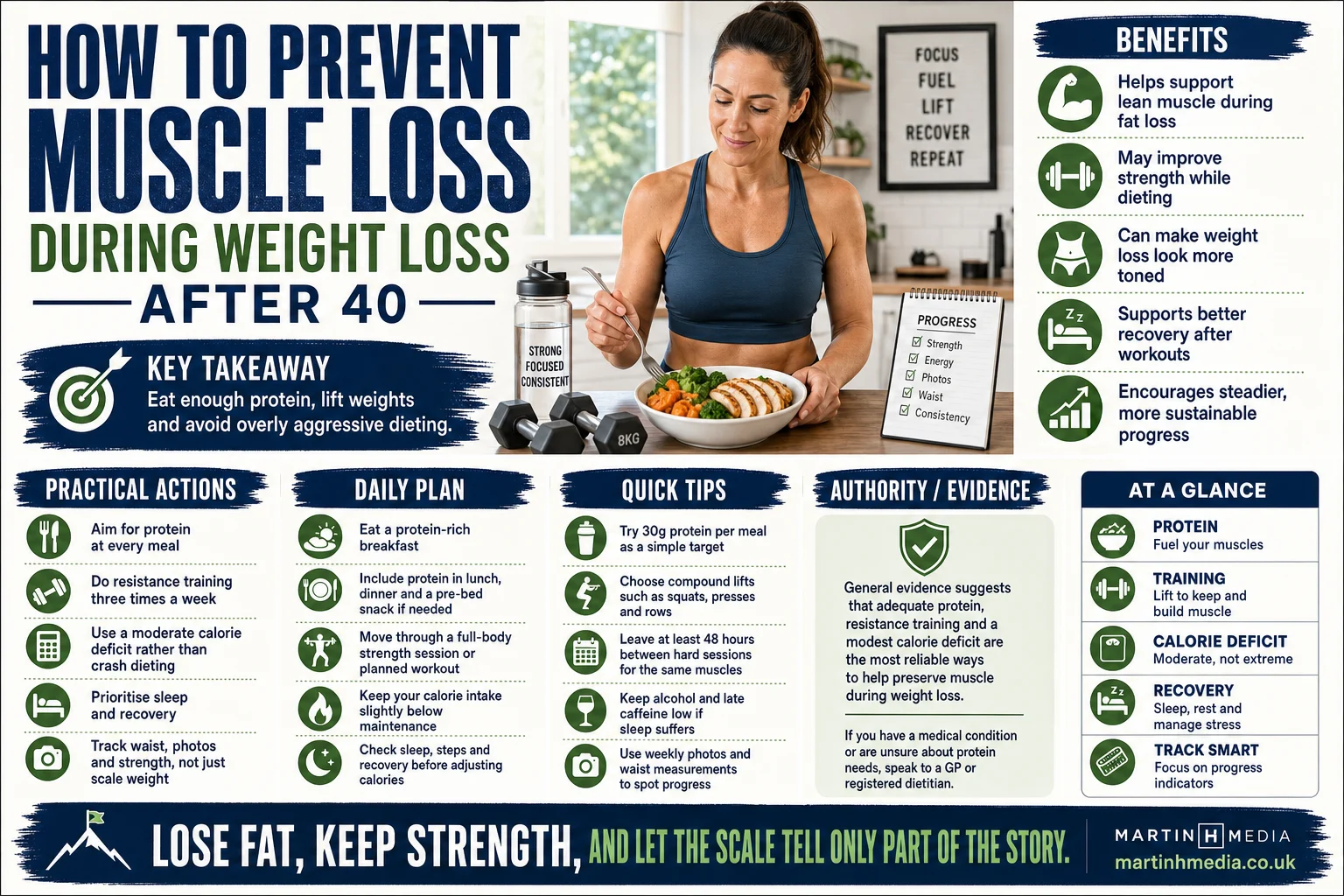
Spread your protein across three or four meals minimum. Each meal should contain at least thirty grams. This keeps muscle protein synthesis elevated throughout the day.
Breakfast matters more than you think. Eating thirty grams of protein before 10 AM triggers muscle maintenance signals. Your body stops breaking down muscle tissue for energy. Most people eat fifteen grams maximum at breakfast.
That’s not enough.
A protein shake works if you hate cooking in the morning. Three eggs with Greek yogurt works better. The whole food option provides additional nutrients that support muscle retention beyond just protein content.
Pre-bed protein intake deserves attention too. Thirty grams of casein protein before sleep reduces overnight muscle breakdown. Your body enters a fasted state during sleep. Slow-digesting protein provides amino acids throughout those eight hours.
Resistance Training Protects What Calorie Restriction Tries to Take
Cardio burns calories but tells your body it doesn’t need muscle. Walking five miles signals you need endurance capacity. It doesn’t signal you need strength. Your body adapts by shedding metabolically expensive muscle tissue.
Lifting weights sends the opposite message. Your muscles experience tension they need to adapt to. Your body keeps muscle tissue because you’re proving you need it regularly.
Three strength sessions per week prevents most muscle loss during weight loss. Each session should work all major muscle groups. You don’t need to spend two hours in the gym.
Forty-five minutes is plenty.
Focus on compound movements that work multiple muscle groups simultaneously. Squats protect leg muscle better than leg extensions. Rows protect back muscle better than isolated bicep curls. These exercises also burn more calories during the workout itself.
Progressive overload matters more after forty than volume. Add weight or reps each week even during calorie restriction. This continued progression signals your body that it needs to maintain muscle mass. Small increases work fine.
Two extra reps this week counts as progress. An additional five pounds on the bar counts. Your body responds to the challenge regardless of magnitude.
Recovery becomes harder as you age. Space your training sessions at least forty-eight hours apart. Your muscles need time to repair between sessions. Training the same muscles on consecutive days guarantees breakdown without adequate recovery.
How to Prevent Muscle Loss During Weight Loss After 40 Through Moderate Calorie Deficits
Aggressive dieting destroys muscle tissue faster than body fat. Eating 1200 calories when you need 2000 forces your body into survival mode. It breaks down muscle to meet energy needs because muscle requires more calories to maintain than fat.
A deficit of 300 to 500 calories daily allows fat loss while preserving muscle. You lose weight slower but you lose the right kind of weight. The person who loses one pound weekly while maintaining muscle looks better than the person who loses three pounds weekly while losing muscle.
Same final weight. Completely different body composition.
Calculate your maintenance calories accurately before creating a deficit. Most people guess wrong by several hundred calories. Online calculators provide starting estimates. Track your weight for two weeks while eating your estimated maintenance level.
If your weight stays stable, the calculation was accurate. If you gain weight, reduce calories by 200. If you lose weight, add 200 calories. Adjust until you find true maintenance.
Then subtract 300 to 500 calories for your deficit.
Protein calories matter differently than carbohydrate calories during this process. Keeping protein at 1.6 grams per kilogram of body weight preserves muscle even in a deficit. This often means protein represents thirty to thirty-five percent of total calories. Supporting weight management after 40 requires prioritizing protein over other macronutrients.
Don’t create your deficit by reducing protein intake. Cut carbohydrates and fats instead. Your muscles need those amino acids to survive calorie restriction. Every gram of protein you cut increases muscle loss.
Sleep Duration Determines Whether You Lose Fat or Muscle
Six hours of sleep nightly guarantees muscle loss during weight loss. Your body produces growth hormone primarily during deep sleep stages. Less sleep means less growth hormone. Less growth hormone means accelerated muscle breakdown.
People who sleep five to six hours lose sixty percent more muscle during weight loss compared to those sleeping eight to nine hours. They lose the same total weight. The composition of that weight loss differs dramatically.
Aim for eight hours minimum nightly. Nine hours works even better after forty. Your recovery needs increased with age. Your sleep requirement increased too.
Most people sacrifice sleep to create time for other activities. This destroys their body composition goals more than skipping workouts. One week of poor sleep undoes two weeks of perfect training and nutrition.
Worth knowing.
Sleep quality matters as much as duration. Alcohol fragments sleep architecture even if you stay in bed eight hours. You never reach deep sleep stages. Your body never produces adequate growth hormone.
Caffeine after 2 PM creates the same problem. The half-life means significant amounts remain in your system at bedtime. You fall asleep but sleep quality suffers throughout the night.
Room temperature affects muscle preservation through its impact on sleep quality. Temperatures above 68 degrees prevent deep sleep stages. Keep your bedroom between 65 and 67 degrees. Cooler is better for both sleep quality and muscle retention.
How to Prevent Muscle Loss During Weight Loss After 40 by Monitoring the Right Metrics
Your bathroom scale lies about body composition changes. Two people at 165 pounds can look completely different. One person has twenty percent body fat. The other has thirty-five percent body fat.
The scale can’t tell you if you’re losing fat or muscle. Weight alone is a useless metric during this process. You need measurements that reveal body composition changes.
Take weekly photos in the same lighting wearing the same clothes. Visual changes appear before scale changes. You’ll see muscle definition improve even when weight drops slowly. These photos provide motivation when the scale stalls.
Waist measurements reveal fat loss better than total body weight. Measure at your belly button level first thing in the morning. A shrinking waist while weight stays stable means you’re losing fat and gaining muscle simultaneously.
That’s the ideal scenario.
Track your strength levels across all major lifts. Maintaining or improving strength during weight loss confirms muscle preservation. Losing strength indicates muscle loss even if protein intake seems adequate. The role of protein intake becomes clear when you correlate strength maintenance with adequate daily protein.
If your squat drops twenty pounds over a month, you’re losing muscle. Increase protein intake by twenty grams daily. Reduce your calorie deficit by 100 calories. Monitor strength for another two weeks.
Strength should stabilize or improve with these adjustments.
Body fat calipers provide direct body fat measurements at home. The accuracy isn’t perfect but the trend data is valuable. Measuring the same sites weekly shows whether fat decreases while muscle stays stable. Consistency in measurement location matters more than absolute accuracy.
How to Prevent Muscle Loss During Weight Loss After 40 With Meal Composition Adjustments
Eating protein alone at meals misses an important synergy. Combining protein with specific carbohydrates amplifies muscle preservation during calorie restriction. This happens through insulin’s effect on muscle protein synthesis.
Insulin isn’t just a fat storage hormone. It also prevents muscle breakdown when combined with adequate protein intake. Eating thirty grams of protein with fifty grams of carbohydrates triggers better muscle retention than protein alone.
This works best immediately after resistance training. Your muscles are primed to absorb nutrients for the next two hours. A post-workout meal with protein and carbohydrates maximizes muscle recovery and preservation.
Rice and chicken works. Oats and protein powder works. Potatoes and eggs works. The specific foods matter less than the macronutrient combination and timing.
Leucine content in your protein sources affects muscle preservation significantly. This amino acid triggers muscle protein synthesis more than other amino acids. Animal proteins contain more leucine than plant proteins per serving.
Three ounces of chicken provides about 2.5 grams of leucine. The same amount of tofu provides 0.9 grams. You need about 2.5 grams of leucine per meal to maximize muscle maintenance after forty.
Plant-based eaters need larger portions to reach equivalent leucine intake. Protein intake for weight management requires attention to both total protein and leucine content per meal.
Whey protein delivers leucine faster than whole food proteins. This makes it valuable immediately post-workout. Casein protein delivers leucine slowly over several hours. This makes it valuable before bed. Different proteins serve different purposes throughout the day.
Healthy fats don’t need restriction during weight loss if protein and calories are controlled. Adding olive oil or avocado to meals improves vitamin absorption. Several vitamins require fat for proper uptake. These vitamins support hormone production needed for muscle maintenance.
Just account for the calories.
Fat contains nine calories per gram compared to four for protein and carbohydrates. A tablespoon of oil adds 120 calories quickly. These calories count toward your daily total even though they come from healthy sources.
Track your intake for two weeks to understand how meal composition affects your results. You might discover you maintain strength better with more carbohydrates around training. You might find you feel fuller with more fat at breakfast. Individual responses vary enough that personalization matters.
Start resistance training three times weekly with thirty grams of protein at every meal.
Frequently Asked Questions
How much protein do I really need daily after 40 to prevent muscle loss?
You need at least 1.6 grams of protein per kilogram of body weight daily during weight loss after forty. For a 180-pound person, this equals about 130 grams daily. Spread this across three to four meals with at least thirty grams per meal for best results.
Can I prevent muscle loss with diet alone without lifting weights?
Diet alone cannot fully prevent muscle loss during weight loss after forty. High protein intake helps but resistance training is necessary to signal your body to keep muscle tissue. You need both adequate protein and regular strength training to maintain muscle during calorie restriction.
How fast should I lose weight to avoid losing muscle?
Aim to lose half a pound to one pound weekly to minimize muscle loss after forty. Faster weight loss increases muscle breakdown regardless of protein intake. A moderate calorie deficit of 300 to 500 calories daily allows steady fat loss while preserving muscle tissue.
Does cardio cause muscle loss during weight loss after 40?
Excessive cardio without resistance training accelerates muscle loss during weight loss after forty. Your body adapts to endurance exercise by reducing metabolically expensive muscle tissue. Limit cardio to two or three moderate sessions weekly and prioritize resistance training for muscle preservation.
How do I know if I’m losing muscle or just fat?
Track your strength levels on major lifts and take weekly waist measurements and photos. Maintaining or improving strength while your waist shrinks indicates fat loss with muscle preservation. Declining strength during weight loss signals muscle loss and requires increased protein intake or reduced calorie deficit.