

Why Muscle Loss After 40 Isn’t About Aging
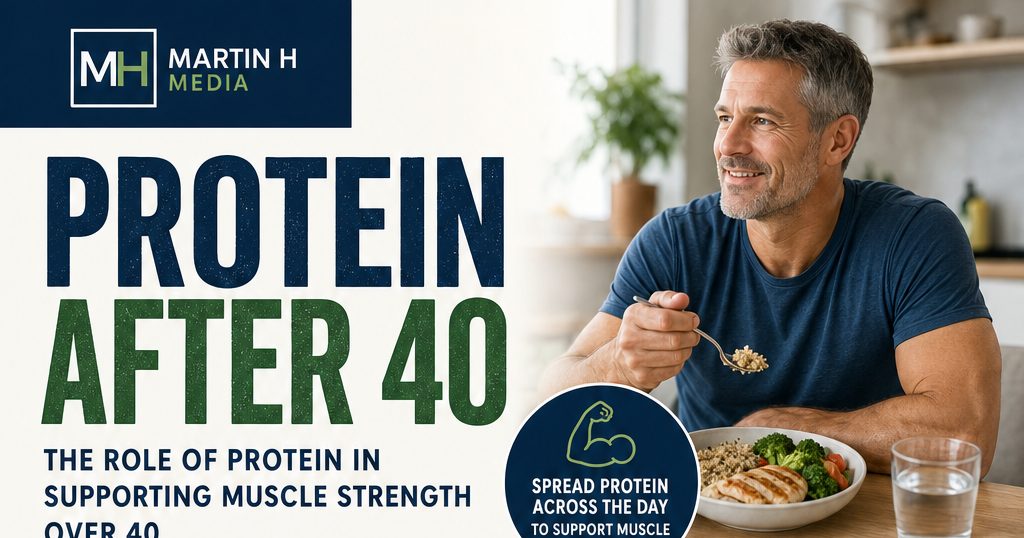
Your grip feels weaker when you open jars. Carrying groceries upstairs leaves you winded. The Role of Protein in Supporting Muscle Strength Over 40 starts with eating enough at every single meal.
The Role of Protein in Supporting Muscle Strength Over 40 Addresses Muscle Loss You Can’t See
Your body loses three to eight percent of muscle mass each decade after forty. This happens even if your weight stays exactly the same. The number on the scale deceives you completely.
Fat replaces muscle tissue silently over years. You might fit into the same pants size. Your actual strength declines steadily anyway.
Each pound of lost muscle reduces what you can lift. It affects how easily you climb stairs. Simple daily tasks become harder without you noticing the gradual shift.
This process has a name: sarcopenia. It accelerates after fifty if you don’t intervene. By seventy, some people lose up to forty percent of peak muscle mass.
Protein intake directly slows this decline. Your muscles need amino acids to maintain their size. Without adequate protein, your body cannibalizes existing muscle tissue for fuel.
Most people eat the same portions they ate at twenty-five. That amount doesn’t meet your current needs. Your body requires more protein now to maintain what you have.
Your Muscles Become Resistant to Protein Signals After Forty
Younger muscles respond quickly to protein intake. A twenty-year-old triggers muscle protein synthesis with fifteen grams. Your forty-five-year-old muscles ignore that same amount.
This phenomenon is called anabolic resistance. Your muscle cells become less sensitive to protein signals. They need a stronger stimulus to start building or maintaining tissue.
Research shows you need twenty-five to thirty grams per meal minimum. Anything less fails to activate the muscle-building pathways. You essentially waste lower amounts after forty.
Spreading protein evenly across meals matters more now than ever. Three meals with thirty grams each beats one meal with ninety grams. Your muscles can only process so much protein at once.
Breakfast becomes particularly important for this reason. Most people eat carb-heavy breakfasts with minimal protein. They miss the first opportunity to stimulate muscle maintenance.
A high-protein start triggers muscle protein synthesis for hours. This sets a better metabolic tone for the entire day. Skipping it means playing catch-up later.
The Role of Protein in Supporting Muscle Strength Over 40 Determines Your Metabolic Rate
Muscle tissue burns calories constantly at rest. Fat tissue burns almost nothing. The more muscle you carry, the higher your baseline metabolism.
Each pound of muscle burns roughly six calories daily at rest. That might sound small. Over months and years, it compounds significantly.
Losing ten pounds of muscle drops your daily burn by sixty calories. That’s 21,900 calories per year. You gain six pounds of fat annually from that deficit alone.
This explains why weight management gets harder each decade. You’re not eating more. Your body simply burns less because muscle mass declined.
Adequate protein stops this metabolic slide. It preserves the calorie-burning tissue you already have. Your metabolism stays higher than it would otherwise.
Studies tracking people over years show this clearly. Those maintaining high protein intake keep more muscle mass. Their metabolic rates decline much slower than low-protein eaters.
Understanding protein’s connection to sustainable weight management helps you see the bigger picture. Muscle preservation affects everything from energy levels to body composition.
Leucine Content Matters More Than Total Protein Amount
Not all protein sources trigger the same muscle response. The amino acid leucine acts as the primary signal. It tells your muscles to start building or maintaining tissue.
You need roughly three grams of leucine per meal to maximize this signal. Animal proteins deliver leucine more efficiently than plant sources. A four-ounce chicken breast provides about 2.5 grams.
Plant proteins contain less leucine per serving overall. You need larger portions to hit the same threshold. A cup of lentils gives you about 1.3 grams.
This doesn’t mean you must eat animal products exclusively. It means you need to plan plant-based meals more carefully. Combining sources helps you reach the leucine target.
Dairy products punch above their weight for leucine content. Greek yogurt, cottage cheese, and milk all deliver high amounts. They make excellent additions to any meal.
Whey protein stands out as the leucine champion. A single scoop typically provides 2.5 to 3 grams. This makes it particularly useful for meeting daily targets.
The Role of Protein in Supporting Muscle Strength Over 40 Requires Timing Strategy
When you eat protein affects muscle maintenance almost as much as how much. Your muscles respond best to regular protein doses throughout the day. One giant meal doesn’t work the same way.
Think of muscle protein synthesis like a fire. You need to add logs regularly to keep it burning. One massive log once daily lets the fire die between feedings.
Spacing protein intake every three to four hours maintains elevated synthesis rates. This keeps your muscles in maintenance mode consistently. They break down less tissue between meals.
The first meal after waking matters most for many people. You’ve been fasting for eight to ten hours overnight. Your body shifted into breakdown mode during sleep.
Protein at breakfast reverses this state quickly. It signals your body to stop breaking down muscle. Morning protein also improves satiety for hours afterward.
Evening protein before bed extends muscle protein synthesis overnight. Casein protein works particularly well here. It digests slowly and releases amino acids for hours.
Many experts now recommend strategic protein timing combined with adequate daily intake for best results. Both factors work together synergistically.
Resistance Training Multiplies Every Gram You Eat
Protein alone slows muscle loss after forty. Protein plus resistance training reverses it completely. The combination triggers muscle growth at any age.
Lifting weights makes your muscles hypersensitive to protein for hours afterward. The anabolic resistance you normally face diminishes temporarily. Your muscles absorb and use protein more efficiently.
This window lasts up to twenty-four hours after training. Every meal during this period works harder than usual. You get more muscle maintenance per gram consumed.
You don’t need heavy weights to activate this response. Moderate resistance with higher repetitions works just as well. The key is challenging your muscles beyond their current capacity.
Two to three sessions per week provides enough stimulus. Each session should work all major muscle groups. Full-body workouts beat split routines for most people over forty.
Progressive overload matters more than any other training variable. You must gradually increase difficulty over weeks and months. Your muscles adapt only when forced to handle new challenges.
The Role of Protein in Supporting Muscle Strength Over 40 Protects Against Falls and Fractures
Strong muscles do more than look better in clothes. They protect your bones during slips and stumbles. Weak muscles increase fall risk dramatically after sixty.
Falls cause ninety percent of hip fractures in older adults. Hip fractures reduce life expectancy and independence significantly. Many people never fully recover their previous mobility.
Muscle strength keeps you stable on uneven surfaces. It helps you catch yourself when you trip. Strong legs let you recover balance before hitting the ground.
Protein intake correlates directly with fall prevention in research studies. People eating adequate protein maintain better leg strength. They demonstrate faster reaction times and better balance.
Your muscles also cushion bones during impacts. More muscle mass means more protection around your skeleton. This reduces fracture risk even when falls do occur.
Grip strength predicts overall muscle health remarkably well. Doctors now test grip strength as a vital sign. Weak grip indicates whole-body muscle loss and higher mortality risk.
Real Targets: How Much You Actually Need Daily
Government recommendations suggest 0.8 grams per kilogram of body weight. That’s the bare minimum to prevent deficiency. It’s nowhere near enough for muscle maintenance after forty.
Current research supports 1.6 to 2.2 grams per kilogram daily. A 170-pound person needs roughly 125 to 170 grams. That’s significantly more than most people eat.
Divide this total across three to four meals minimum. Each meal should contain twenty-five to forty grams. This spacing maximizes muscle protein synthesis throughout the day.
Tracking your intake for one week reveals surprising gaps. Most people discover they eat plenty at dinner. Breakfast and lunch fall far short of useful amounts.
A four-ounce chicken breast contains about thirty-five grams. Two eggs provide twelve grams. A cup of Greek yogurt delivers twenty grams.
You can see how meals add up quickly or fall short. Intentional planning makes a dramatic difference. Random eating rarely hits the targets you need.
Exploring how protein supports multiple aspects of health after forty shows why these amounts matter so much. The benefits extend far beyond just muscle strength.
The Role of Protein in Supporting Muscle Strength Over 40 Works Better with Vitamin D
Vitamin D receptors exist throughout your muscle tissue. These receptors regulate muscle protein synthesis and strength. Low vitamin D levels impair muscle function significantly.
Most people over forty have insufficient vitamin D status. You produce less from sun exposure as you age. Your skin becomes less efficient at vitamin D synthesis.
Studies show vitamin D supplementation improves muscle strength in deficient individuals. The effect amplifies when combined with adequate protein intake. Both nutrients work together synergistically.
Blood levels above thirty nanograms per milliliter support muscle health best. Many experts recommend testing your levels annually. Supplementation may need adjustment based on results.
Food sources provide minimal amounts for most people. Fatty fish and fortified dairy help somewhat. Supplementation remains the most reliable way to reach optimal levels.
Dosing varies based on current levels and body weight. Most people need 2,000 to 4,000 IU daily. Higher doses may be necessary initially to correct deficiency.
Start tracking your protein at every meal this week.
Frequently Asked Questions
How quickly will I notice strength improvements from increasing protein intake?
Most people notice improved recovery within two weeks of adequate protein intake. Measurable strength gains typically appear after four to six weeks when combined with resistance training. Muscle mass changes take eight to twelve weeks to become visible.
Can I get enough protein from plant sources after forty?
Yes, but it requires more planning and larger portions than animal sources. You need to combine different plant proteins throughout the day to get all essential amino acids. Soy, quinoa, and hemp are complete proteins that work well.
Does eating more protein damage my kidneys?
No evidence shows high protein intake harms healthy kidneys in adults. People with existing kidney disease should consult their doctor before increasing protein. For healthy individuals, higher protein intake appears safe long term.
Should I drink a protein shake immediately after working out?
The post-workout window is less critical than once believed. Getting adequate protein within two hours of training works fine. Total daily protein intake and consistent timing throughout the day matter more.
Will protein help if I don’t do resistance training?
Protein alone slows muscle loss but won’t build new muscle tissue. You need the stimulus from resistance exercise to trigger growth. Combining both produces the best results for strength and muscle maintenance.