

Why High-Protein Breakfasts Backfire During Fasting Windows
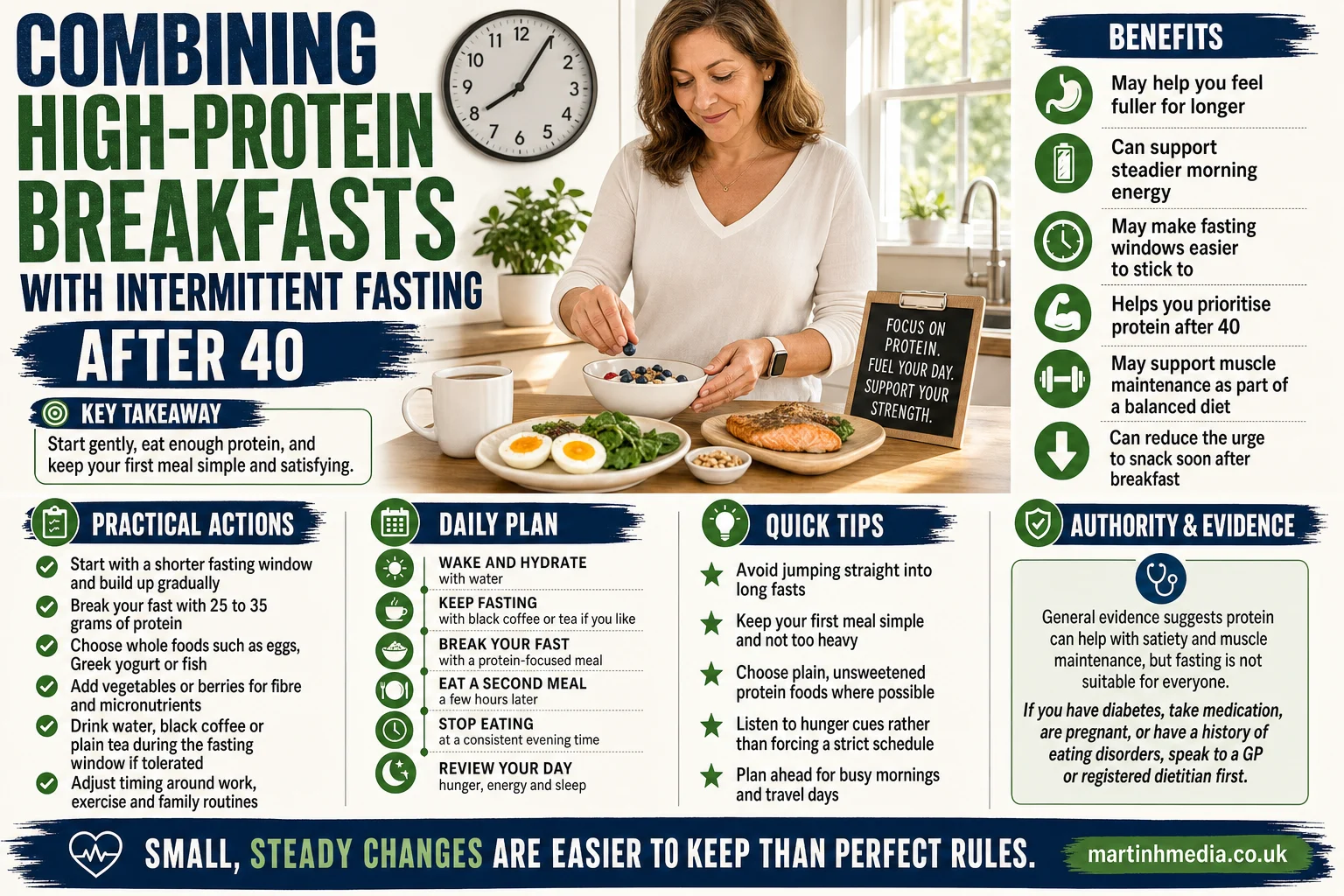
Combining High-Protein Breakfasts with Intermittent Fasting sounds backwards at first. You’re skipping breakfast half the time. When you finally eat, protein changes everything. The right first meal keeps you full for hours.
Why Protein Timing Matters During Fasting Windows
Your body burns through glycogen stores during an overnight fast. By morning, you’re running on fat reserves. Breaking this state with protein preserves muscle tissue.
Carbs spike insulin fast. The rush feels good for thirty minutes. Then you crash hard and hunt for snacks.
Protein digests slowly. It releases energy over three to four hours. Your blood sugar stays level throughout the morning.
Most fasting beginners grab toast or cereal. They feel ravenous again by ten o’clock. The cycle repeats daily.
Protein flips this pattern. Eggs or Greek yogurt at 10 AM carries you to 2 PM easily. No mid-morning energy dip.
Your muscles need amino acids after extended fasting periods. Protein provides this immediately. It signals your body to preserve lean mass.
Combining High-Protein Breakfasts with Intermittent Fasting: The Adaptation Phase
Your first week feels strange. You’re used to eating within an hour of waking. Pushing that back requires mental adjustment.
Start with a simple twelve-hour window. Stop eating at 8 PM. Resume at 8 AM with protein. This feels manageable for most people.
When starting intermittent fasting safely, gradual changes prevent the dizziness and irritability. Your hormones need time to shift fuel sources.
Week two extends to fourteen hours. Finish dinner by 7 PM. Break your fast at 9 AM. The extra two hours challenge you slightly.
Track your hunger levels each day. Write down energy patterns. You’ll notice hunger peaks then fades naturally.
By week three, sixteen hours becomes sustainable. You stop eating at 6 PM. You wait until 10 AM for your protein meal.
Best Protein Sources for Breaking Your Fast
Eggs deliver complete protein with all essential amino acids. Three eggs provide twenty-one grams. Scramble them with vegetables for added nutrients.
Greek yogurt offers twenty grams per cup. Choose plain versions without added sugar. Mix in berries for natural sweetness.
Cottage cheese sits well on an empty stomach. It digests easily after fasting. Half a cup gives you fourteen grams.
Salmon or other fish work perfectly. They provide omega-3 fats alongside protein. A small fillet delivers thirty grams easily.
Avoid protein bars for your first meal. They contain sweeteners and additives. These can upset your stomach after fasting.
Skip protein shakes initially too. Liquid calories digest too quickly. You want solid food that requires chewing.
Chewing signals your digestive system to wake up. It triggers enzyme production. This prevents bloating and discomfort.
Combining High-Protein Breakfasts with Intermittent Fasting for Fat Loss
Protein has the highest thermic effect of all macronutrients. Your body burns calories just processing it. This boost lasts for hours.
Fasting depletes glycogen stores overnight. Your first meal determines what happens next. Protein keeps you in fat-burning mode longer.
Carb-heavy breakfasts switch your metabolism back to sugar burning. Fat oxidation stops immediately. You lose the fasting benefit.
A thirty-gram protein breakfast maintains elevated fat burning. It provides energy without stopping the process. You continue burning stored fat.
This combination preserves muscle during calorie deficits. Most diets lose muscle along with fat. Protein plus fasting protects lean tissue.
Your resting metabolic rate stays higher with more muscle. Each pound burns extra calories daily. This compounds over months.
Studies show people eating protein-first meals consume fewer calories daily. They feel satisfied longer. Snacking drops naturally.
Hydration Strategy Before Your Protein Meal
Drink two glasses of water immediately upon waking. This primes your digestive system. It also separates thirst from hunger.
Black coffee supports fasting without breaking it. The caffeine suppresses appetite gently. It extends your fasting window comfortably.
Green tea provides antioxidants during your fasting hours. It keeps your hands busy. The ritual replaces breakfast habits.
Sparkling water creates fullness in your stomach. The carbonation helps during the hardest morning hours. Zero calories means zero fast-breaking.
Stop drinking thirty minutes before your protein meal. This prevents diluting stomach acid. Your digestion works better.
Resume water intake after finishing your meal. Protein requires extra hydration for processing. Aim for another two glasses.
Combining High-Protein Breakfasts with Intermittent Fasting: Meal Size Guidelines
Your stomach shrinks slightly during extended fasting periods. A massive meal causes immediate discomfort. Start smaller than you think.
Aim for twenty-five to thirty-five grams of protein. This amount satisfies without overwhelming. Your appetite guides the exact number.
Eat slowly over fifteen to twenty minutes. Put your fork down between bites. Your brain needs time to register fullness.
Add vegetables for volume without many calories. Spinach, tomatoes, and peppers work well. They provide fiber and nutrients.
Save heavy foods for later in your eating window. Fried items sit poorly on an empty stomach. They cause nausea in many people.
Keep fats moderate in your first meal. Too much slows digestion excessively. You’ll feel sluggish for hours.
Plan your second meal three to four hours later. This spacing maintains steady energy. It prevents the afternoon crash.
Common Mistakes When Pairing Protein with Fasting
Jumping to an eighteen-hour fast immediately causes problems. Your body needs adaptation time. Gradual progression prevents crashes and quit rates.
Breaking your fast with protein powder alone leaves you unsatisfied. Whole food provides chewing and satisfaction. Shakes work better as supplements.
Skipping vegetables with your protein creates nutrient gaps. You need fiber for digestion. Micronutrients support energy production.
Eating processed protein sources backfires. Deli meats contain sodium and preservatives. They cause water retention and bloating.
Ignoring your hunger signals leads to binge eating. Some days you need food earlier. Flexibility prevents failure.
Exercising hard right before breaking your fast drains you. Save intense workouts for after eating. Light walking works better fasted.
Combining High-Protein Breakfasts with Intermittent Fasting for Different Schedules
Night shift workers need reversed timing. Eat your protein meal before starting work. Fast during your sleep hours.
Early gym-goers should eat protein within an hour post-workout. Training breaks your fast naturally. Refuel with thirty grams immediately.
Parents with school drop-offs can fast until 9 AM. Return home and prepare eggs. The quiet house makes eating peaceful.
Office workers benefit from 10 AM protein meals. This skips the commute snacking. You arrive focused and eat at your desk.
Weekend schedules can differ from weekdays. Consistency helps but perfection isn’t required. Adjust your window as needed.
Travel disrupts routines easily. Pack hard-boiled eggs or jerky. Protein snacks maintain your pattern anywhere.
Tracking Progress Beyond the Scale
Energy levels tell you more than weight changes. Notice when afternoon fatigue disappears. This signals metabolic adaptation.
Hunger patterns shift over three to four weeks. Morning appetite fades naturally. This means your body adapted successfully.
Clothing fit changes before scale numbers move. Your body recomposes with protein and fasting. Muscle replaces fat gradually.
Sleep quality often improves with protein-focused eating. Stable blood sugar prevents night waking. You sleep deeper and longer.
Mental clarity sharpens during fasting windows. Ketones fuel your brain efficiently. Focus and concentration improve noticeably.
Digestive comfort increases with consistent meal timing. Your gut adjusts to predictable patterns. Bloating and irregularity decrease.
Adjusting Protein Amounts for Your Goals
Fat loss requires slightly higher protein intake. Aim for thirty-five to forty grams. This preserves muscle during calorie restriction.
Muscle building needs protein throughout your eating window. Start with thirty grams. Add another thirty grams four hours later.
Maintenance allows twenty-five to thirty grams comfortably. This sustains current muscle mass. It prevents unwanted weight changes.
Athletes training hard need more total daily protein. Split sixty grams across two meals. Time one meal post-workout.
Older adults benefit from higher protein per meal. Muscle preservation becomes harder with age. Thirty-five grams helps maintain strength.
Women often need slightly less total protein. Twenty-five to thirty grams satisfies most goals. Listen to your satiety signals.
Long-Term Sustainability Strategies
Variety prevents meal fatigue. Rotate between eggs, fish, and yogurt. Different textures keep you interested.
Prep protein sources on Sunday evenings. Cook a dozen eggs. Portion Greek yogurt into containers.
Social events require flexibility. Skip fasting occasionally without guilt. One brunch doesn’t erase your progress.
Plateaus happen to everyone. Change your fasting window length. Adjust protein amounts slightly.
Listen to genuine hunger versus habit. Understanding your body’s signals prevents unnecessary suffering. Some days you need food earlier.
Seasons affect your needs. Winter may require shorter fasts. Summer heat extends fasting windows easily.
Build your eating window around social commitments. Dinner with family matters more than perfect timing. Adjust your fast accordingly.
Start tomorrow morning by pushing breakfast back one hour and making it protein-focused.
Frequently Asked Questions
Can I drink coffee before my protein breakfast while fasting?
Yes, black coffee doesn’t break your fast. It actually helps suppress appetite naturally. Skip cream and sugar to maintain fasting benefits. Coffee extends your fasting window comfortably for most people.
How much protein should my first meal contain after fasting?
Aim for twenty-five to thirty-five grams of protein. This amount satisfies without overwhelming your digestive system. Three eggs or one cup of Greek yogurt hits this range perfectly.
Will protein shakes work as well as whole food?
Whole food works better for your first meal after fasting. Solid food requires chewing and digests more slowly. Shakes leave most people hungry again within two hours. Save protein powder for later meals.
How long until my body adapts to fasting with protein meals?
Most people adapt within two to three weeks. Your hunger patterns shift noticeably by week three. Energy levels stabilize as your body learns to burn fat efficiently. Track your progress daily to see patterns.
Can I build muscle while combining protein breakfasts with intermittent fasting?
Yes, you can build muscle with this approach. Eat thirty to forty grams of protein per meal. Time one meal within an hour after training. Total daily protein matters more than meal timing alone.