
Walking Melts Stress Better Than You Think
Your shoulders tense up during a work call. Your jaw clenches during traffic. Your mind races when you can’t sleep. Learning How to Use Walking as a Stress Management Tool stops this cascade before it controls your day.
How to Use Walking as a Stress Management Tool Through Morning Timing
Your stress hormone cortisol peaks 30 to 45 minutes after you wake up. This natural spike gives you energy to start your day. The problem happens when this surge stays too high.
A 15-minute walk within two hours of waking processes this cortisol properly. Your body uses the energy this hormone releases into your bloodstream. Without movement, excess cortisol lingers and creates afternoon crashes.
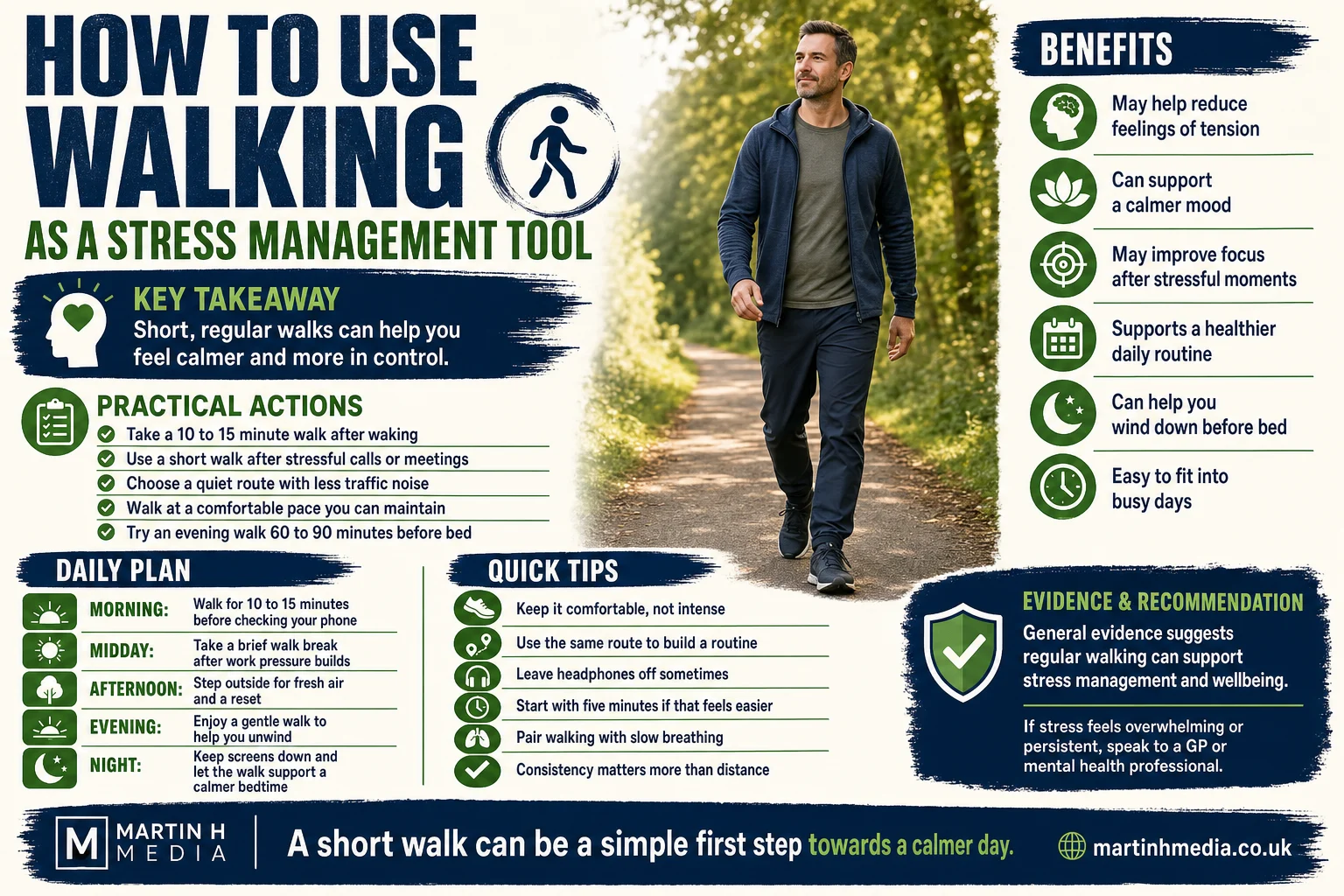
Step outside before you check your phone or open your laptop. The combination of sunlight and movement resets your hormone balance. Walking and cortisol levels respond best when you match movement with natural rhythms.
You don’t need to walk fast or far. A gentle pace around your neighborhood works perfectly. Your nervous system shifts from alert mode to calm mode automatically.
Most people feel the difference before any test confirms it. Your thoughts become clearer within five minutes. The weight on your chest lifts noticeably.
The Physical Pattern That Makes Walking Lower Stress Hormones
Your breath naturally syncs with your steps during a walk. This rhythm sends safety signals directly to your brain. The pattern matters more than speed or distance covered.
Each step creates a gentle rocking motion through your body. This movement activates your parasympathetic nervous system. Your body interprets steady walking as proof you’re not facing danger.
Blood measurements show cortisol drops 15 to 20 percent after 20 minutes. This happens at a conversational pace without pushing yourself hard. Intense exercise actually spikes stress hormones temporarily.
Your arms swing naturally as you walk. This bilateral movement calms your brain’s stress centers. The left-right pattern helps process stuck emotions and anxious thoughts.
Tension releases from your shoulders within the first few minutes. Your jaw unclenches without conscious effort. These physical changes happen automatically when you maintain a steady pace.
How to Use Walking as a Stress Management Tool Instead of Intense Exercise
High-intensity workouts spike cortisol during the session. Your body can’t distinguish between exercise stress and life stress. Running hard or lifting heavy adds to your total stress load.
Walking keeps cortisol balanced while still providing movement benefits. The moderate intensity never triggers a fight-or-flight response. Your hormones stay stable throughout the entire walk.
This makes walking superior when you’re already dealing with chronic stress. Adding more intense exercise often backfires for overwhelmed individuals. Your system needs movement without additional strain.
You can walk every single day without needing recovery time. Intense exercise requires rest periods to prevent hormone buildup. Walking never pushes hard enough to deplete your reserves.
Studies comparing exercise types show walkers have lower cortisol than runners. The difference becomes more pronounced in people over 40. Your body appreciates the gentler approach as you age.
Using Walk Breaks to Stop Stress Spirals During Work
A five-minute walk breaks the stress response before it compounds. Your body starts dumping cortisol the moment tension hits. Standing up and moving stops this cascade immediately.
Set a timer for every 90 minutes during your workday. Walk to another floor or around the building perimeter. This prevents stress hormones from accumulating throughout the day.
Your brain processes information differently while walking. Solutions appear for problems you couldn’t solve sitting down. The movement unlocks creative thinking your stressed mind blocked.
Don’t wait until you feel overwhelmed to take walking breaks. Prevention works better than damage control with stress hormones. Regular short walks keep cortisol from ever spiking too high.
Some people worry about losing productivity by stepping away. The opposite happens. You return sharper and faster after movement. Your efficiency increases when stress doesn’t cloud your thinking.
How to Use Walking as a Stress Management Tool With Specific Routes
Green spaces provide extra stress-lowering benefits beyond the walking itself. Trees and natural settings reduce cortisol more than urban environments. Parks amplify the calming effect of movement.
Choose routes without traffic noise when possible. Constant sound stimulation keeps your nervous system on alert. Quieter paths let your body fully enter rest mode.
Walking the same route creates a ritual your body recognizes. This familiarity signals safety to your brain. Your stress response lowers faster on familiar paths.
You don’t need wilderness access to get benefits. Residential streets with trees work fine. Even parking lot perimeters help if you focus on movement.
Avoid routes that add new stressors to your walk. Busy intersections or unsafe areas defeat the purpose. Your environment should support relaxation, not create more tension.
The Evening Walk Strategy for Better Sleep and Recovery
An evening walk helps your body process leftover stress from the day. Cortisol should naturally decline as bedtime approaches. Movement accelerates this decline when stress kept hormones elevated.
Walk 60 to 90 minutes before you plan to sleep. This timing allows your body temperature to rise and fall naturally. The temperature drop signals your brain that sleep should come soon.
Keep evening walks gentle and unhurried. You’re winding down, not working out. The connection between walking and stress hormones works best when intensity matches your goal.
Leave your phone behind or keep it in your pocket. Evening walks should disconnect you from daytime demands. This separation helps your mind transition into rest mode.
Many people notice they fall asleep faster after evening walks. Racing thoughts quiet down without effort. Your body recognizes the walk as a bridge between doing and resting.
How to Use Walking as a Stress Management Tool Without Overthinking It
You don’t need special gear or perfect conditions to start. Regular shoes and your current clothes work fine. Waiting for ideal circumstances just delays the benefits.
Start with whatever time you have available right now. Five minutes counts. Ten minutes works better. Fifteen minutes provides noticeable hormone changes.
Don’t track steps or worry about pace initially. Your phone’s health app creates pressure you don’t need. Just walk at a comfortable speed without checking data.
Some days you’ll walk longer and some days shorter. Consistency matters more than duration. Daily short walks beat occasional long ones for stress management.
Skip the headphones occasionally to let your mind wander. Constant input prevents the mental processing walking naturally provides. Quiet walks support cortisol reduction better than distracted ones.
Combining Walking With Other Simple Stress Tools
Walking amplifies other stress management practices you already use. A walk before meditation makes sitting still much easier. Your body settles faster after movement.
Try walking right after a stressful phone call or meeting. The physical movement metabolizes the stress hormones that conversation triggered. You prevent those hormones from affecting the rest of your day.
Walking before meals improves digestion when stress has been high. Cortisol disrupts your digestive system. Movement resets this system before you eat.
Some people pair walks with breathing exercises for compound benefits. Breathe in for four steps, out for six steps. This pattern deepens the relaxation response.
Don’t overthink combinations. Walking alone provides substantial stress relief. Additional tools enhance results but aren’t required for basic benefits.
What Changes When You Walk for Stress Daily
Your baseline stress level drops after two weeks of daily walking. You notice situations that used to trigger you don’t anymore. Your threshold for stress increases noticeably.
Physical tension patterns change over time. Tight shoulders and clenched jaws become less frequent. Your body holds less stress even on difficult days.
Sleep quality improves without changing anything else about your routine. Lower evening cortisol lets your body enter deep sleep faster. You wake up more refreshed.
Fat storage patterns shift when cortisol stays balanced. Stress-related belly fat decreases over months. This happens even without changing your diet.
Worth knowing: the benefits compound over time. Month three looks different than week one. Your nervous system becomes more resilient with consistent practice.
Walk for 15 minutes tomorrow morning before checking your phone.
Frequently Asked Questions
How long should I walk to lower stress hormones effectively?
Fifteen to twenty minutes provides measurable cortisol reduction. Blood tests show hormone levels drop 15 to 20 percent after this duration. You can walk longer if you have time, but 15 minutes delivers the core benefit. Consistency matters more than length. Daily 15-minute walks beat occasional hour-long walks for stress management.
Does walking speed matter for stress relief?
A conversational pace works best for lowering cortisol. Walking too fast triggers a stress response instead of calming one. You should be able to talk comfortably without breathing hard. The rhythm and consistency matter more than speed. Gentle, steady walking provides better hormone balance than pushing yourself hard.
Can I walk indoors on a treadmill for stress management?
Indoor walking provides movement benefits but misses some stress-lowering elements. Sunlight exposure and nature views enhance cortisol reduction. Treadmill walking still helps when outdoor access isn’t available. The movement itself provides value even without ideal conditions. Try to walk outside when possible, but don’t skip walking entirely if you’re stuck indoors.
When is the best time of day to walk for stress?
Morning walks within two hours of waking help process natural cortisol peaks. Evening walks 60 to 90 minutes before bed clear accumulated stress. Both times provide unique benefits for hormone balance. You can also take short walks during work breaks to prevent stress buildup. The best time is whatever time you’ll actually do it consistently.
Will walking help if I already exercise intensely?
Adding walking benefits people who do intense workouts. High-intensity exercise spikes cortisol temporarily during sessions. Walking on rest days helps bring stress hormones back down. This combination prevents the cortisol buildup that intense training can create. Many athletes use walking for active recovery and stress management between hard workouts.