

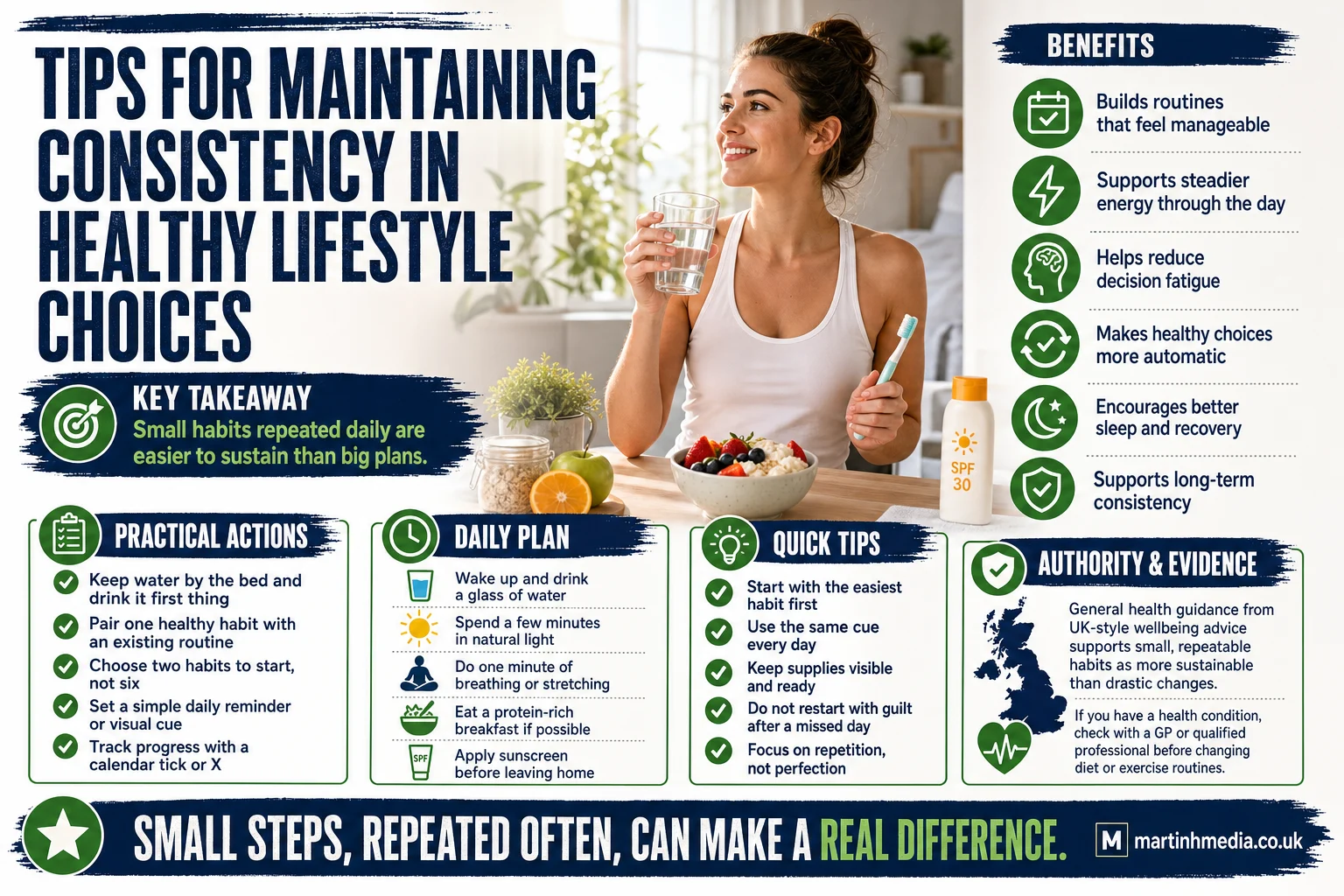
Why Healthy Habits Fail After 3 Weeks (And How to Stop It)
You skip the gym Tuesday morning and promise to go twice Wednesday. Wednesday arrives and neither session happens. Tips for Maintaining Consistency in Healthy Lifestyle Choice matter more than any single burst of effort. Small repeated actions build the body you want.
Tips for Maintaining Consistency in Healthy Lifestyle Choices Through Environmental Design
Your surroundings control your behavior more than willpower does. Place your workout clothes on the chair you see first thing. Put fruit in a bowl on the counter. Hide junk food in the back of the cupboard.
Each visual cue triggers an action without requiring a decision. You see the apple and eat it. You see your running shoes and put them on. The environment makes the choice before your brain gets involved.
Remove friction from healthy actions and add it to unhealthy ones. Keep a water bottle on your desk all day. Store cookies in a container that needs two hands to open. The extra three seconds of effort stops most impulse eating.
Your kitchen layout determines what you eat more than your intentions do. Rearrange it once and benefit every single day. The same principle works for movement.
Park your car at the far end of every parking lot. Take stairs that are visible instead of waiting for hidden elevators. Design your route home to pass the park instead of the bakery.
Most people try to change their discipline. Change your environment instead. It works when you’re tired and it works when you’re distracted.
Building Automatic Triggers for Daily Movement
Your brain loves linking actions together into chains. Finish your morning coffee and immediately put on walking shoes. Complete your lunch and take a ten minute walk outside. These connections become unbreakable over time.
The trigger needs to happen every single day at the same time. Inconsistent triggers create inconsistent behavior. Your body learns to expect movement after the coffee cup hits the sink.
Start absurdly small to guarantee success. Three pushups after you brush your teeth at night. One minute of stretching when you wake up. The size doesn’t matter in week one.
Worth knowing: consistency beats motivation because small repeated actions eliminate the decision entirely.
After two weeks the trigger becomes automatic. Your body moves before your mind can object. Then you can increase duration or intensity. Never increase both at once.
Most people start too big and quit within days. They decide to run five miles daily starting Monday. By Friday they’ve given up completely. The pattern never forms because the action felt like punishment.
Match the action to your current fitness level minus twenty percent. If you can walk thirty minutes comfortably, commit to twenty. You’ll often do more once you start. The commitment stays achievable on bad days.
Tips for Maintaining Consistency in Healthy Lifestyle Choice Using Social Accountability
Tell three people about your new walking schedule. Share your planned days and times. This external pressure keeps you honest when internal motivation disappears.
Join a group that meets at a fixed time each week. Yoga classes on Tuesday mornings. Walking groups on Thursday evenings. The appointment creates obligation that feelings can’t cancel.
Find one person with similar goals and check in daily. Send a photo of your completed workout. Share your meal prep results on Sunday. The five second message prevents three days of backsliding.
Public commitment works better than private goals. You can lie to yourself easily. Lying to others takes more effort. Most people choose honesty over the discomfort of admitting they quit.
Money adds even stronger accountability. Bet fifty dollars you’ll complete twelve workouts this month. Give it to a friend who returns it only after verification. Financial loss hurts more than missed workouts.
Tracking Without Obsessing Over Numbers
Write an X on your calendar each day you complete your health action. The chain of X marks becomes visually rewarding. You stop wanting to break the streak.
This method works because it measures behavior instead of outcomes. You control whether you walk today. You don’t control whether you lose weight this week. Track what you can control.
Take one progress photo every two weeks in the same spot. Wear the same clothes and use the same lighting. Your mirror lies but photos show real changes over months.
Most people track too many variables and quit from overwhelm. Pick one metric only. Steps per day. Workouts completed per week. Vegetables eaten per day. More metrics don’t improve results.
Review your tracking data every Sunday for five minutes. Notice patterns without judgment. You walked four days this week instead of five. Next week aim for four again. Consistency matters more than perfection.
Tips for Maintaining Consistency in Healthy Lifestyle Choice Through Meal Preparation Routines
Cook once and eat three times. Sunday afternoon meal prep removes daily food decisions. You open the fridge and grab the container you already made.
Start with one meal type only. Prepare five identical lunches every Sunday. After that becomes automatic, add breakfast prep. Then dinner. Stacking habits works better than changing everything simultaneously.
Keep your recipes simple enough to make while distracted. Baked chicken and roasted vegetables takes ten minutes of active work. Complexity creates friction that kills the habit within weeks.
Store prepared meals in clear containers at eye level. You see them first when hunger hits. Hidden food gets forgotten and wasted.
Batch preparation feels boring but understanding why consistency beats motivation means accepting that boring systems produce exciting results over time.
Most people fail meal prep because they try Pinterest recipes. They spend three hours cooking elaborate dishes they don’t actually enjoy. Simple food you like beats complex food you admire.
Sleep Schedule As Foundation for Everything Else
Every health goal collapses without consistent sleep. Set the same bedtime seven days per week. Your body can’t build beneficial patterns with random sleep schedules.
Poor sleep destroys discipline the next day. You skip the gym because you’re exhausted. You eat sugar because your brain demands quick energy. One bad night cascades into three bad decisions.
Start your bedtime routine ninety minutes before sleep. Dim the lights and stop looking at screens. Your body needs transition time to prepare for rest. Jumping straight from bright screens to bed fails most nights.
Keep your bedroom cold and completely dark. Temperature affects sleep quality more than most people realize. Cool rooms promote deeper sleep that actually restores your body.
Track your sleep and wake times for two weeks without changing anything. Notice the pattern. Most people sleep inconsistently and wonder why motivation fluctuates wildly. The connection becomes obvious when you see the data.
Tips for Maintaining Consistency in Healthy Lifestyle Choice During Schedule Disruptions
Travel destroys routines unless you plan for it. Pack resistance bands that fit in any suitcase. Book hotels with gyms. Research walking routes near your destination before you arrive.
Create a minimal version of your routine for chaotic days. Your normal workout takes forty minutes. Your chaos version takes eight. Doing the short version maintains the pattern even when time disappears.
The pattern matters more than the duration. Three minutes of movement keeps the habit alive. Zero minutes breaks the chain and restarts the struggle. Always choose the smallest version over nothing.
Most people use disruptions as permission to quit completely. They travel for five days and abandon healthy eating entirely. Then they need two weeks to rebuild lost momentum. The break cost more than the vacation.
Anticipate your obstacles and build systems that work even when circumstances change. Write down your chaos routine before you need it. Deciding in the moment fails.
Replacing Perfection With Acceptable Standards
You don’t need perfect meals to improve your health. You need meals slightly better than last month. Perfectionism kills more progress than laziness does.
Set your minimum acceptable standard below what feels impressive. Three workouts per week instead of six. One vegetable with dinner instead of five. The low bar gets cleared consistently.
Most people set standards they can only meet on their best days. Then they fail on average days and quit entirely. Success comes from systems that work on your worst days.
This is wrong: thinking you failed because you only walked twenty minutes instead of thirty. You succeeded because you walked. The pattern continued.
Celebrate maintaining the behavior regardless of quality. You meal prepped even though the food tastes boring. You exercised even though the workout felt sluggish. Showing up builds the identity that produces long term results.
Lower your standards until consistency becomes easy. Increase them only after three months of perfect adherence. Speed comes from patience.
Pick one Tips for Maintaining Consistency in Healthy Lifestyle Choice strategy from this article and implement it tomorrow morning.
Frequently Asked Questions
How long does it take to build a consistent healthy habit?
Most habits become automatic after three to eight weeks of daily repetition. The exact timeline depends on habit complexity and your current routine. Simple actions like drinking water after waking take less time than complex behaviors like meal planning. Focus on perfect adherence for twenty one days minimum before expecting the behavior to feel natural.
What should I do after missing several days of my healthy routine?
Resume immediately with your smallest possible version of the habit. Don’t try to compensate for missed days by doing extra work. Simply restart the pattern today without judgment. The gap only becomes permanent if you wait for perfect conditions to begin again. One day back on track restarts your momentum.
Can I work on multiple healthy habits at the same time?
Start with one habit only until it becomes completely automatic. Adding multiple changes simultaneously drains mental energy and reduces success rates dramatically. After your first habit runs on autopilot for four weeks, add one more. Sequential habit building produces better long term results than simultaneous attempts.
How do I stay consistent when I don’t see immediate results?
Track your behavior instead of measuring outcomes you can’t control daily. Mark each day you complete your action regardless of physical changes. Trust that small repeated actions compound into visible results over months. Most people quit two weeks before changes become noticeable. Patience separates temporary effort from permanent transformation.
What time of day works best for building health consistency?
Morning routines succeed most often because fewer unexpected events disrupt early hours. Your willpower and energy levels peak after sleep and before daily decisions deplete them. However, the best time is whenever your schedule allows guaranteed repetition. Consistency at noon beats inconsistency at dawn.